State economist says revenue growth is slowing; capital gains volatility complicates outlook
Loading...
Summary
Georgia's state economist told appropriators that revenue growth has slowed: withholding and sales gains have moderated, corporate tax receipts have declined, and capital gains remain volatile — factors that make the effect of proposed rate cuts smaller in FY26 and push larger impacts into FY27.
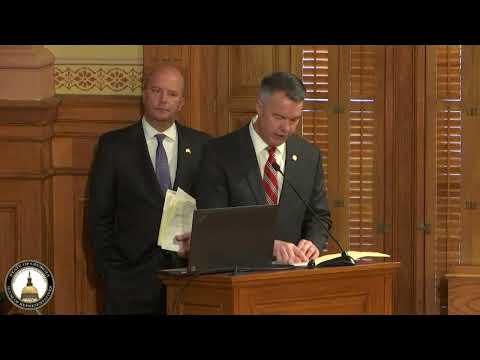
State economist Bob Bushman briefed lawmakers on fiscal 2025 results and the near‑term revenue outlook, highlighting several forces shaping collections.
Bushman said personal income tax collections rose modestly despite prior rate cuts and that withholding has kept pace for now, but corporate income tax receipts and large one‑time capital gains are the key volatile elements. "A big part of the $3,900,000,000 positive gap in fiscal 20‑22 was tax on capital gains," he said, adding that the largest gains categories have been especially volatile.
He flagged slower sales‑tax growth tied to the consumption mix reverting toward services, falling interest earnings as short‑term rates have declined, and tariff‑driven inflation as an upside risk to prices. On the governor's proposed 20‑basis‑point cut, Bushman said the FY26 effect will be muted because of timing; the full impact is pushed into FY27.
Why it matters: Lawmakers deciding on permanent rate reductions and new appropriations rely on the revenue forecast. Bushman's accounting underscores that one‑time capital gains and policy timing materially affect near‑term revenue availability.
What legislators asked: Committee members pressed the economist on how demographic shifts, labor participation, and sectoral job changes affect withholding, and sought clarity on federal funding backfills. Bushman repeatedly referred expenditure questions to agency heads and emphasized that year‑to‑year volatility requires conservative assumptions in the operating plan.