
District briefing warns of budget squeeze as lawmakers consider shifting K-12 funding
Get AI-powered insights, summaries, and transcripts
Subscribe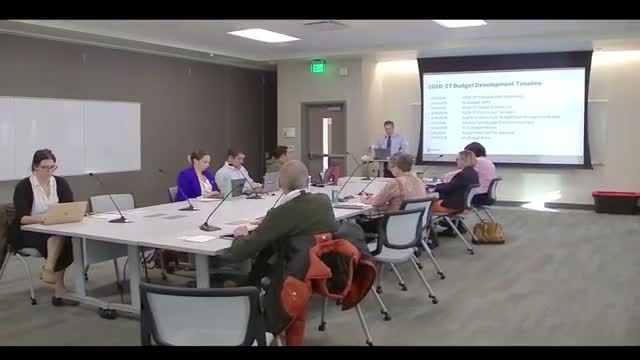
Summary
Budget staff told the board that state changes and rising costs have put pressure on the Salt Lake district's budget; staff identified potential legislative actions (SB 62, SB 65, SB 97) and rising costs in utilities, insurance and online-course adjustments as key near-term risks.
Budget staff outlined a series of funding pressures on the district at a board budget briefing, warning that proposed state changes and steady cost increases could force either service cuts or new local tax measures.
Alan (first name only), the staff presenter, explained how the certified tax rate preserves prior-year revenue even when assessed values rise, using an example where a property assessed at $1,500 would be limited to producing the same $100 in revenue as the prior year. "It takes that $1,500 and says, you can only receive $100," he said, noting that reliance on the certified rate reduces the district's buying power in an inflationary economy.
Why it matters: the district faces several intersecting pressures. Rising costs for water, sewer and insurance, higher substitute-teacher pay and benefit inflation are combining with a set of state-level proposals that, if enacted, could reduce or redirect funds now available to districts. Alan told the board the district's choices in response are narrow: "We cut the service or we bind property tax to stick in there."
Key points from the briefing:
- Legislative proposals: Alan highlighted SB 62 (a proposal to change the funding formula to an October 1 count, which would remove a one-year "hold harmless" for declining-enrollment districts) and SB 65 (which would move the basic rate into a new fund and let the legislature allocate that money rather than it flowing directly to districts). He also noted SB 97, which would cap local school-board tax increases to 5% over the previous year.
- WPU/inflationary adjustment: Staff described the statutory inflationary adjustment to the Weighted Pupil Unit (WPU) as a five-year average that produced a 4.2% increase this cycle. Alan warned the five-year average could fall in future years as earlier high-inflation years drop out of the calculation.
- Program recategorization and staffing costs: District staff and Ryan Hunt, the budget director, said part of the apparent growth in student-support and general-district-administration spending comes from reclassification of positions and moving previously separate funds into the general fund after state chart-of-accounts changes. Alan and Ryan said some increases reflect filling previously part-time roles and salary/benefit inflation rather than only growth in headcount.
- Specific revenue hits: Alan said the state's treatment of online-school courses has reduced district allocations by roughly $271,000 in 2022, $1.2 million last year and about $819,000 year-to-date; staff attributed the shift partly to higher per-course provider costs and more students taking online classes.
- School security and grants: The district estimated full school-security compliance would cost more than $100 million; the state awarded about $700,000 toward that need, leaving a substantial unfunded gap.
Board response and next steps: Several board members recommended an extra February meeting devoted to legislative updates to track bills as they move through the session. Staff said fund balance could be used as a short-term buffer if the legislature reduces distributed funds but emphasized fund balance is not a sustainable solution for ongoing services.
The board finance committee will meet next Monday to pursue topics raised in the briefing and to identify any items it wants the committee to explore further.