Get Full Government Meeting Transcripts, Videos, & Alerts Forever!
Get email alerts on the Grants Midc topic
No spam. Unsubscribe anytime.
Council tables $123,000 indigent-defense grant amid questions about execution and local match
Summary
Council deferred action on a Michigan Indigent Defense Commission grant (about $123,000 total with a city match of $13,008.64) and asked administrators to secure court reports and a court representative before accepting funds.
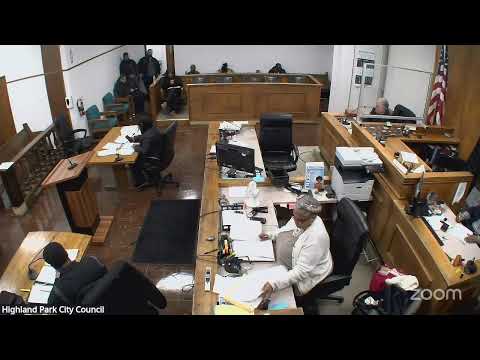
The Highland Park City Council voted to table a resolution to accept a Michigan Indigent Defense Commission (MIDC) grant after council members asked for additional information and recommended a court representative be present at a future meeting.
Attorney remarks and council discussion established the grant’s purpose: the state provides funding to help local district courts comply with a law requiring defense counsel for defendants who cannot afford an attorney. The packet described the city as the grantee and included a required local match of $13,008.64. One council member raised concerns about language that listed Mayor Glenda McDonald by name as the grantee contact on the paperwork; another questioned whether the court has historically exceeded its local attorney budget and whether the grant would be used for travel or other unspecified line items.
The city’s attorney and other speakers advised that accepting the grant is a funding decision and that the council could table the resolution to obtain additional documentation. Council moved to table the item to a workshop and requested reports for 2023–25 from the court before reconsideration.
The attorney summarized: the city, as the funding unit for the court, is often the recipient of the grant paperwork and the mayor typically signs documents on the city's behalf, but council members requested a court representative and the reports before final action.
Because the MIDC grant is tied to statutory compliance, the attorney noted that the state mandate would not disappear whether the council accepted the funds or not; he recommended accepting the funding but agreed to tabling if council preferred more information.
The council recorded the motion to table and asked the administration to secure the requested reports and invite a court representative to the follow-up workshop.