Farmington Valley summit warns SNAP uncertainty and federal food‑aid cuts are widening local need
Loading...
Summary
Health officials, state lawmakers and nonprofit leaders said rising local demand, a 50% reduction in federal TCAP deliveries and potential SNAP eligibility changes are stressing food banks; speakers urged state funding, better local data and coordinated outreach.
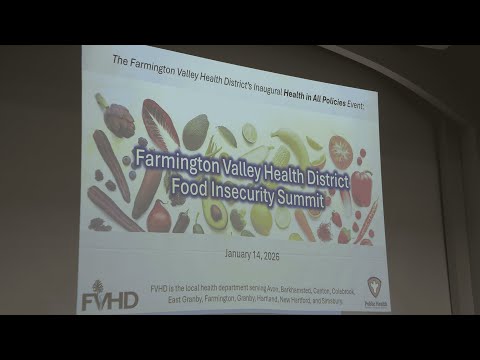
Speakers at a Farmington Valley Health District summit in Avon on food insecurity warned that rising need, shrinking federal food aid and pending SNAP changes are straining local food banks and pantries.
The district’s director of health, Stephanie Johnson, told attendees the service area covers about 110,000 residents and that “1 in 10 people are considered food insecure” while only “1 in 20 of those households received SNAP benefits,” underscoring a gap between need and federal reach. Moderator Christian DuBorg summarized the macro drivers: “an increase in need plus a decrease in federal supports and services plus an increase in food prices,” a combination he said will likely produce more food insecurity.
Connecticut FoodShare representatives and other panelists described recent federal program shortfalls. Miranda (senior director of network relations, Connecticut FoodShare) said the organization has “seen a 50% reduction over the past year in the amount of food we're getting through TCAP,” and that “35 truckloads of food … were canceled” last year, reducing available donations to local pantries at a time when demand is growing. Panelists said this volatility is driving pantries to function more like social‑service hubs, connecting clients to broader supports.
State Rep. Eleni Kapros DeGraw outlined legislative efforts to offset federal cuts, saying she and colleagues had proposed a $10,000,000 allocation for Connecticut FoodShare (CTMAP) to be used only for food. She noted interim appropriations secured $3,000,000 for fiscal 2026 and $6,000,000 for fiscal 2027 but emphasized the community need remains larger than that amount.
Researchers and policy analysts on the panel raised another constraint: data. Caitlin Caspe of the Rudd Center said the federal USDA national measure that tracked food‑insecurity trends was discontinued for recent years, a change she called “a real problem” because it removes a consistent source for tracking changes and assessing policy impacts. Panelists urged states to develop hyperlocal or state‑level measures to replace lost federal data so resources can be targeted where access barriers are highest.
Panelists offered immediate and longer‑term policy responses: maintain and expand outreach to connect eligible households to SNAP and other programs; explore state‑level funding mechanisms (a proposed food and nutrition special fund was discussed); and consider state alternatives to federal SNAP if federal supports erode. DuBorg said his office released a state report with detailed recommendations and suggested other states’ measurement models as potential templates.
Next steps from the summit included follow‑up research, coordinated local outreach (including an easy mobile‑pantry schedule text service noted during the event), and continued conversations among municipalities, nonprofits and legislators about funding and measurement.
The summit brought stakeholders together for practical planning rather than immediate policy votes; organizers signaled more meetings and a webinar on food policy in the coming weeks.