
Utah training details what’s changing on the ACT for spring 2026
Get AI-powered insights, summaries, and transcripts
Subscribe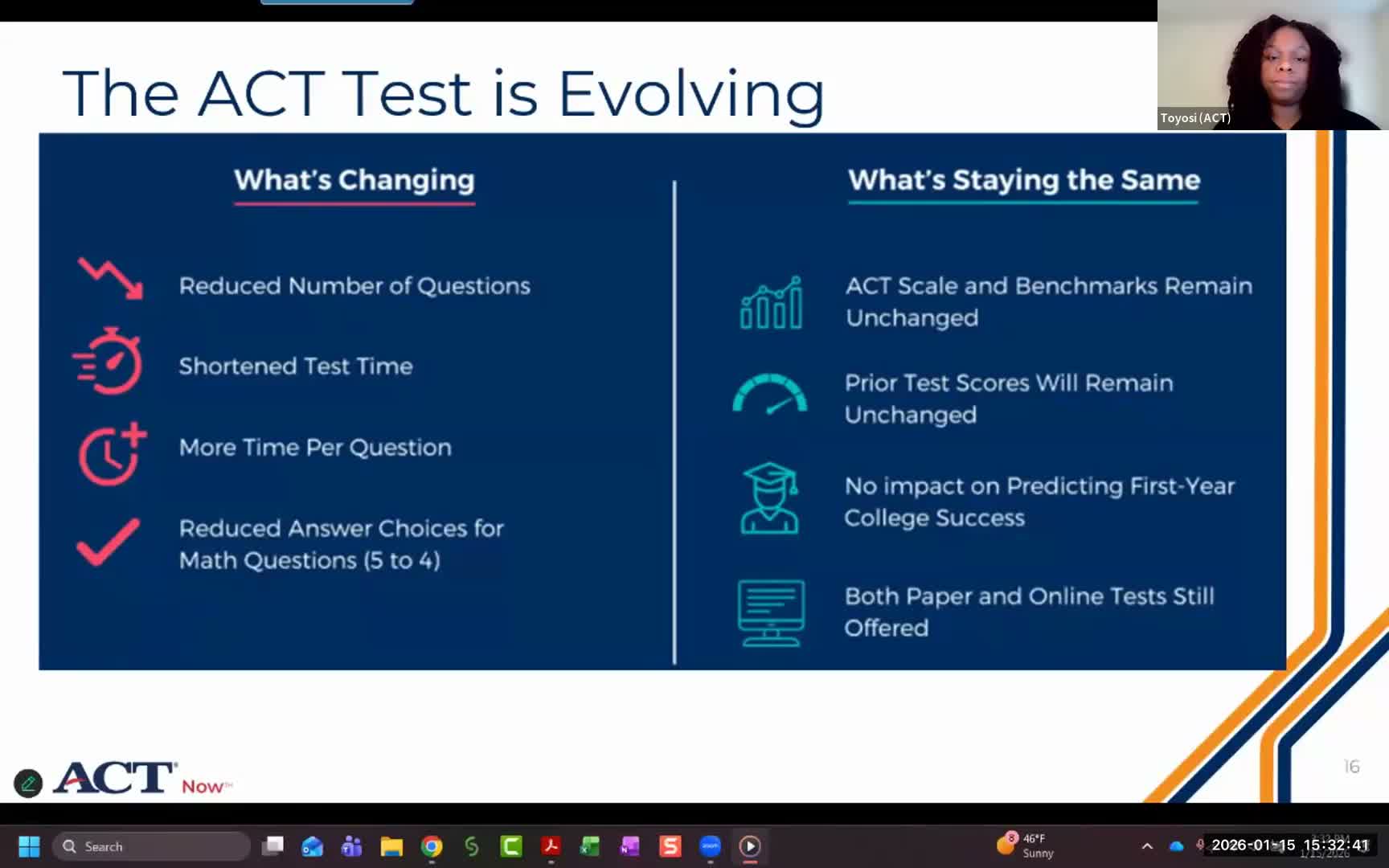
Summary
ACT and Utah State Board of Education presenters told school test coordinators that the spring 2026 enhanced ACT will be shorter with fewer questions, more time per question, and a four-choice math section; composite scores and benchmarks remain unchanged. Key scheduling and accommodation deadlines were listed.
Elise Frey, test administration and assessment specialist with the Utah State Board of Education, opened a recorded training session and turned the presentation over to ACT staff to brief school leaders on the enhanced ACT coming in spring 2026.
An ACT presenter said the enhanced ACT will be shorter overall, with fewer questions and more time per question. "Students will have more time per question," the presenter said, and the math section will move from five answer choices to four. Reading passages will be shorter, the presenter added. The presenter also stressed that the ACT score scale and benchmark scores will not change and prior test scores remain intact.
Why it matters: the format changes affect how schools schedule tests and advise accommodated students. The presenter provided milestone dates and deadlines schools must track in ACT Now, including confirm-participation and accommodation request deadlines and scheduled test events.
What schools must note: ACT will calculate composite scores using English, mathematics, and reading only; practice tests and the ACT data file layout have been updated. Electronic reporting via Success.ACT.org will replace printed high school reports; individual score reports will still be shipped to schools when needed.
Next steps: presenters directed coordinators to the ACT-hosted schedule of events and the ACT Now resources for full timelines and to use the updated practice tests for student preparation. The training recording and slide deck will be posted to USBE’s assessment YouTube channel and ACT Now for later reference.
The session included a live Q&A on scheduling and accommodations; presenters repeatedly directed participants to consult the accessibility supports guide for rules governing accommodated timing.