
Debate over shutting down RPS penalties: sponsors tout rate relief; industry warns of lost jobs and markets
Get AI-powered insights, summaries, and transcripts
Subscribe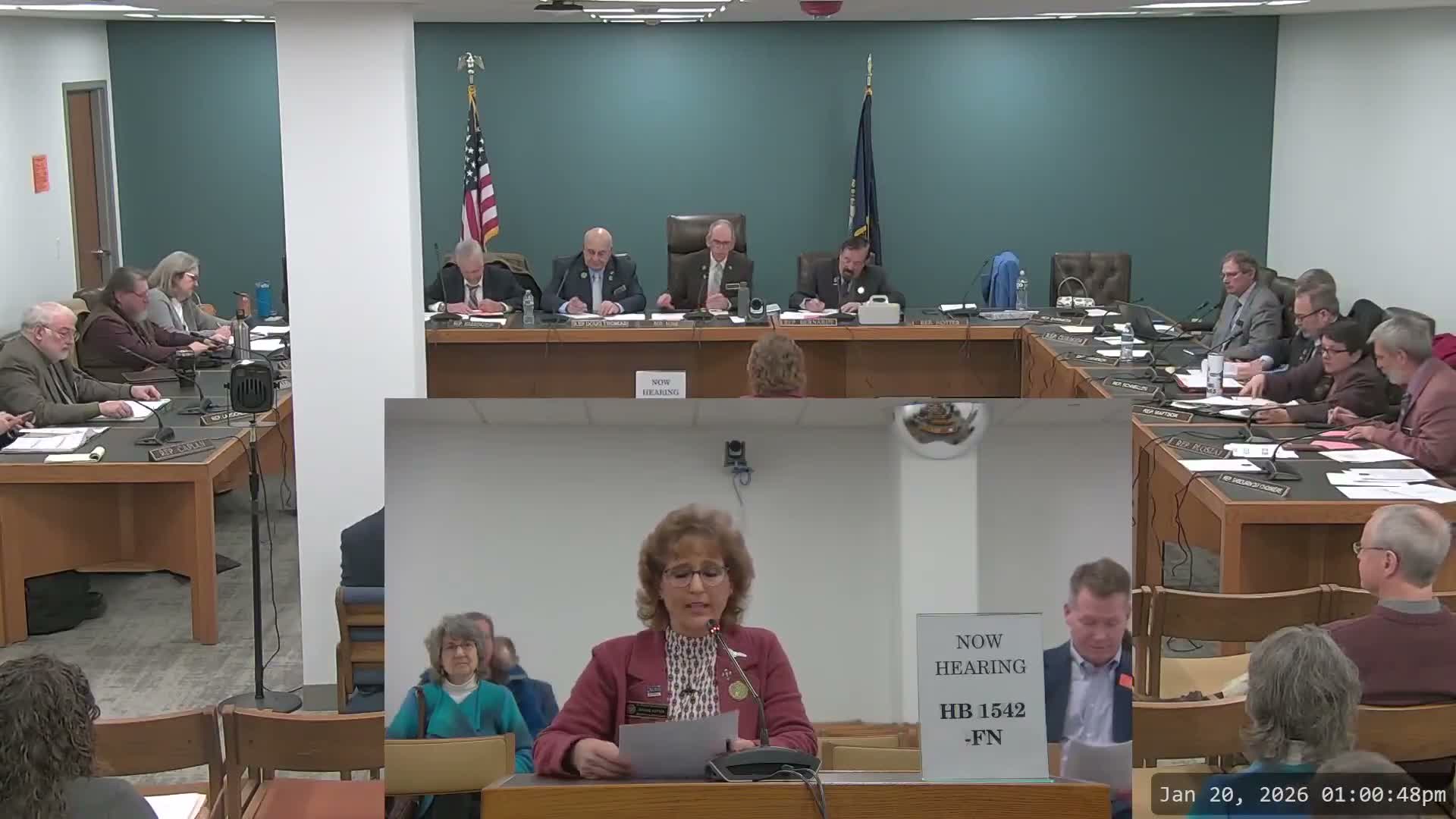
Summary
House Bill 15‑42 FN would set alternative compliance payments to $0, effectively removing the penalty for RPS noncompliance and the primary funding for the Renewable Energy Fund. Proponents argued modest immediate rate relief; DOE, utilities, renewable generators, and timber/biomass interests warned the change would collapse REC markets, jeopardize REF grant programs and thousands of jobs.
Concord, N.H. — A bill to remove penalties for failing to meet New Hampshire’s Renewable Portfolio Standard (RPS) prompted a wide‑ranging debate at the House Science, Technology and Energy Committee, with the sponsor citing rate relief and opponents warning of sweeping economic and energy‑policy consequences.
Representative Janine Notter introduced HB 15‑42 FN, which would set Alternative Compliance Payments (ACPs) — the penalty utilities pay when they fail to buy required renewable energy certificates (RECs) — to $0 beginning January 1, 2027. The sponsor said the change would lower costs for competitive electricity customers and return approximately $6.7 million per year to ratepayers.
The Department of Energy testified that setting ACPs to zero would remove the market driver that creates REC demand and could effectively repeal the practical enforcement mechanism of the RPS. DOE flagged potential consequences for REC trading, Renewable Energy Fund revenues, the department’s staffing (nine positions funded by the REF), and the department’s grant and rebate programs administered by the REF.
Speakers opposing the bill included the New Hampshire Timberland Owners Association, biomass and hydropower representatives, Clean Energy New Hampshire, the Conservation Law Foundation and community power advocates. They said ACP revenue and the REF have funded grants, rebates and programs that leverage significant private investment (DOE/agency reports cited leverage ratios of 6–9x), supported small hydro and biomass plants, and underpinned thousands of jobs in the state’s renewable energy supply chain. Timber and biomass witnesses said local markets for low‑grade wood and biomass power plants depend on New Hampshire REC demand and would be particularly vulnerable.
Supporters, including Americans for Prosperity and some business groups, emphasized rate relief for consumers and argued the REF has sometimes been diverted to the general fund rather than spent on programs. They said the ACP pool functions in practice as a tax and that setting ACPs to zero would remove that charge.
Committee members asked DOE and witnesses about the scale of fiscal impacts, the REF’s current program spending, and alternative ways to preserve low‑income and community programs should ACP revenues decline. DOE suggested legislative clarity would be needed for how to wind down programs and staff funded from the REF if ACP revenue fell.
No committee vote was recorded on HB 15‑42 FN at the hearing; committee members requested additional information and heard more than a dozen witnesses on the measure, which the department said would amount to an effective repeal of the RPS if enacted.