Lifetime Citizen Portal Access — AI Briefings, Alerts & Unlimited Follows
City briefed on housing needs assessment: 27,000‑unit shortfall today, up to 60,000 by projected growth
Loading...
Summary
City staff and consultants presented a regional housing needs assessment that finds a current shortfall of ~27,000 units in Colorado Springs and a potential future deficit near 60,000 units; it points to acute shortages for households below 80% AMI, high rental cost burdens and a Q1 2026 housing action plan to prioritize tools and public engagement.
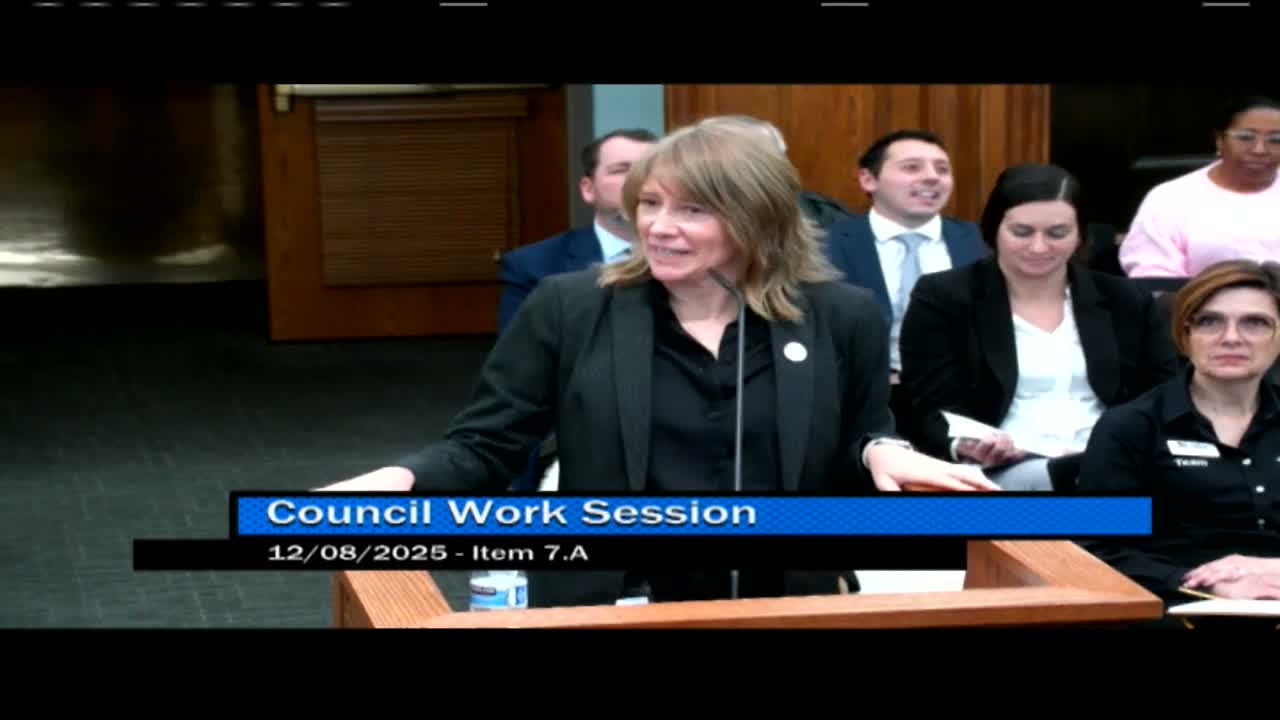
City housing staff and consultants presented a regional housing needs assessment and a timetable to develop a city‑specific housing action plan in early 2026.
Key findings: Amy Cox (city chief housing and homelessness response officer) and consultants said Colorado Springs faces a structural housing deficit: the assessment estimates roughly 27,000 units of current unmet demand as of 2023 and projects a cumulative deficit near 60,000 units under expected growth scenarios. The largest needs are concentrated among households earning at or below 80% of area median income; analysts highlighted a key inflection point at approximately $75,000 household income where affordability markedly improves.
Homelessness and supportive housing: Presenters said PIT (point‑in‑time) counts undercount true homelessness; alternative indicators (SNAP, McKinney‑Vento school data) suggested larger populations. The assessment estimated about 1,551 households (≈4,000 individuals) at high risk of homelessness and calculated an estimated supportive‑housing need of roughly 2,000 units.
Why it matters: The presenters tied long‑term underbuilding, high construction and insurance costs, and changing demographics (aging population and more single‑person households) to persistent affordability gaps. James McMurray (Matrix Design Group) described housing‑production shortfalls and affordability math showing the average owner unit and rent thresholds place many local workers and renters out of reach of the market.
Action plan: Katie Sunderland (housing solutions manager) said the city will craft a 2026 housing action plan — a state‑supported, city‑specific implementation roadmap — that will include public engagement, dashboards, prioritized tools from a policy toolbox, and measurable goals. The city posted the full assessment and dashboards at coloradosprings.gov/housingneedsassessment and will start the action‑plan process in Q1 2026.
Council reaction: Members pressed for clearer program prioritization and public education and emphasized the need to translate the assessment into implementable, politically durable strategies. Several members said education and GIS mapping of proposed growth scenarios should be central to the action plan to address public concerns about neighborhood impacts.
Next steps: City staff will begin the action‑plan engagement and will return to council with prioritized strategies, metrics and implementation steps in 2026. The assessment itself does not require council approval; it was provided as an informational briefing.