Get Full Government Meeting Transcripts, Videos, & Alerts Forever!
Get email alerts on the Public Safety topic
No spam. Unsubscribe anytime.
Firefighters urge Colorado Springs council to address pay gaps and aging equipment
Summary
During public comment, Colorado Springs firefighters and union leaders warned that pay will be 10–18% below market in 2026, that some apparatus exceed 25 years old, and that filling salary gaps and replacing equipment would require multimillion-dollar funding decisions the council must confront.
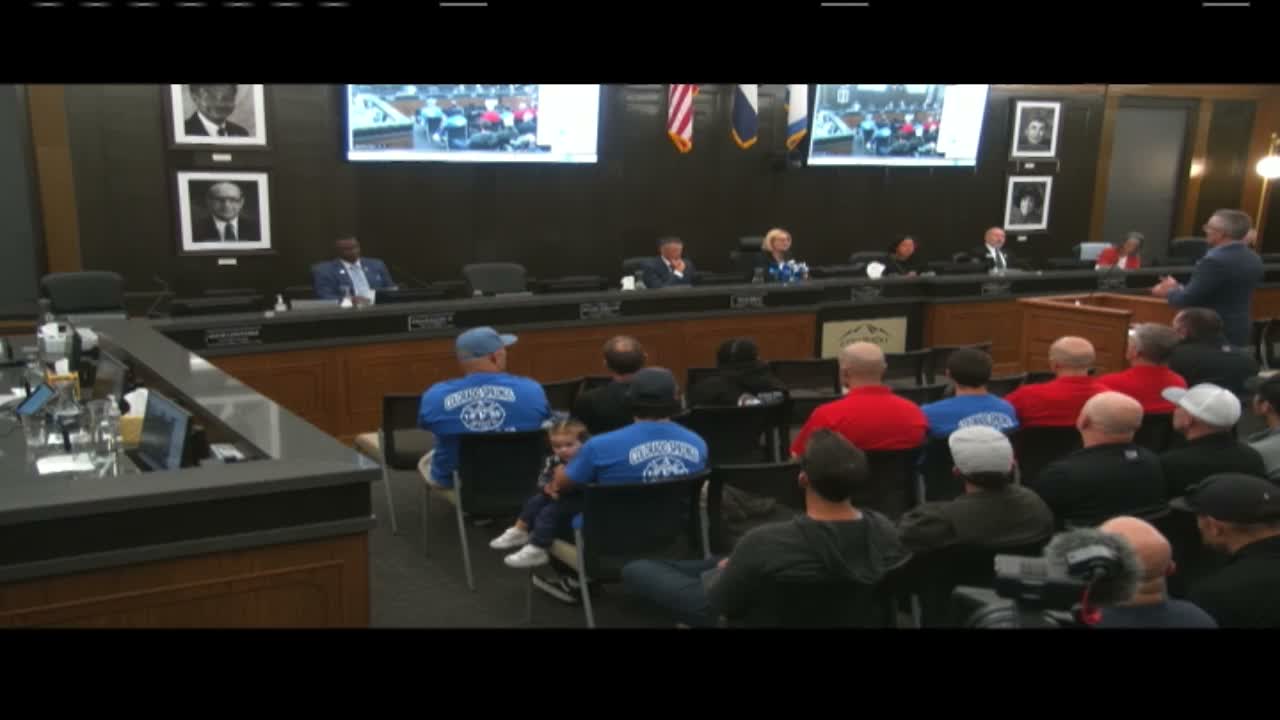
Derek Wheeler, a battalion chief with the Colorado Springs Fire Department, told the City Council during a special budget meeting that firefighters of all ranks will be 10 to 18 percent below market pay in 2026, with role‑specific gaps such as battalion chiefs making an estimated $25,000 less than peers. "Make it so that every time you say you support public safety, you can do so knowing your firefighters are paid fairly," Wheeler said.
The concern is immediate and financial: Wheeler said bringing pay to market would require roughly $10,000,000, increasing the department's 2026 budget from about $109,000,000 to $119,000,000. Kurt Crum, president of Colorado Springs Professional Firefighters Local 5, outlined related equipment needs, saying some apparatus are 25 to 28 years old and that the department is operating on a 17‑year replacement schedule versus a national 12–15 year norm. He said self‑contained breathing apparatuses (SCBAs) are nearing end of life and that replacement could cost around $5,000,000.
The union president urged the council to consider stable revenue sources to retain staff and replace equipment. "Even $100 per property per year makes a meaningful difference," Crum said, arguing property tax revenue would be more predictable than sales taxes tied to economic cycles.
Council discussion during the meeting underscored the scale of long‑term needs. A council member noted the fire chief presented figures that included roughly $80,000,000 in long‑term forestation needs and about $70,000,000 in apparatus and one‑time costs, while the city is already cutting staff and using furloughs. The council member said the city has not had a public safety sales tax increase since 2001 and suggested that referring a revenue measure to the ballot or exploring modest property tax changes are among the options.
Supporters said the combination of pay gaps, aging equipment and staff reductions creates retention and safety risks. Wheeler and other speakers framed the issue as a public‑safety concern that will influence response reliability and the department's ability to recruit and keep trained personnel.
No formal vote or motion on funding changes took place at the meeting; council members said further budget deliberations and potential ballot referrals are next steps.