Get Full Government Meeting Transcripts, Videos, & Alerts Forever!
Get email alerts on the City Budget topic
No spam. Unsubscribe anytime.
Council debates budgeting approach as Colorado Springs refines 2026 proposal
Summary
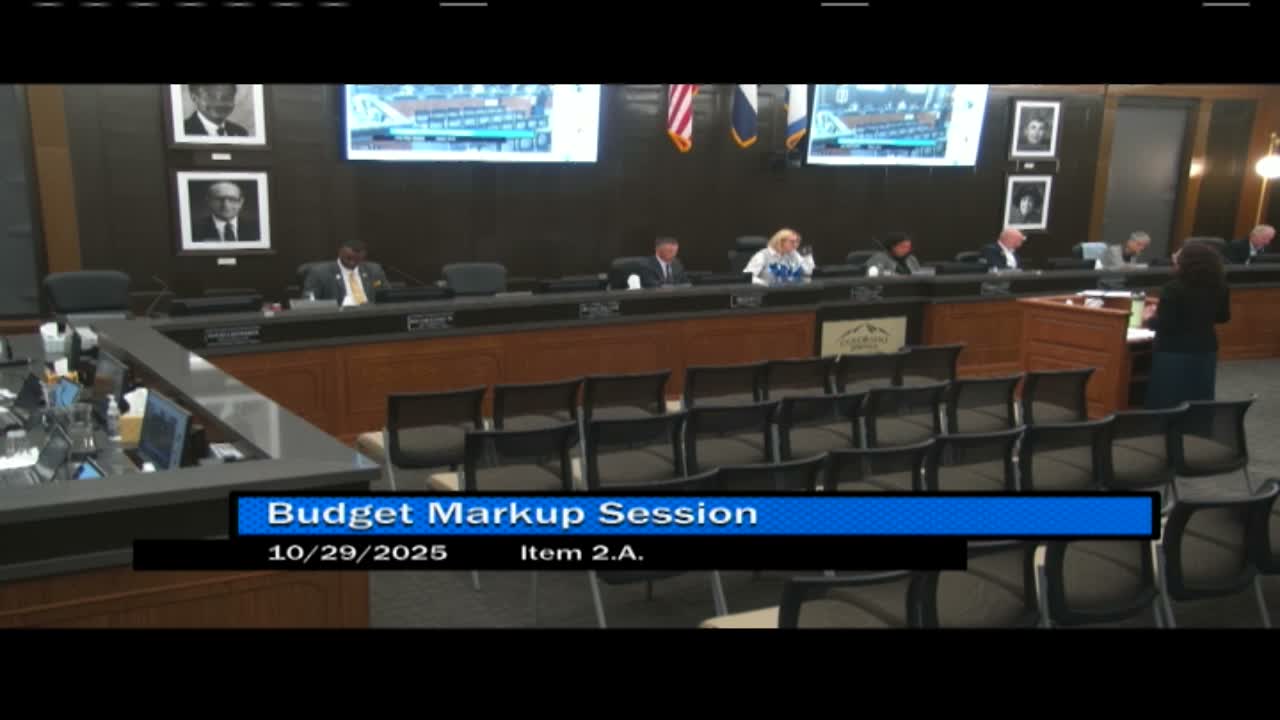
At a Oct. 29 budget work session, councilmembers split over whether to assume 1.4% sales-tax growth or budget flat for 2026; administration outlined specific fund corrections and council signaled preliminary support to shift to a flat sales-tax forecast and to add a municipal court clerk, with final ordinance work slated for Nov. 10.
Colorado Springs — Colorado Springs City Council spent most of a special budget work session weighing how cautious to be in the 2026 revenue forecast and where to make targeted changes to the draft budget.
Sherry McDaniel, the city’s chief financial officer, told the council the session was an opportunity to make final modifications to the October 6 budget document before staff prepares the ordinance for a Nov. 10 vote. She said the mill levies for special improvement maintenance districts and the civilian and sworn salary schedule will be carried forward into the ordinance.
The largest policy debate centered on whether to keep the proposed 1.4% sales-tax growth assumption or to adopt a zero-growth (flat) forecast. Councilman Risley urged caution and said a conservative approach would help avoid repeating this year’s midyear shortfalls. “I would rather take the other approach and say, let’s plan on a flat budget,” he said, referencing a staff-commissioned 30-year correlation analysis between employment and sales-tax collections that suggested downside risk for receipts if employment growth remains weak.
McDaniel and other staff cautioned that moving to a flat revenue assumption requires identifying about $3.5 million in expenditure reductions or using management levers such as hiring freezes. McDaniel outlined how departments and funds would be adjusted if council adopts lower revenue targets and said the administration uses hiring freezes as an effective midyear control.
Council members split: several supported the conservative, flat approach to budgeting to avoid dipping into reserves or making surprise midyear cuts, while others said adopting a lower revenue assumption now could force premature layoffs or the cancellation of planned training and services. Council members used an informal thumbs-up/thumbs-down signal; a majority indicated preliminary support for the flat forecast, with final ordinance language to be resolved at the Nov. 10 meeting.
On staffing, the council approved adding one municipal court clerk to help Judge Kane manage caseload pressure after recent probation staffing reductions. Judge Kane told the council he planned to fill currently vacant court-side positions first and reassess the need for another permanent clerk after those temps are on board. The council directed staff to identify a $71,000 offset (members suggested the public-works appropriating bucket as one likely source) and moved the clerk item into the “approved” column for inclusion in the final ordinance.
Other administrative corrections discussed included a $8,000 true-up to the Cemetery Enterprise Fund to reflect the correct endowment transfer and a net-zero consolidation of fleet and facilities costs from police and fire to a central support-services budget.
What happens next: staff will incorporate the council’s agreed modifications into the appropriation ordinance and return the completed ordinance and supporting redlines for council action at the Nov. 10 regular meeting.