Austin ISD board accepts discipline-monitoring update as trustees press for deeper 'shadow discipline' data
Loading...
Summary
Trustees accepted a monitoring report showing the percentage of exclusionary discipline actions attributed to economically disadvantaged students is 73% (Nov. 3 snapshot) and on track to meet year targets; trustees and community members pressed the district to surface so-called 'shadow discipline' and provide more granular, campus- and classroom-level analysis.
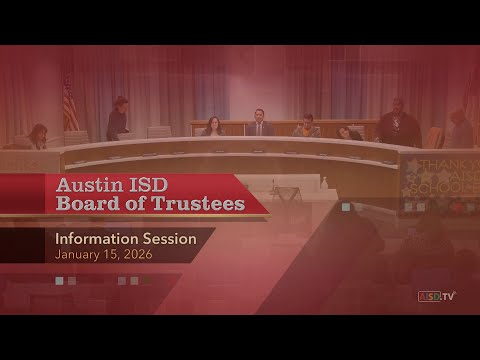
The Austin Independent School District Board of Trustees on Thursday accepted a monitoring report tracking exclusionary discipline that the administration says is on track with this year’s target but still shows disproportionate impact on economically disadvantaged students.
The update, presented by Director Brandy Gratton and Assistant Superintendent Mary Anne Maxwell, said discretionary exclusionary discipline (in-school or out-of-school suspensions and other removals for offenses such as skipping class, insubordination and fighting) accounted for 73% of such actions assigned to students identified as economically disadvantaged in the district’s first-day-through-Nov. 3 progress snapshot.
“That is what caught my attention,” Gratton said during the presentation, noting post‑pandemic discipline rates had hovered near 80% before recent reductions. The board’s constraint progress measure sets a long-range target to lower that rate to 67% by August 2029.
Why it matters: Trustees and speakers said the headline percentage understates the information they need. Several public commenters and trustees raised concerns about “shadow discipline” — students who are removed from class, held in offices or sent home without a corresponding discipline record — which they said may hide the full extent of lost instructional time and disproportionate treatment.
Parent Lisa Glodice urged the board to require documentation of all informal removals and to define ‘‘shadow discipline’’ in policy so that the board and public have a complete picture. ‘‘When these practices go unreported, the discipline presentation you see dramatically understates the real loss of instructional time for our most vulnerable students,’’ she said in a recorded comment.
Trustees pressed administration for concrete fixes and more granular reporting. Trustee Hunter requested a timeline for making full BOY/MOY data public and asked for a memo from general counsel about any grant fine print related to security equipment. Trustee Kaufman and others asked that the board receive campus‑ and classroom‑level breakdowns that identify repeat individual students and staff patterns, not only aggregate percentages.
Administration response: Gratton and Executive Director LaShonda Lewis described multiple safeguards and next steps the district has implemented, including returning to in‑person training on discipline law, cross‑matching attendance and discipline records, monthly and weekly progress monitoring reports for executive directors, nine‑week campus discipline action plans and a district “watch list” to flag students with repeated removals so central teams can coordinate supports.
“We want to keep students in school and in class, period. Point blank,” Gratton said, framing the discipline work as prevention plus improvement in reporting fidelity.
Board action: After an extended discussion about definitions, reporting, teacher supports and potential unintended consequences, Vice President Willie Chiu moved — and Secretary Gonzales seconded — a motion to accept the CPM 1.2 monitoring report. President Boswell announced the motion passed by all trustees on the dais.
What’s next: Trustees asked administration to return with additional reporting refinements, including clearer subgroup denominators, campus‑level comparisons and, where feasible, randomized parent follow ups to validate whether informal removals are being documented. The board also agreed to discuss whether to refine the CPM metric next year to incorporate quality and context measures in addition to the discipline‑rate percentage.
The board’s acceptance formalizes the conversation but leaves open the requested follow‑up work and reporting changes that trustees pressed for during Thursday’s meeting.