
OFM outlines Gov. Ferguson’s 2026 supplemental budget, cites caseload growth and a revenue shortfall
Get AI-powered insights, summaries, and transcripts
Sign Up Free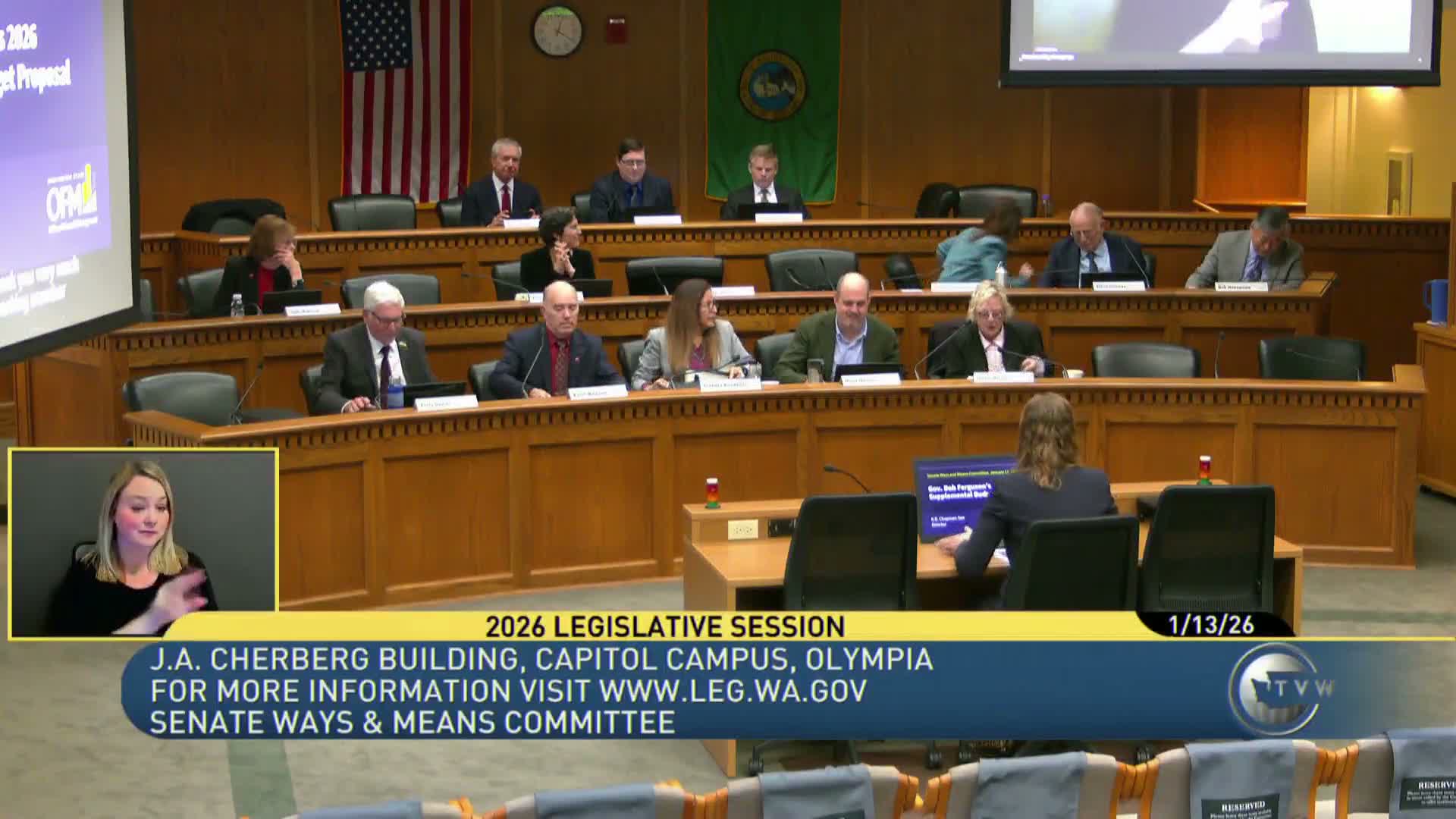
Summary
Office of Financial Management Director Katie Chobinski told the Senate Ways and Means Committee the governor’s 2026 supplemental package responds to caseload growth, federal policy changes and a drop in revenue; the proposal uses roughly $1 billion from the budget stabilization account and targets reductions and selective restorations across human services, education and natural resources.
Katie Chobinski, director of the Office of Financial Management, told the Senate Ways and Means Committee the governor’s 2026 supplemental proposal aims to preserve core services while closing an on‑paper shortfall driven by caseload growth, federal policy changes and weaker revenue forecasts. "We have seen increasing case loads and enrollments," Chobinski said, and identified long‑term care, childcare and special education as the largest drivers of maintenance‑level cost increases.
Chobinski said federal changes tied to the federal reconciliation bill known in this hearing as HR1 require the state to absorb additional costs for SNAP and Medicaid and related systems investments; she reported about $155,000,000 in general‑fund costs tied to those changes. She also said revenue forecasts have weakened since the enacted budget, which she summarized as "a decrease in revenue for about $390,000,000 for this 2‑year period."
The director presented top‑line tradeoffs the governor used to craft the package: aggressive scrubbing of agency requests and administrative budgets, targeted policy investments where the administration judged new spending critical, and use of the budget stabilization account. "The budget would use about $1,000,000,000 of the budget stabilization account," Chobinski said, including approximately $140,000,000 set aside for 2025 fire‑season costs and transfers into FY26 and FY27.
On areas of change, Chobinski identified: a soft cap proposal for Working Connections Childcare that would close new enrollments until caseloads naturally decline to about 33,000 households; holding some childcare subsidy rates at the 70th percentile rather than rising to the 80th; delaying rebases for assisted living and nursing home rates; and targeted restorations for several K‑12 grants and workforce and behavioral‑health investments in higher education. She also flagged three tax‑policy proposals: narrowing a data‑center sales tax exemption for equipment refreshes, removing a preferential B&O rate for certain prescription drug wholesalers, and a Department of Revenue fix tied to a recent court case.
Chobinski framed the package as a mix of spending reductions, revenue shifts and transfers that together address an on‑paper gap the administration estimated at roughly $2.3 billion over the 2025–27 biennium, while seeking to preserve services for the state’s most vulnerable residents. She answered committee questions about how "non‑mandatory but necessary" items were identified as a combination of maintenance‑level requirements and the administration’s subjective judgment about urgent policy needs. The hearing moved next to questions from senators and extensive public testimony on particular program impacts.
Next steps: the committee will question agency and advocacy witnesses and consider legislative amendments as it develops its own supplemental proposal.