
Washington County presents 18‑month behavioral health plan, flags state funding shortfall
Get AI-powered insights, summaries, and transcripts
Subscribe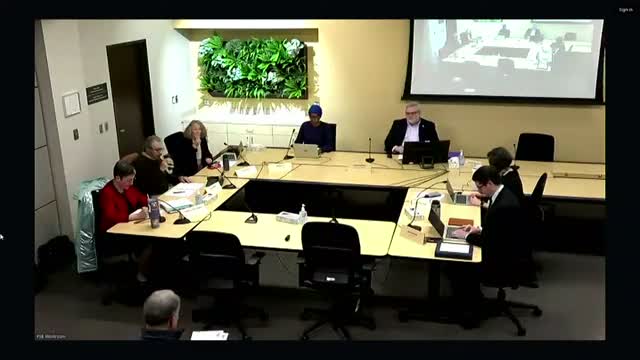
Summary
County staff told the Board of Commissioners that a new 18‑month county financial assistance agreement (CFAA) with the Oregon Health Authority sets requirements and reporting; a cost study shows OHA funds about 43% of program costs, CareOregon cut about $4 million, and the division plans $29 million in service contracts and quarterly OHA reporting.
Nicole Cone, division manager for Behavioral Health at Washington County, told the Board of County Commissioners that the county’s new county financial assistance agreement (CFAA) with the Oregon Health Authority lays out contract requirements and an 18‑month performance period beginning Jan. 1, 2026. The agreement is paired with a 75‑page comprehensive local plan that Cone said will guide county services, metrics and budgets during the performance period.
The CFAA, Cone said, is intended to give the county more flexibility than the previous structure of more than 60 discrete service elements. “Historically, we received our dollars in what are called service elements… it didn’t accurately reflect the work that we were doing,” Cone said, arguing the new structure lets the county align spending to community need and to measurable outcomes.
Cone cited a recent cost study indicating the Oregon Health Authority funds “about 43% of what it costs to do this work,” and said the shortfall requires county general fund support, coordinated care organizations (CCOs) and other strategic partnerships to fill the gap. She also told commissioners that CareOregon notified the division in the fall of 2025 that it would not renew roughly $4,000,000 in delegated care‑coordination funding; the loss required staffing changes and operational shifts to preserve required services under the plan.
The local plan identifies six primary sections, including continuum of care, core service areas, community needs assessment, forensic services, crisis services and prevention/promotion. Cone said one CFAA requirement is a mobile crisis team that is “available 24/7, and can respond… within 1 hour” to a crisis anywhere in the county. The plan also includes reporting and postvention duties when the county records suicides of people 26 and younger.
Cone said the county’s Behavioral Health Division has “just over 57 FTE” assigned to support the plan and expects to fund roughly $29,000,000 in service contracts over the 18‑month performance period to local providers who deliver direct treatment. She acknowledged workforce challenges: at the pandemic peak some teams had up to 16 master’s‑level clinician vacancies and those vacancies have declined but remain above pre‑pandemic levels.
Several commissioners asked about forecasting future capacity for residential beds and other services; Cone said statewide and regional reports exist and that coordinated care organizations such as HealthShare are conducting ecosystem analyses the county can draw on. She also said the division participates in regional workgroups on billing codes and sustainable funding models for services (including planning for a crisis stabilization center if capital and operating funds become available).
Cone described implementation steps: the supervisory team will inventory areas not yet compliant with the CFAA, set priorities for required services, and use the state reporting platform to submit metrics and quarterly updates to OHA. She said the 18‑month plan is a “living document” intended to help set priorities for the next biennium and to provide evidence for legislative advocacy.
Board members praised the division’s work and reiterated support for using the cost study in legislative outreach. One commissioner noted the board had previously approved receipt of the OHA agreement and funds before the local plan came to the board; no formal vote on the plan took place during the presentation.
The division will spend the first quarter implementing management and reporting processes, report metrics quarterly to OHA, and return to the board with updates and legislative tracking as staff work to align resources with required services.