Committee reviews bill to ban possession of realistic officer badges and insignia
Loading...
Summary
HB 2165 would make possessing realistic law-enforcement badges, insignia or items that identify a person as a peace officer a gross misdemeanor. The governor's office backed the measure as a gap-filler to existing impersonation laws; stakeholders urged clearer definitions and alignment with RCW criminal-impersonation statutes.
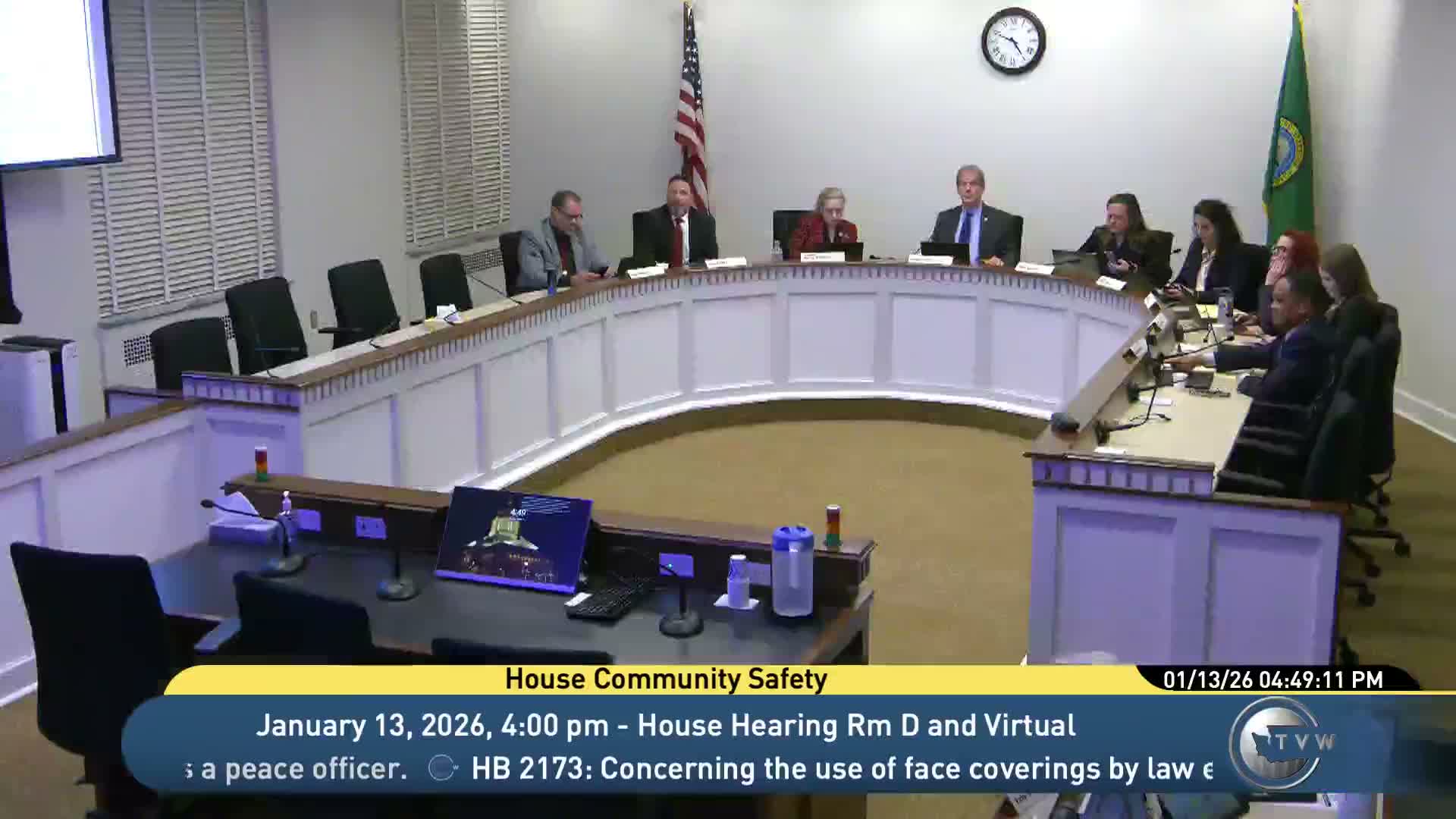
House Bill 2165, presented to the House Community Safety Committee on Jan. 13, 2026, would create a standalone crime of false identification as a peace officer, a gross misdemeanor punishable where a person knowingly possesses or provides realistic badges, documents or other items that identify a person as a commissioned peace officer when they are not.
Corey Patton, committee staff, explained the bill’s two primary modes of commission: possessing or providing an item bearing a law-enforcement insignia that identifies a person who is not commissioned, or intentionally misrepresenting an object as property belonging to a law-enforcement agency. The measure includes defenses for honorary/reserve identifications and protections for constitutionally protected depictions such as satire.
A sponsor presenting the bill described national and local examples in which impersonation preceded assault or exploitation, and Nathan Olsen, public-safety adviser to the governor, said the governor supports the proposal as a clarification and gap-filler to current impersonation statutes. Olsen said current law requires an active impersonation before criminal liability in some cases and that HB 2165 would allow penalties for possession of realistic items that pose public-safety risks.
Stakeholders raised drafting questions and potential overlap with existing criminal-impersonation statutes. Committee members cited RCW 9A.60.040 and RCW 9A.60.045 during questioning and asked staff and sponsors to work with prosecutors and civil-rights groups to combine or harmonize language to avoid duplicative or ambiguous coverage. The chair asked the sponsor to convene stakeholders and report changes before executive action.
No vote was taken; staff and sponsors will pursue follow-up meetings to refine definitions and ensure the statute aligns with existing law.