Get AI Briefings, Transcripts & Alerts on Local & National Government Meetings — Forever.
Bill to allow RNs without EMT certification on specialty ambulance transports draws support from rural providers and calls for training safeguards
Summary
House Bill 2,110 would allow a registered nurse (without EMT certification) to fulfill one required ambulance personnel slot for interfacility specialty care transports when no paramedic or EMT-certified nurse is available; rural hospitals and ambulance providers supported the change while nursing groups urged Department of Health–approved training and clear medical oversight.
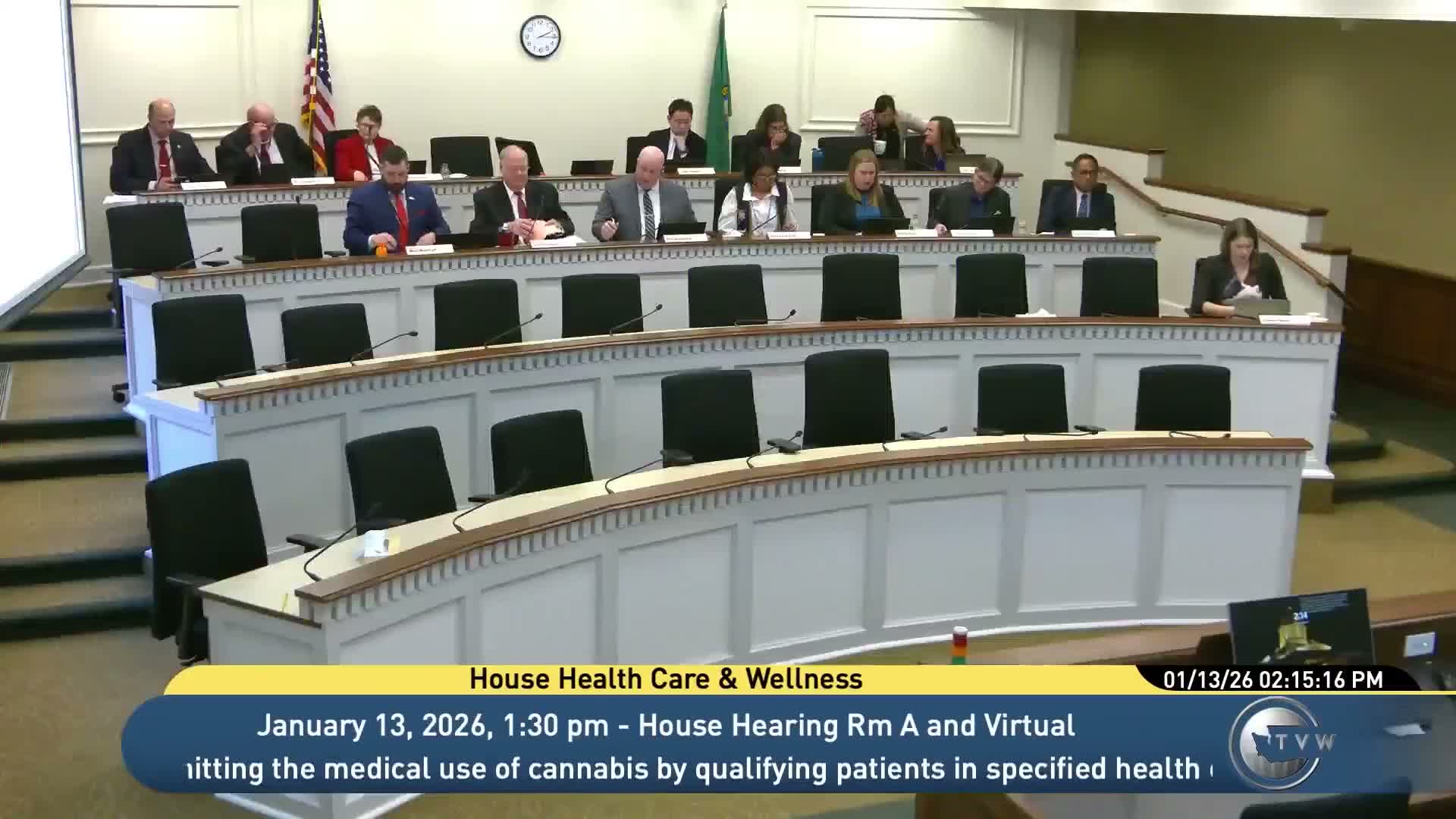
Staff described House Bill 2,110 as a targeted change to allow a registered nurse who does not hold EMT certification to meet staffing requirements for interfacility specialty care transports when no paramedic or EMT-certified nurse is available, provided a certified EMS provider remains in the ambulance and the nurse has appropriate competencies.
Representative Joe Schmick said the bill responds to challenges in critical access hospitals that cannot recruit RNs with EMT certification and asked for stakeholder testimony and amendments. Rural hospital leaders and ambulance providers testified that the EMT/paramedic staffing requirement delays transfers, increases reliance on costly airlifts, and, in some cases, compromises timely care; Zane Gibbons and Shane McGuire described operational crises and long waits for required crews.
The Washington State Hospital Association supported the bill but proposed amendments clarifying that RNs operate within their scope of practice and that medical oversight by sending or receiving physicians be explicit. Olympic Ambulance Service and other EMS stakeholders urged the committee to consider using the bill as a broader, well‑qualified solution rather than only a contingency fallback.
The Washington State Nurses Association and transport nurses raised safety concerns, requesting Department of Health–approved standardized hands‑on ambulance training for nurses who would accompany transports and clearer accountability for hospital staffing plans so pulling nurses from inpatient floors would not create other risks.
The hearing closed with no vote recorded and sponsors and stakeholders indicating further amendment negotiations.