Get Full Government Meeting Transcripts, Videos, & Alerts Forever!
Providers back measure to limit duplicate reviews; lawmakers raise safety questions
Summary
House Bill 2230 would limit DSHS to one annual routine review per community residential service provider in specified subject areas and require divisions to combine overlapping reviews; providers described duplicate, time-consuming audits and welcomed streamlining but members pressed on safety and random inspections.
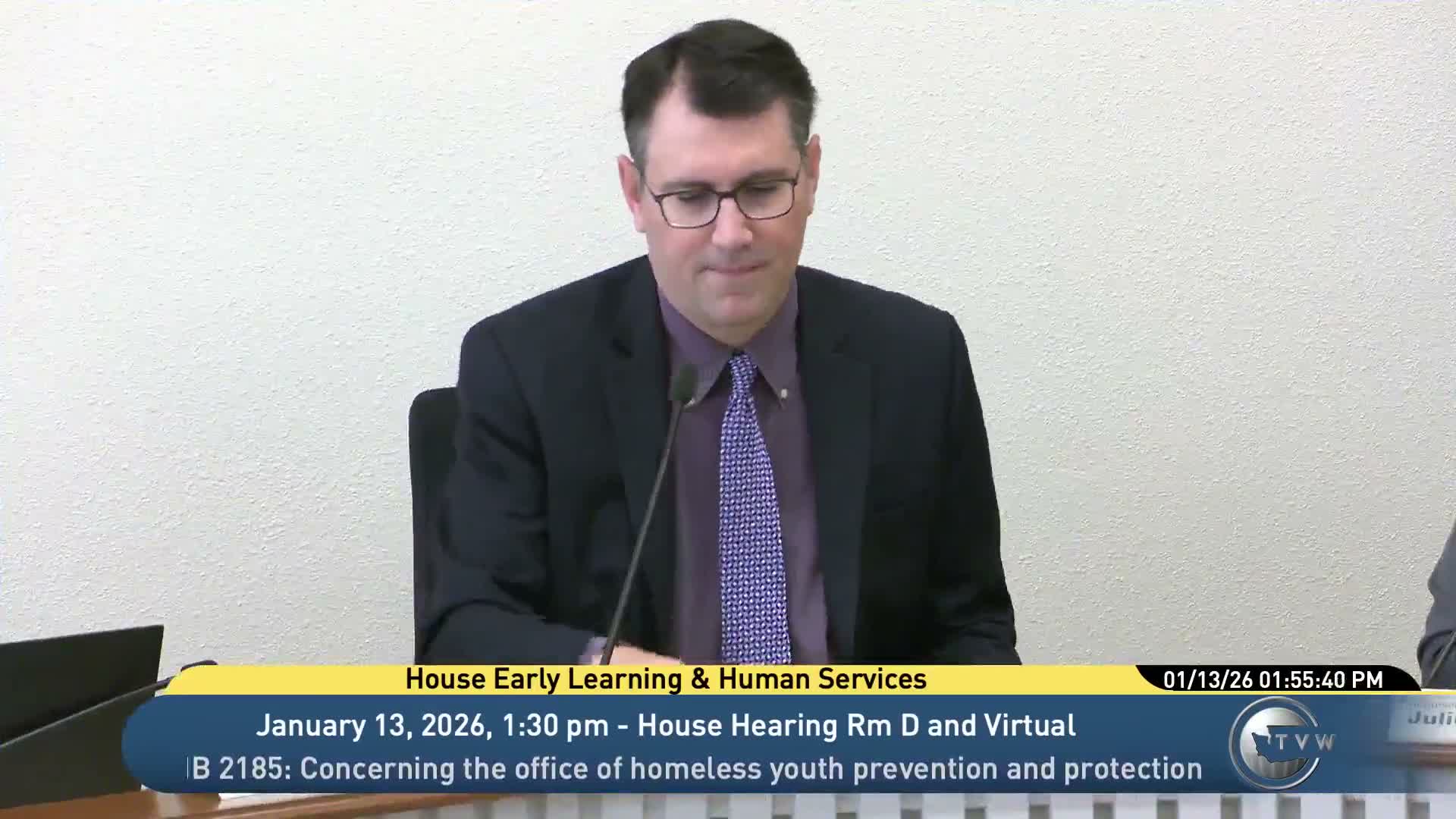
House Bill 2230, heard in committee Tuesday, would require the Department of Social and Health Services to limit routine reviews of community residential service business providers to one annual review in specified subject areas (client finances, service plans, federal compliance, community integration, provider finances and general quality assurance) and to combine review activities where possible.
Omera Harrington, committee counsel, said the limitation would not…
Already have an account? Log in
Subscribe to keep reading
Unlock the rest of this article — and every article on Citizen Portal.
- Unlimited articles
- AI-powered breakdowns of topics, speakers, decisions, and budgets
- Instant alerts when your location has a new meeting
- Follow topics and more locations
- 1,000 AI Insights / month, plus AI Chat