Get Full Government Meeting Transcripts, Videos, & Alerts Forever!
Get email alerts on the Consumer Protection topic
No spam. Unsubscribe anytime.
Consumer groups urge Washington to step in after CFPB retreat on BNPL protections
Summary
Poverty Action Network and the Center for Responsible Lending told the committee BNPL disproportionately affects younger, nonwhite and lower‑income consumers, highlighted data limits from CFPB reporting and recommended state data gathering, licensing and disclosure rules.
Consumer advocates told the Washington committee that buy‑now‑pay‑later raises risks for lower‑income households and that states should act where federal oversight has retreated.
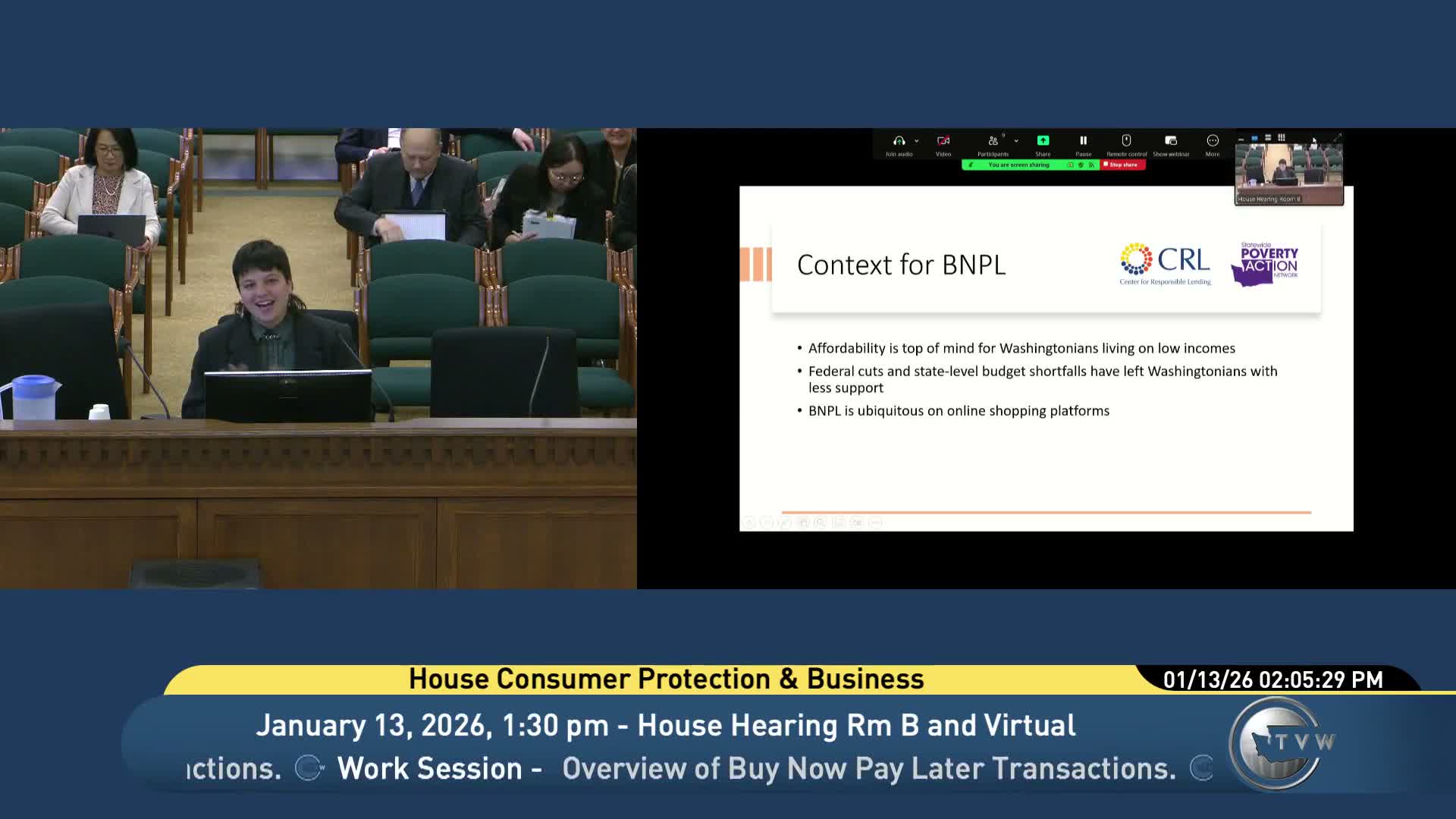
Molly Gallagher, policy lead at the Statewide Poverty Action Network, said BNPL options are now available for everyday purchases and essential services and can create overlapping repayment schedules, overdrafts and late‑fee cascades for households with tight budgets. "These products can seem like an easy way to afford essentials, but there are real risks to using these products," Gallagher said, urging research and guardrails.
Nadine Chabrier, senior policy counsel at the Center for Responsible Lending, reviewed federal findings and limitations. She noted CFPB research focused on the six largest BNPL firms and that BNPL often does not appear on credit reports, limiting visibility: "Buy now, pay later doesn't consistently show on credit reports, so there's no way to tell the amount that each individual borrower uses." Chabrier highlighted demographic patterns — younger, Black, Latino and lower‑income consumers are more likely to use BNPL — and described state policy options including data collection, licensing, supervision and applying existing consumer‑finance laws.
Both advocates emphasized disclosure, dispute protections and clarity about automatic debits. They urged the committee to pursue targeted state measures that protect consumers without eliminating useful financing tools. The session did not result in immediate policy changes, but members said they are preparing draft regulatory language.