
State Building Code Council says single‑exit stair and sixplex rules likely to move into final rulemaking
Get AI-powered insights, summaries, and transcripts
Subscribe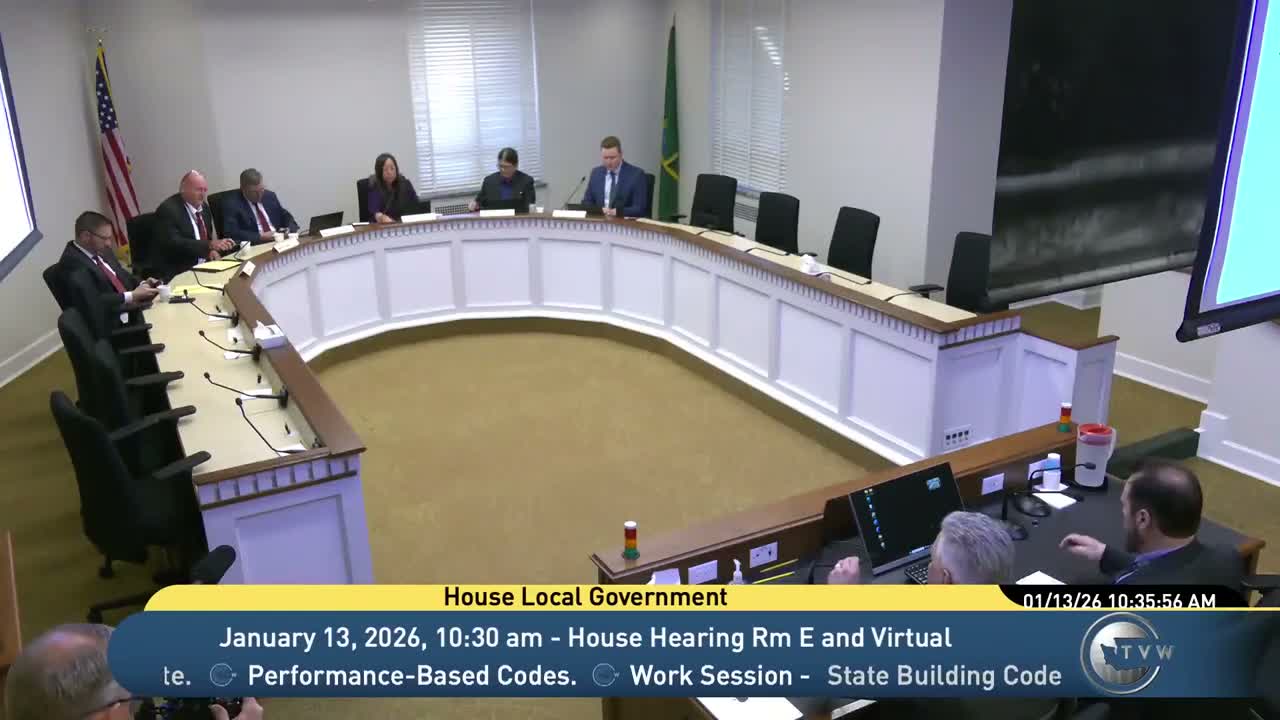
Summary
The State Building Code Council told the Local Government Committee the council will file prescriptive solutions for single‑exit stairs (up to six stories) and sixplexes into the CR‑102 public rulemaking package, with adoption anticipated in late spring; SBCC staff said TAGs, firefighters and other experts informed safety provisions such as emergency escape and rescue openings.
Todd Byreuther, chair of the State Building Code Council, told the Local Government Committee during a work session that the council has substantially completed technical advisory work and intends to submit amendments to the state rulemaking process this spring.
"We've substantially completed 2 or 3 years of work... those are all sitting ready now to file into CR 102," Byreuther said, noting the CR‑102 package leads to two public hearings and further amendment before adoption "sometime later in this spring in May or June." He said two legislatively requested items—the minimum dwelling unit size and emergency‑shelter provisions—are being prepared along with more complex items the legislature asked the council to study.
Byreuther said the council combined the single‑exit stair and sixplex tasks into one technical advisory group (TAG) and "were really able to attract what I call the brain trust of the state of Washington"—volunteer subject‑matter experts who met repeatedly to draft prescriptive solutions for typologies that fall between the residential and building codes.
The proposals presented to the committee include a prescriptive path for sixplexes within the residential code (a typology typically limited to one or two units) and a single‑exit stair approach that could allow buildings up to six stories and, in certain configurations, up to 24 units while retaining constraints on exit distances and other egress limits. Byreuther said the TAG work explicitly considers fire ratings, egress, structural requirements and fire‑suppression options.
Dustin, the SBCC managing director, told lawmakers firefighter representatives suggested occupant‑use rescue devices (for example, roll‑out window ladders) during deliberations but that the council opted to require emergency escape and rescue openings on all levels of the building types under discussion to provide an additional egress option. "We have required the emergency escape and rescue openings on all levels of these buildings," Dustin said, while noting occupant devices would remain optional and not required by code.
Committee members asked about TAG selection. Dustin described an advertised application process, letters of recommendation from representative organizations, and public council approval of nominees at a full council or executive‑committee meeting.
Byreuther said that after CR‑102 filing the SBCC will hold two hearings, allow amendment submittals, and then proceed toward adoption and an implementation date determined in the final rulemaking process. The council did not present a final adoption date beyond the late‑spring window discussed during the meeting.
The committee thanked SBCC staff for the update and said it would continue to follow documents and public hearings as the proposals move through the CR‑102 process.