Get Full Government Meeting Transcripts, Videos, & Alerts Forever!
Get email alerts on the Collective Bargaining topic
No spam. Unsubscribe anytime.
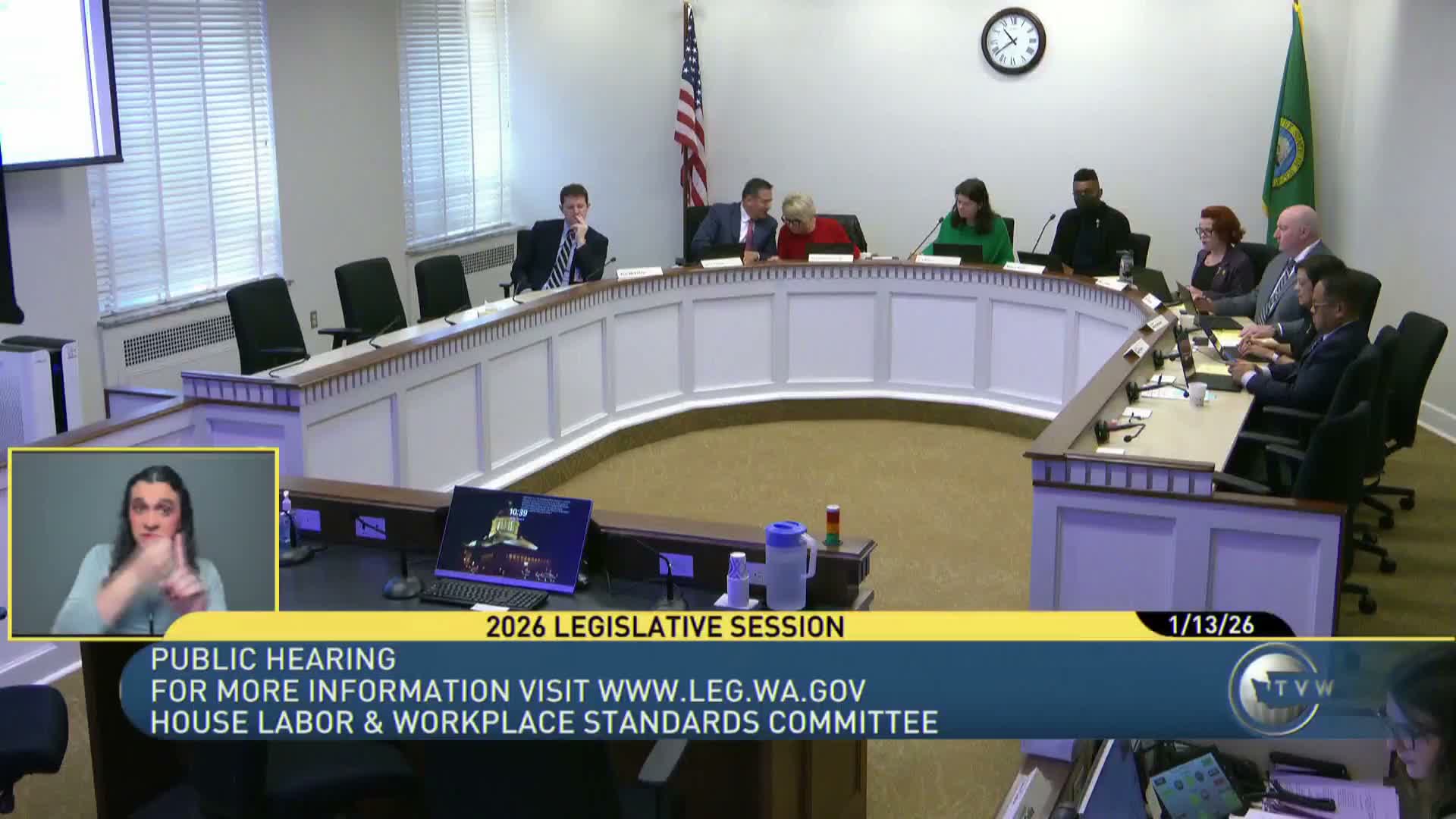
Bill to extend binding arbitration to corrections officers regardless of county size draws labor support, county cost concerns
Summary
HB 2137 would remove a 70,000 population threshold so corrections officers in all city and county jails can access binding interest arbitration; Teamsters representatives urged passage on equity and safety grounds while the Washington State Association of Counties warned of fiscal impacts and requested amendments to protect county budgeting authority.
Committee staff explained that House Bill 2137 would remove a statutory population threshold that currently limits which correctional employees qualify as "uniformed personnel" eligible for binding interest arbitration under the Public Employees Collective Bargaining Act.
Representative Mary (full name recorded in transcript as Representative Bernofsky) said the bill’s intent was to give more public employees access to binding arbitration to resolve contract disputes. Multiple Teamsters representatives called in to testify in support. Darren Smith, business representative and president of Teamsters Local 231, said corrections officers in smaller jurisdictions lack parity with police officers because eligibility is tied to jurisdiction size and urged the committee to pass HB 21 37. Carl Keller (Teamsters Local 760) and Dave Simmons (Teamsters Local 760) said the change would address wage and benefit inequities—Keller testified municipal facilities can pay about 20–25% less without arbitration rights.
Paul Jewell, representing the Washington State Association of Counties, testified in opposition and warned the bill would increase costs for many counties. Jewell requested two amendments already used in state statutes for other groups: require arbitrators to consider a county’s financial ability to pay proposed compensation and ensure an arbitrator’s decision is not binding on a county’s legislative appropriation.
Supporters framed the change as an equity and public‑safety measure for frontline workers who cannot strike; opponents framed it as a fiscal concern for local governments. The committee closed the public hearing on HB 2137 without recording a vote.