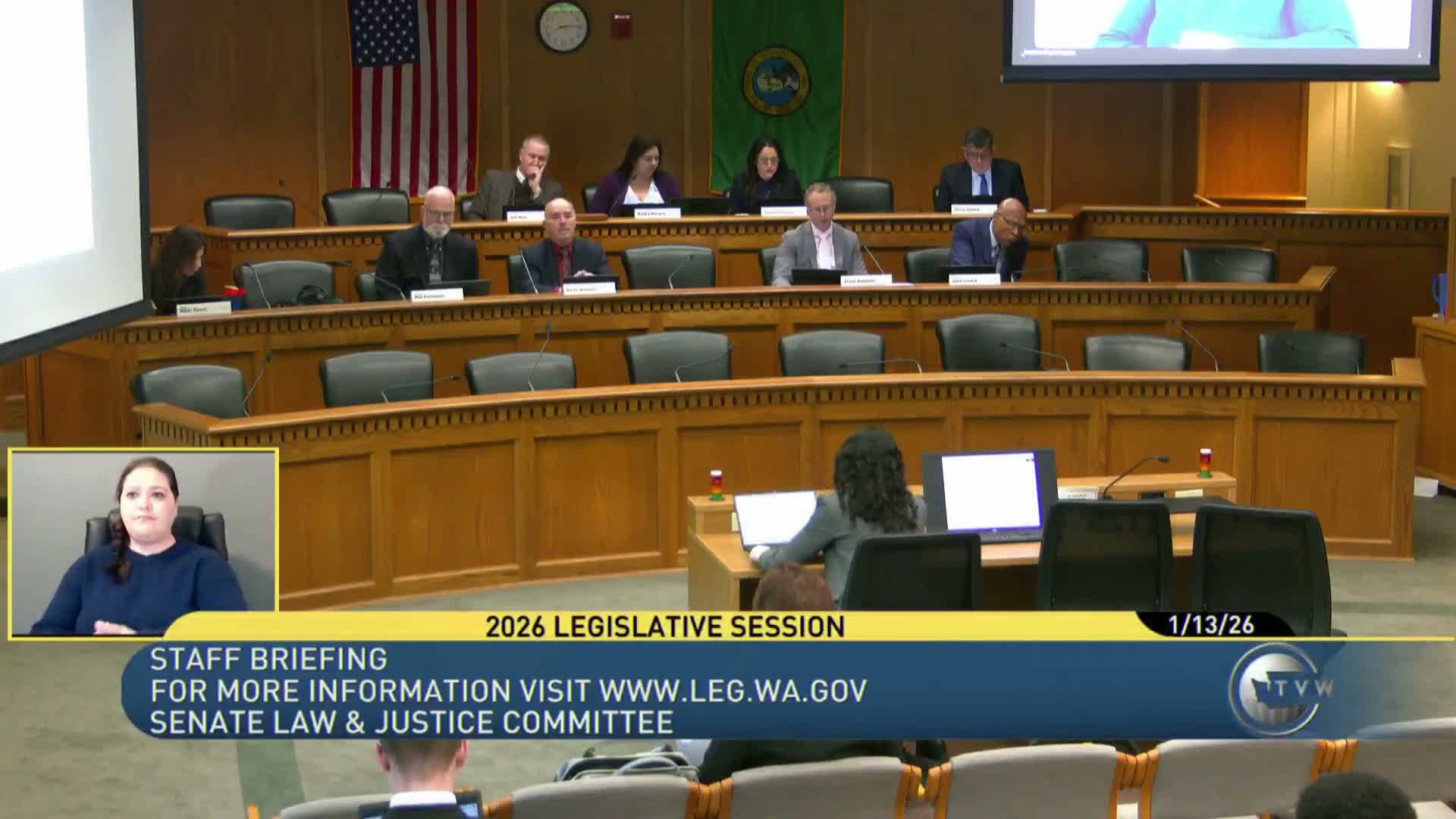
Panel backs SB 5,880 to allow accredited private labs as one route to clear toxicology backlog
Loading...
Summary
City attorneys, traffic-safety experts and prosecutors told the Law and Justice Committee about a severe toxicology backlog — 19,000 referrals and turnaround of up to 22 months for drug reports — and debated SB 5,880’s option to admit results from ISO/IEC 17025‑accredited labs while raising concerns about local fiscal burdens and confrontation-clause evidence rules.
Senators heard sharply different but intersecting views on Senate Bill 5,880 during the Jan. 13 Law and Justice Committee hearing. The bill would allow blood and breath test results to be admissible if analyzed by laboratories certified or accredited to the ISO/IEC 17025 standard for forensic toxicology testing, in addition to results prepared under the state toxicologist’s permit.
Erica Evans, Seattle City Attorney, urged passage and described the practical consequences of laboratory delay: "Right now, if someone has a drug and alcohol DUI, it takes 22 months for the toxicology lab to get that report back to us," Evans said, adding that long delays can prevent filing charges and leave individuals free to reoffend while cases are pending. Brad Lane, a state traffic-safety subject-matter expert, said Washington received about 19,000 toxicology referrals in the past year and reported average turnaround elsewhere of about 45 days versus Washington’s 10 months for alcohol/THC and 22 months for drugs.
Proponents said SB 5,880 offers a non‑fiscal legislative option that could speed case processing and reduce time-to-trial. Senator Keith Wagner described the bill as a tool to reduce backlog so that "people get the speedy trial that they deserve." Representatives of prosecuting attorneys and sheriffs emphasized the problem statement and said outsourcing or accredited private labs could be an option, while also warning that many smaller counties and cities may not be able to afford private testing and that state funding will likely be required to prevent unequal access.
County officials and the Association of Counties raised fiscal concerns that private lab testing could shift substantial costs to local jurisdictions, noting counties currently do not usually pay for state-lab testing. Defense groups urged procedural protections: Bruce Osterholm (Washington Association of Criminal Defense Lawyers and Washington Defender Association) asked the committee to require cooperating labs and reasonable discovery as a contract condition to protect defendants’ due‑process rights when evidence is produced by out‑of‑state or private entities.
The committee heard that this problem results from staffing, instrumentation, and facility constraints at the state toxicology lab, and witnesses urged a combination of solutions including additional state funding, contracting options for the state lab to outsource backlog samples, and careful implementation language to protect discovery and confrontation rights.
The committee suspended the five‑day notice rule earlier in the hearing in order to take up SB 5,880 during the same session.