Committee reviews bill allowing limited transfers from school transportation vehicle funds
Loading...
Summary
Senate Bill 5922 would let school districts petition OSPI to transfer funds from transportation vehicle replacement accounts to other district funds if a district reduces its fleet; the bill includes oversight conditions and a small fiscal note estimate for administering petitions.
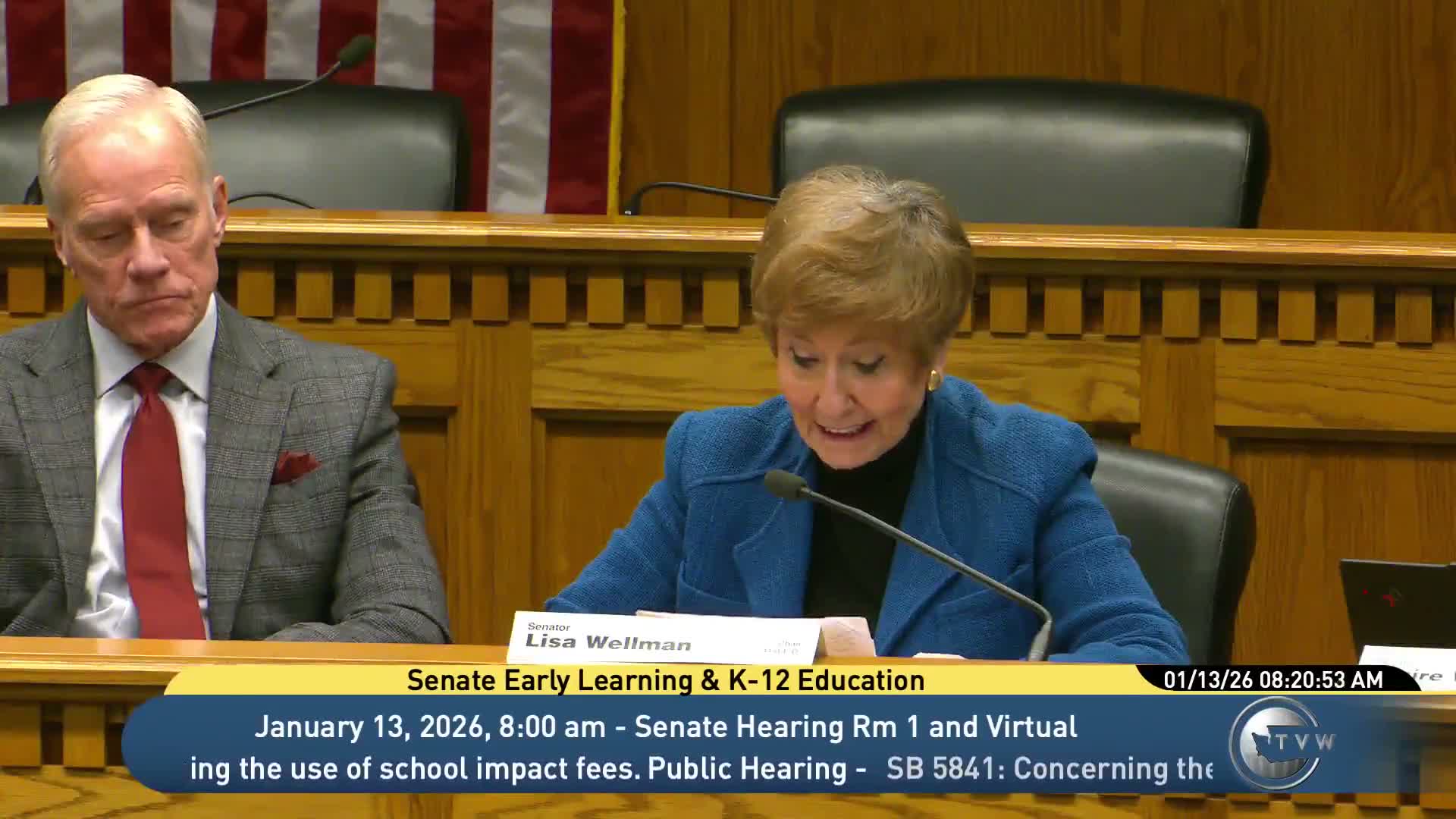
Senate Bill 5922 was presented to the Early Learning & K–12 Education Committee as a mechanism for school districts to petition the Office of Superintendent of Public Instruction (OSPI) to transfer money from their transportation vehicle funds to another fund when districts choose not to replace vehicles and reduce their fleet. Alex Fairfortune, committee staff, said the policy would allow transfers only for payments tied to fully depreciated vehicles plus earned interest and would require OSPI to determine whether a fleet reduction is appropriate given enrollment forecasts or other relevant factors. A fiscal note estimated roughly $6,000 to set up the petition process and about $2,000 to process each petition.
Committee members questioned operational details. Senators asked whether districts could replace a larger bus with a smaller vehicle class (for example, switching to vans) and whether the fund transfers could go into any district account. Alex Fairfortune said OSPI maintains a menu of vehicle categories and that staff would need to check specific statutory and administrative rules about substituting vehicle types; the bill does not specify a destination fund but requires oversight, particularly where districts are under binding conditions.
Supporters said the change could help districts in financial distress. Senator Christian Dawson and others said the tool could provide needed flexibility for districts with declining enrollment or those in binding conditions where operating accounts are strained. Testimony noted that vans are defined differently from buses and that driver training requirements differ, so operational choices would matter for safety and legal compliance.
The committee discussed potential oversight and the need for OSPI safeguards; no vote was taken and the presentation concluded with members requesting additional information from OSPI about vehicle classifications and practical implications.