Senate committee hears bill to set statewide standards for medically tailored meals
Loading...
Summary
The Senate Human Services Committee heard sponsorship and nonprofit testimony on SB 5,966, which would define medically tailored meals under Washington’s Medicaid waiver, prioritize Washington-based nonprofit providers, and set uniform quality and nutrition-care-plan requirements; a fiscal note is pending.
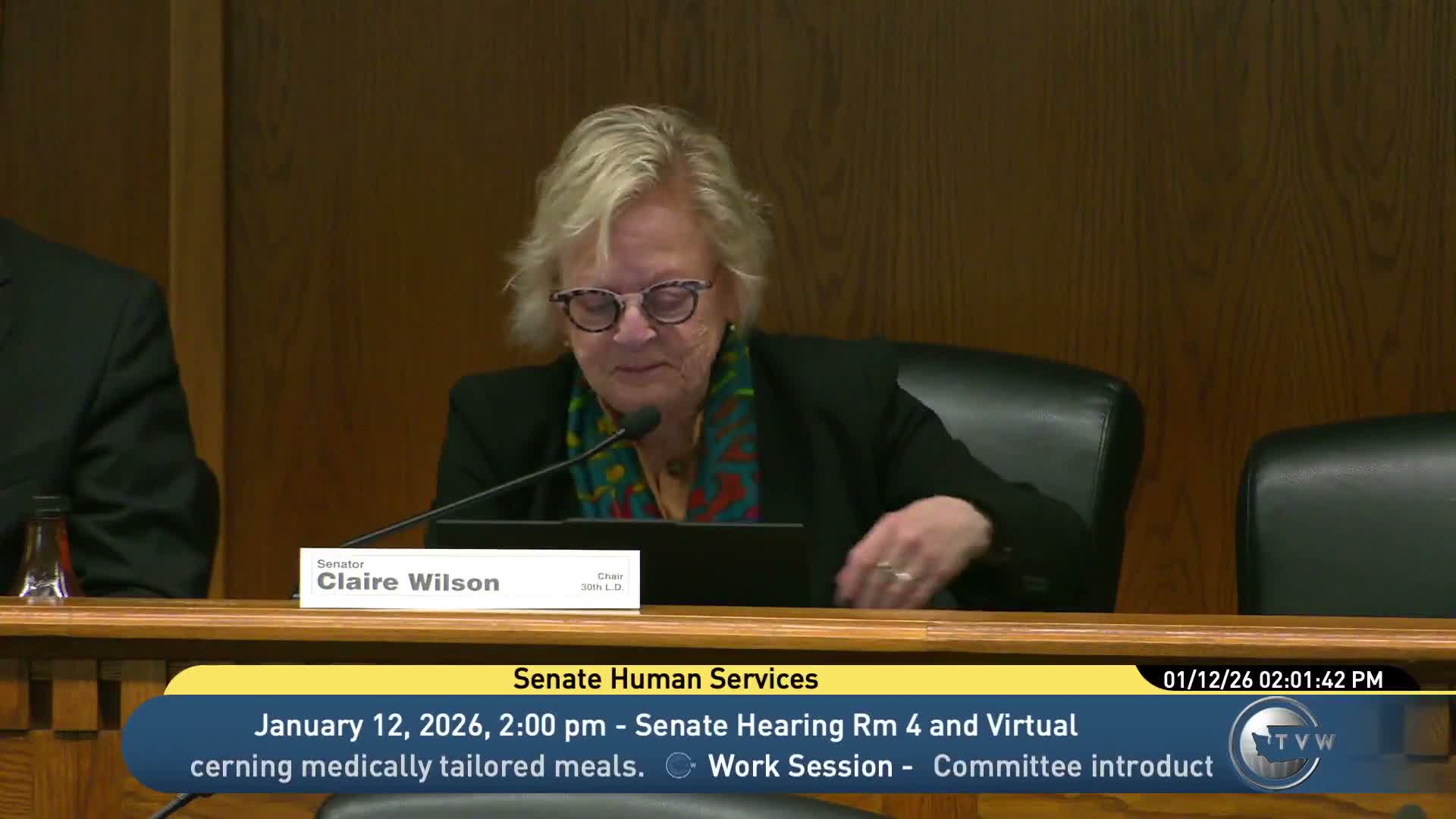
Senate Human Services Committee members opened the 2026 session on Jan. 12 with a briefing and public hearing on Senate Bill 5,966, legislation to standardize medically tailored meals provided through Washington’s Medicaid waiver.
Sponsor Senator Tawanna Nobles (28th Legislative District) said the bill aims to set a uniform statewide baseline for quality and accountability when state agencies provide medically tailored meals, ensuring meals are grounded in medical guidance, matched to an individual’s nutrition care plan, and respectful of dietary and cultural needs. “If we say that food is a part of health care, then we have to treat food like it is health care,” Nobles said.
Allison Mendiola, committee staff, told the committee that under the existing Medical Transformation Project 2 waiver the Healthcare Authority is authorized to provide medically tailored meals that include assessments, care plans and up to three prescribed meals per day for enrollees meeting USDA definitions of low or very-low food security and who are recently discharged from institutional care or at high risk of hospitalization or nursing-facility placement. She noted DSHS is administering the service and that implementing rules require state approval of nutrition service providers and involvement of registered dietitians or nutritionists in care-plan development. A fiscal note was requested on Jan. 6 and had not been posted at the time of the hearing.
Nonprofit providers and food-system partners testified in favor. Suzanne Washington, CEO of Meals on Wheels People (Southwest Washington), said her organization has run a medically tailored meal program for about four years and described clinical results from individualized menus—telling the committee that one patient’s kidney function improved from about 20% to over 60% after receiving renal-specific meals. Emily Hanning of Chicken Soup Brigade highlighted accreditation and scale—more than 155,000 medically tailored meals delivered last year across multiple counties—and urged that state dollars support local nonprofits and the Washington food supply chain. Jeremy Vrabelyke of Cascadia Produce and Sam Walker of Emergency Food Network stressed the economic benefits to local growers and the value of local food hubs and volunteer capacity.
Testimony and sponsor remarks emphasized that SB 5,966 does not expand benefits or create a new program; rather, the bill would standardize definitions and delivery expectations so that existing MTM services operate more consistently across the state and, when feasible, prioritize Washington-based nonprofit providers.
Committee members asked implementation questions. Committee staff and providers said MTM is being stood up through the waiver and that similar delivery systems (Meals on Wheels and health system contracts) already exist. Providers estimated contract costs vary by funding source and contracting partner—roughly $10 to $25 per medically tailored meal depending on who pays and the program model.
The committee opened public testimony and did not take formal action on the bill at the hearing. The committee is scheduled for additional DSHS-focused work the following day; the bill’s fiscal note and any executive-session actions will appear in subsequent committee materials.