
State officials warn of expanding invasive species threats, urge prevention and early detection
Get AI-powered insights, summaries, and transcripts
Sign Up Free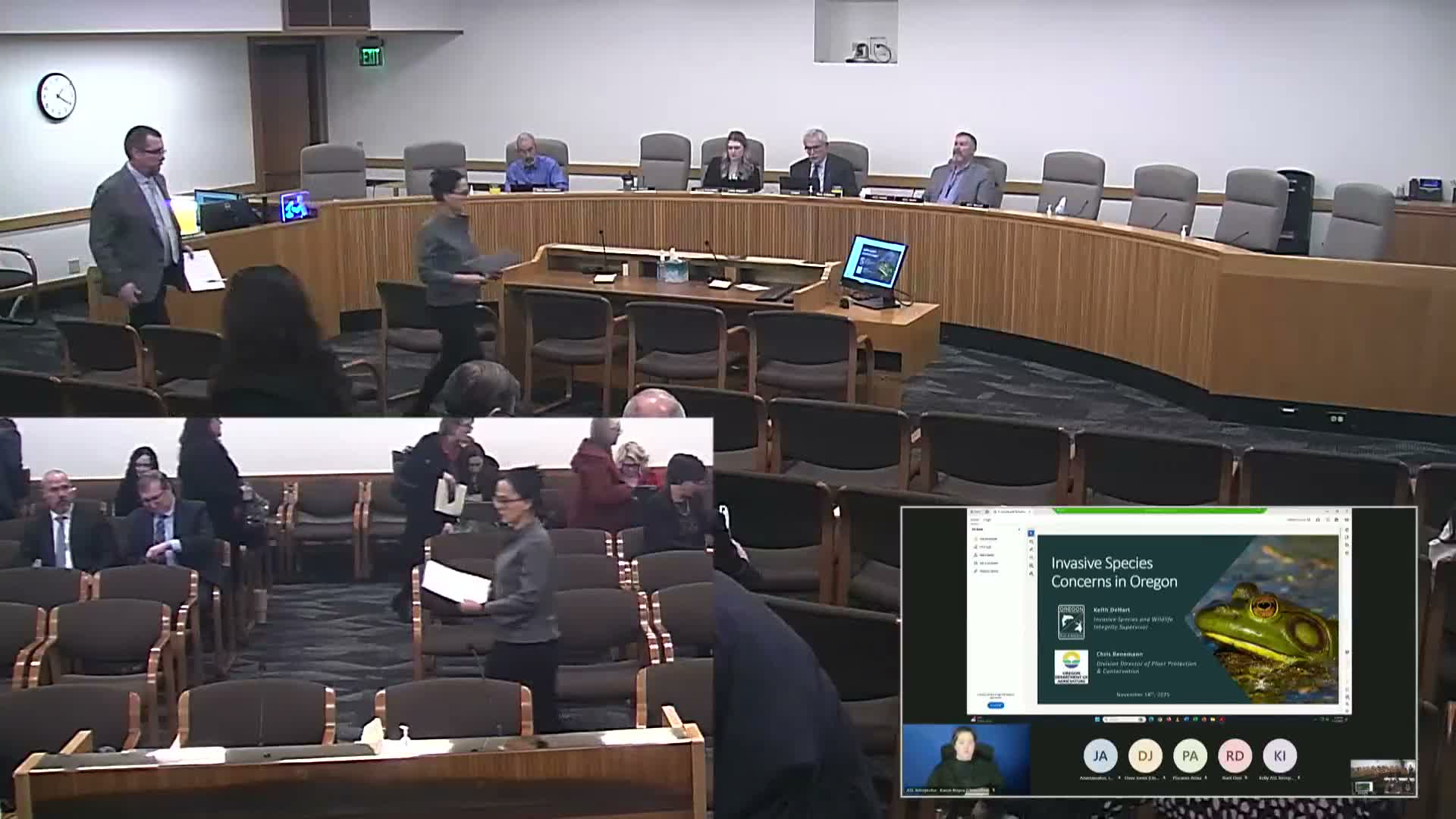
Summary
Oregon agencies briefed the committee on aquatic and terrestrial invasive species threats — from elodea and milfoil to Palmer amaranth and feral swine — stressing prevention, watercraft inspections, interagency coordination, and limited eradication options once a species is established.
Oregon Department of Fish and Wildlife (ODFW) and Department of Agriculture (ODA) officials told the Senate interim committee on Jan. 14 that invasive species remain a major and costly threat to ecosystems, infrastructure, agriculture and recreation and that prevention and early detection are far more cost‑effective than long‑term control.
Keith DeHart (ODFW) and Chris Beneman (ODA) described statutory definitions and the interagency Oregon Invasive Species Council, explained how pathways drive introductions (nursery stock, firewood, watercraft and rail cargo), and urged continued coordination across jurisdictions. DeHart noted that watercraft inspection stations remain the state’s number‑one interception point for aquatic plants and pathogens.
Speakers reviewed aquatic plants: widespread elodea (linked to historic aquarium releases), Eurasian milfoil, and a high‑priority flowering rush population near Boardman on the Columbia River. Treatment options include mechanical harvesters, targeted herbicide use for localized pockets, and emergent technologies such as ultraviolet vegetation treatment boats piloted elsewhere; speakers emphasized prevention because many aquatic plants propagate from small fragments.
Invertebrate and mammal threats covered green crab and Chinese mitten crab detections, freshwater mussels (major concern), New Zealand mudsnail impacts, nutria burrowing and feral swine pressures. Beneman highlighted plant pests such as Phytophthora ramorum (sudden oak death) actively managed in southwest Oregon, the Japanese beetle (ODA will implement a new nursery compliance program in 2026), and a recent detection of Palmer amaranth in an Ontario onion field, which ODA listed as a high‑priority weed and responded to with targeted field work.
Committee members asked how port cargo inspections and federal actions interact with state prevention. Agencies explained that cargo and ballast water inspections are federally led; Oregon staff credited Portland CBP for a high interception rate and said intercepted vessels are decontaminated before re‑entry. Speakers cautioned that once species establish, eradication is rarely possible and long‑term control is costly; they asked the legislature to prioritize prevention funding, surveillance and inter‑state cooperation for border infestations.
Next steps: agencies will continue surveillance, expand education about pathways, implement the ODA nursery compliance program for 2026, and coordinate with federal and neighboring states on emergent threats such as Palmer amaranth and potential introductions via rail and cargo.