Get Full Government Meeting Transcripts, Videos, & Alerts Forever!
Get email alerts on the Emergency Management topic
No spam. Unsubscribe anytime.
Oregon Emergency Management outlines 2025 response figures, seeks federal reimbursements and readies ORS Watch Center
Summary
OEM Director Erin McMahon told the committee that 2025 brought floods, wildfires and storms; OEM distributed $5 million for a preparedness stockpile in 2025, processed $571 million in reimbursements, and said roughly $149 million in reimbursements remains pending at DHS. The ORS Watch Center is scheduled to launch 07/01/2026.
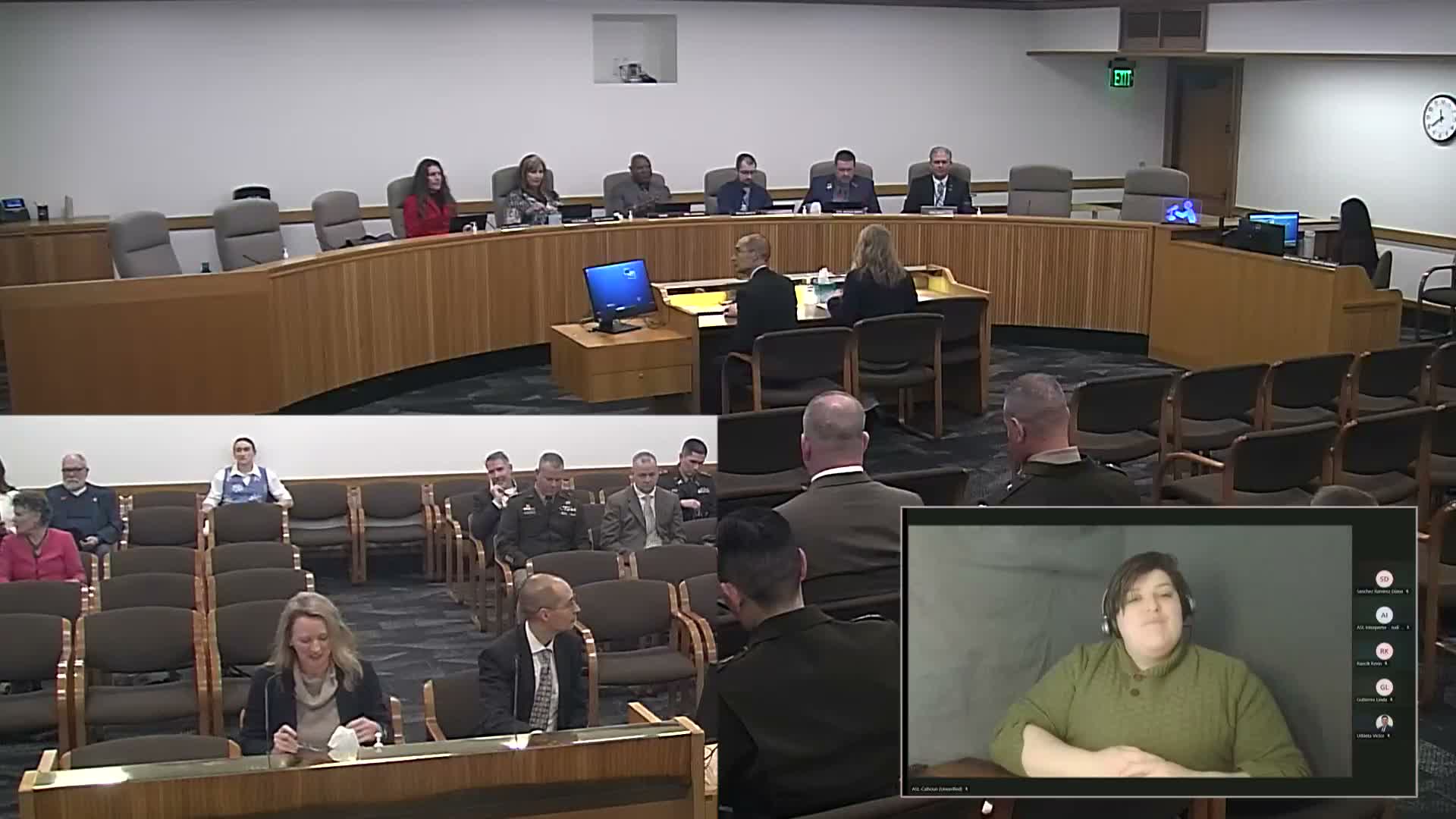
Erin McMahon, director of the Oregon Department of Emergency Management and the state’s homeland security advisor, briefed the Senate interim committee on Jan. 14 on the agency’s 2025 workload and priorities for 2026.
"To protect and prepare the people of Oregon and strengthen resilience for the communities that we serve," McMahon said, framing OEM’s work as both crisis response and steady preparedness. She recounted a year of severe floods, a challenging wildfire season and winter storms, and described how OEM coordinated with local governments, tribal partners, first responders and nonprofits during those events.
McMahon provided several concrete figures: the state was appropriated $5,000,000 in 2025 for a state disaster preparedness stockpile; OEM reported that $571,000,000 in reimbursements were processed in 2025; and she said about $149,000,000 in reimbursements are currently "sitting on the desk of the Secretary of Homeland Security" awaiting signature. She explained that most FEMA grants are reimbursement grants — local governments pay costs up front and must wait for federal reimbursement — and said the Department is coordinating with federal representatives and the governor’s office to resolve delays.
On modernization, McMahon announced the Oregon Emergency Response System (ORS) Watch Center will launch July 1, 2026, to provide a common operating picture and real‑time situational awareness; she also said OEM has begun a statewide lifecycle refresh for next‑generation 9‑1‑1 equipment and will validate a new Oregon State recovery plan with a statewide exercise in October 2026 that will simulate a volcanic eruption.
McMahon highlighted mitigation and equipment programs: OEM integrated the Statewide Interoperability Coordination Program, provided $300,000 to 10 community resilience organizations through a state community resilience coalition grant, and distributed 96 pieces of response equipment to 63 jurisdictions in 2025 through the SPIR program. She also noted OEM closed more than 1,100 projects in public assistance in 2025 and is managing 11 open major disasters with total project expenses across those disasters estimated at over $2.9 billion.
Committee members asked about OEM’s role in a governor‑declared food emergency and the timeline for the outstanding federal reimbursements; McMahon said OEM provided coordination and messaging support while ODHS led the food response, and reiterated OEM’s engagement with federal officials to try to move the pending reimbursement approvals.
The committee did not take formal action during the briefing; members thanked OEM for the update and moved on to other agenda items.