Get Full Government Meeting Transcripts, Videos, & Alerts Forever!
Get email alerts on the Telecommunications topic
No spam. Unsubscribe anytime.
T‑Mobile says AI, site densification and mobile assets can restore life‑safety connectivity
Summary
T‑Mobile’s emergency lead described network resiliency tools—AI/SON site densification, fleets of cell‑on‑wheels and Starlink/direct‑to‑cell failover—and said the company coordinates with state emergency managers to prioritize public safety restoration and provide Wi‑Fi/charging to shelters and medical devices.
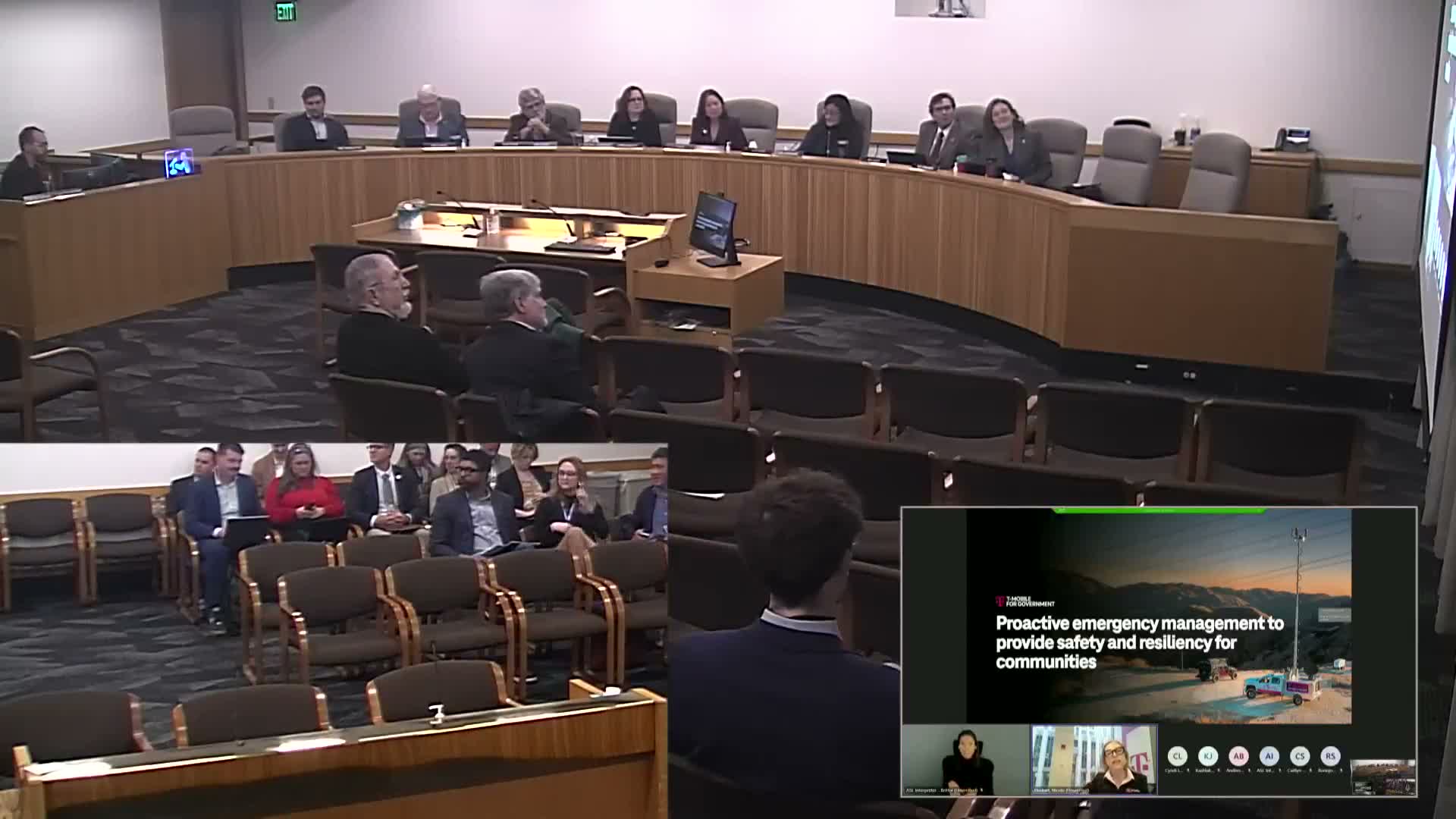
Nicole Hudnut, national lead for T‑Mobile’s emergency response team, told the House committee that communications are a lifeline in disasters and outlined several layers of resilience the company deploys.
Hudnut said T‑Mobile leverages AI and SON (self‑organizing network) technology to detect outages and shift traffic, especially in denser urban areas, and that hardened sites with fixed generators are supplemented by mobile cell‑on‑wheels/charging trucks that are satellite‑backhauled and self‑sustaining. She described charging and Wi‑Fi trucks that can power medical equipment and wheelchairs at community shelters.
On satellite failover, Hudnut described investments in Starlink and direct‑to‑cell capability so compatible handsets can send text/skinny data to satellite in affected areas. She emphasized coordination with Oregon Emergency Management, FEMA and local ESF2 leads to prioritize restoration where search‑and‑rescue and life‑safety missions are active.
“Communication is a lifeline,” Hudnut told the committee, adding that T‑Mobile’s assets are used with partners (American Red Cross, Boys & Girls Clubs) to support charging, Wi‑Fi and community pods.
The presentation was informational; no committee action followed.