Get Full Government Meeting Transcripts, Videos, & Alerts Forever!
Get email alerts on the Hospital Readiness topic
No spam. Unsubscribe anytime.
OHSU emergency manager outlines hospital limits, surge plans and need for personal preparedness
Summary
OHSU emergency manager Cindy Lake told the House interim committee that OHSU serves as Oregon’s medical coordination center, that its Markham Hill campus has constrained access and complex patients, and that staffing, redundancy and personal preparedness are central to continued care during a Cascadia‑scale event.
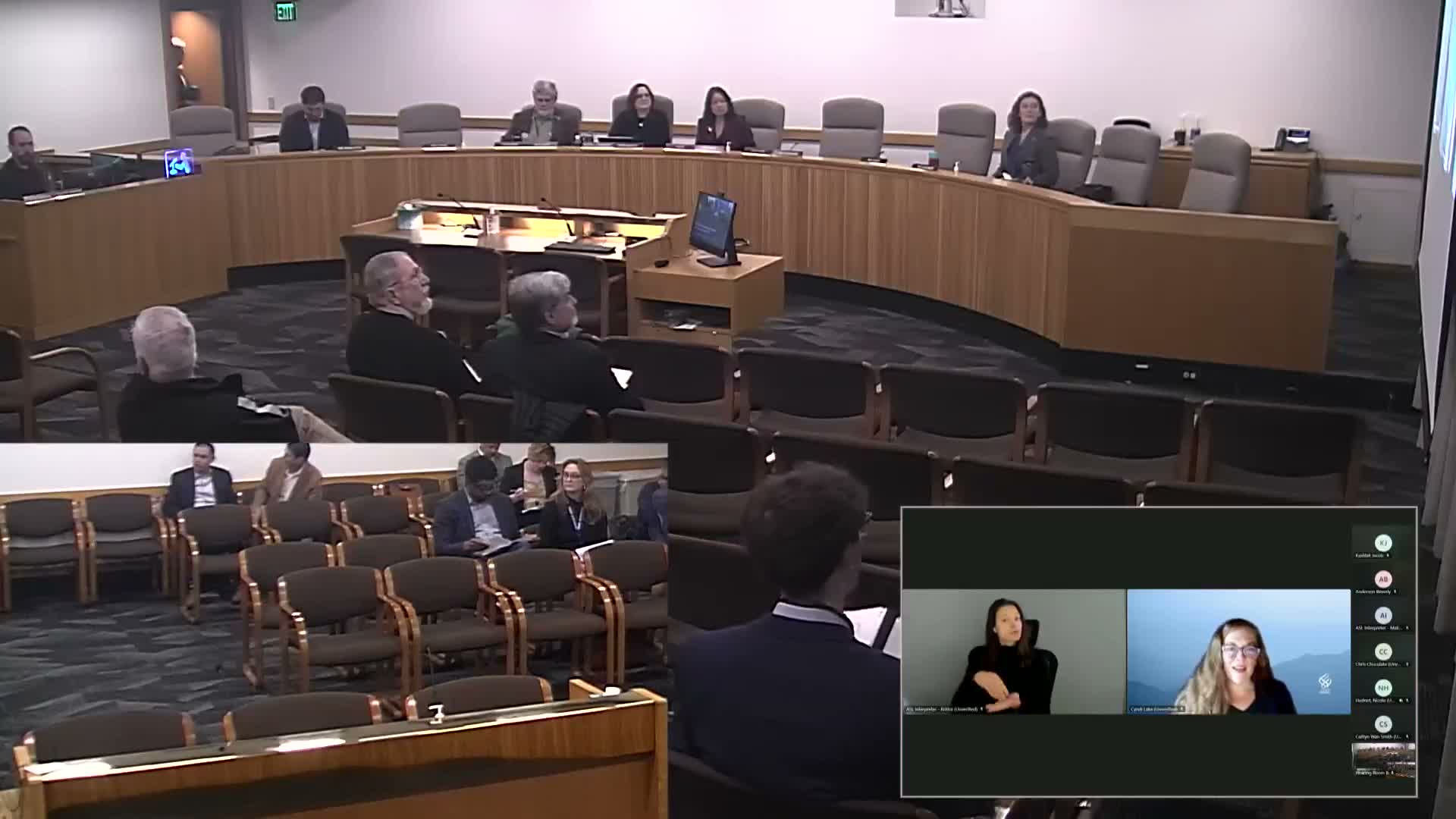
Cindy Lake, emergency manager for Oregon Health & Science University, told the House Interim Committee on Emergency Management and Veterans that OHSU plays a statewide medical coordination role and must plan for both continuing care and safe evacuation of patients, staff and visitors from its constrained Markham Hill campus.
Lake said OHSU is Oregon’s only academic health center and “we are Oregon’s largest employer with over 21,000 employees” and that the Markham Hill site is situated about 500 feet above sea level with access limited to a few roadways and the aerial tram, complicating evacuation plans. She said OHSU conducts annual hazard and vulnerability analyses and has expanded emergency management staff: “we now have 3 full time staff at OHSU.”
The presentation stressed redundancy in systems (power, communications, backhaul) and continuity planning if staff are unavailable. Lake emphasized individual and household readiness as a force multiplier for institutional resilience: “I would urge everyone listening in to this as well to, tonight, go home, look at your personal preparedness plan.” She also described coordination with local, county and federal partners and the National Guard for specialized mass‑casualty and hazardous exposure responses.
During committee questions Lake said the OHSU emergency program covers satellite clinics and off‑site locations and that the institution coordinates with Portland Bureau of Transportation, police and first responders on access and escort planning. On the hardest scenario — loss of roadway access to the hill campus — Lake said other roadways exist, and that planners are working with city partners but acknowledged outstanding concerns about full isolation after a major Cascadia event.
The committee did not take formal action on OHSU policy; the presentation was delivered for information and planning purposes.