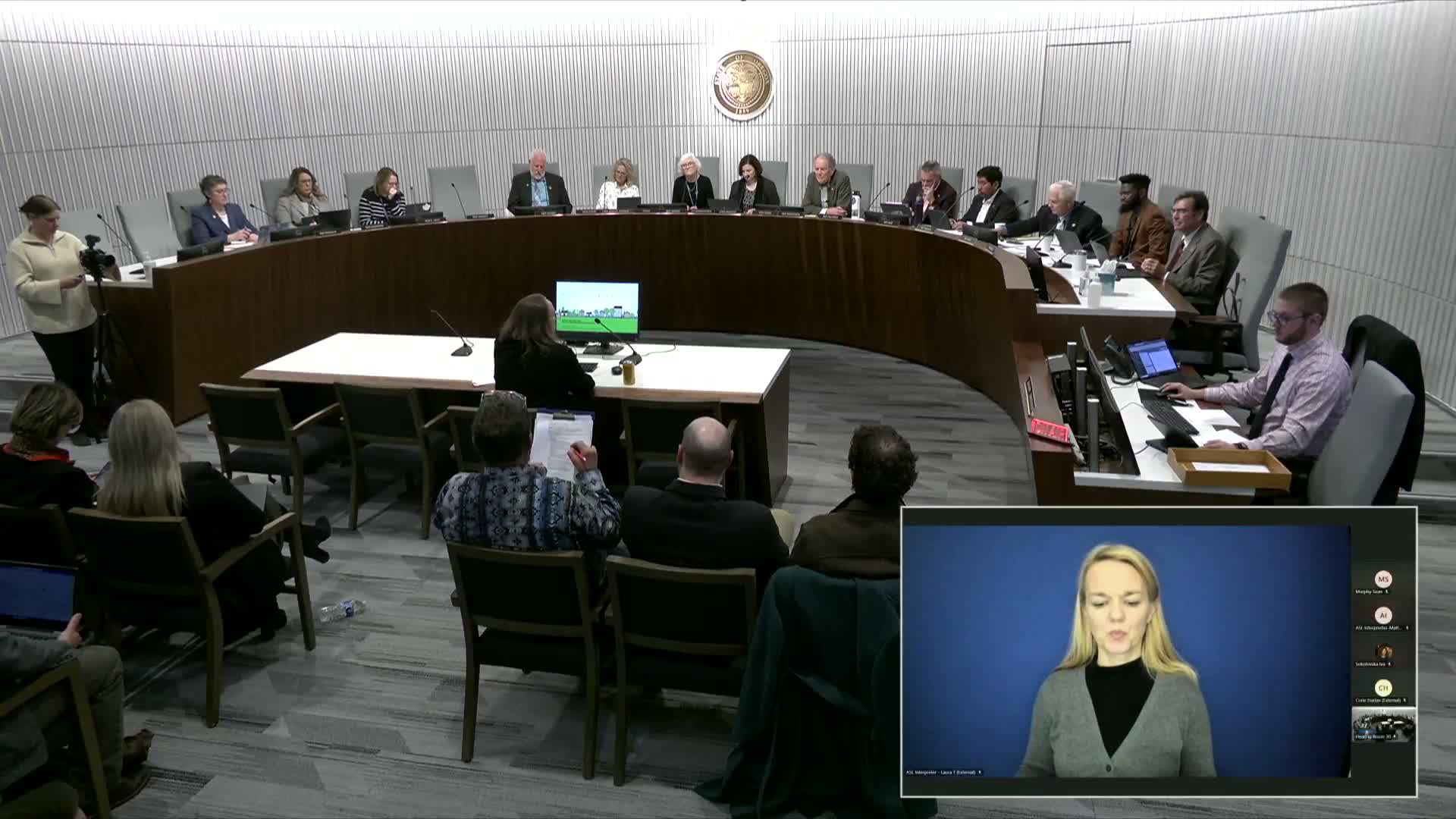
OHCS tells committee Article 11‑Q bonds can fund preservation when paired with acquisition or major refinancing
Loading...
Summary
OHCS told the House Interim Committee on Housing and Homelessness that Article 11‑Q general obligation bond proceeds can support preservation where acquisition or significant rehabilitation/refinance creates state controls in the financing stack; lighter‑touch debt buydowns generally are ineligible.
Natasha Detwiler Davie, director of affordable rental housing at the Oregon Housing and Community Services agency, told the House Interim Committee on Housing and Homelessness that Article 11‑Q general obligation bond proceeds are usable for preservation when projects involve acquisitions or substantial rehabilitation that permit the state to hold the necessary ownership or operational controls.
"The short story of where... Article 11 Q bonds can be used for preservation is when there is an acquisition engaged and when there is a rehabilitation effort engaged," Detwiler Davie said, explaining that the constitutional language authorizing Article 11‑Q bonds limits how the state can participate in project financing.
Why it matters: the committee is preparing LC 209, a preservation fund proposal, and the Ways and Means committee asked OHCS to clarify the range of permissible activities. OHCS told lawmakers that the bonds can support preservation financing when the state can occupy a shared first position with private lenders or when a full refinance replaces existing debt; small, subordinate additions to an existing financing stack generally do not meet the constitutional test.
Details and scale: OHCS said preservation applies most cleanly where ownership changes hands or where a concerted refinance accompanies rehabilitation. The agency identified roughly 87 properties (nearly 3,000 units) at risk of losing federal project‑based rental assistance over the next 10 years, another ~100 properties (over 5,000 units) with other affordability expirations, and about 273 properties in OHCS' portfolio with debt coverage ratios below 1.1. Detwiler Davie also said the agency received 59 stabilization requests representing 4,122 units that sought roughly $78.3 million while legislative stabilization funding for the biennium totaled $38 million.
How it would work: OHCS described negotiating "shared first position" arrangements with private lenders so the state retains affordability controls while allowing banks to keep necessary first‑lien protections. For projects where owners wish to remain but require major rehabilitation, a full refinance is the likely vehicle. For financially distressed projects that only need a debt buydown, Article 11‑Q proceeds are typically ineligible unless paired with qualifying rehabilitation.
Committee response and next steps: Members pressed OHCS on prioritization and due diligence; Chair Marsh said the committee will invite OHCS back to explain criteria and due‑diligence steps for any preservation fund. LC 209, which the committee introduced earlier in the meeting, will be the vehicle for those further discussions.
The committee did not take any final votes on funding at the meeting; OHCS said it will submit a written report to the legislature and return for further briefings.