Work group backs small per-hour assessment and higher fee cap to shore up BOLI funding
Loading...
Summary
A bipartisan work group proposed using a 0.2-cent-per-hour Worker Benefit Fund assessment (split 50/50 between employers and employees) combined with raising the prevailing-wage filing cap to about $12,500 to generate roughly $20.5 million for BOLI; questions remain over exemptions, calendar timing and MLAC review.
A bipartisan work group convened by the Bureau of Labor and Industries recommended this week that the Legislature pursue two modest revenue changes to create a stable, ongoing funding stream for the bureau.
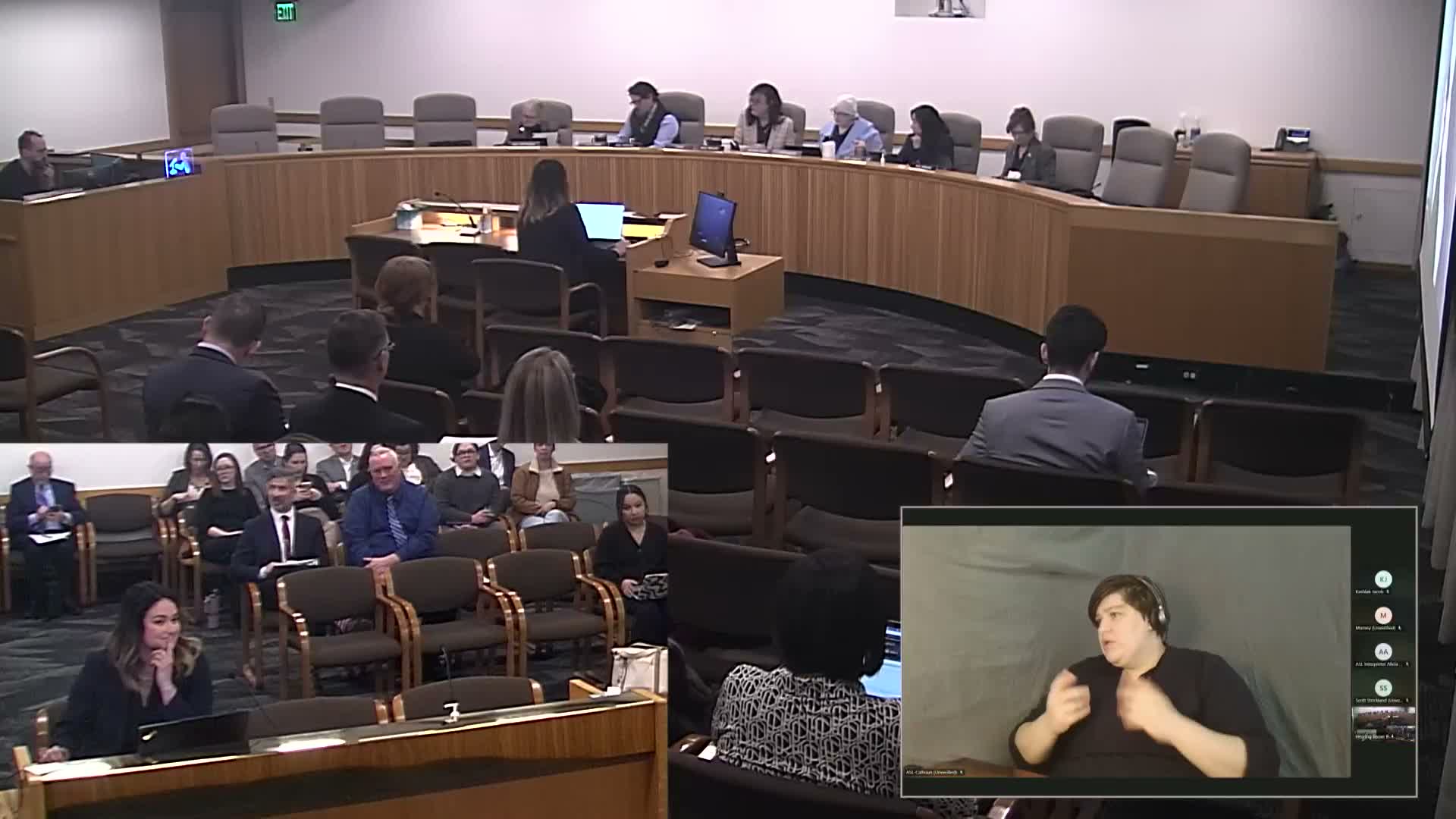
Justin Antino Viatoro, deputy commissioner for BOLI, told the Senate Interim Committee on Labor and Business that the group's near-consensus proposal combines (1) raising the prevailing-wage filing cap from $7,500 to $12,500 and (2) using the existing Worker Benefit Fund (WBF) assessment mechanism to create a separate account for bureau operations. "When we looked back at the previous two years this would have netted the bureau about $1.5 million from the prevailing wage cap change," he said, and the WBF assessment approach was estimated to produce about $19 million.
DCBS director Sean O'Day and Matt West of the Workers' Compensation Division explained the WBF history, the fund's major programs and how rates are set. DCBS described the proposed assessment as two-tenths of a cent per hour (0.2¢) split equally between employers and employees; under baseline assumptions presenters estimated that would amount to roughly $4.18 per employee per year (the employee share about $2.08). DCBS staff estimated 0.2¢ could generate approximately $6 million per year on a strict cash-flow basis, or $12 million in a biennium depending on timing.
The package presented to the committee combined the two pots: the $19 million WBF assessment plus an estimated $1.5 million from lifting the prevailing-wage cap, for a combined target of about $20.5 million, with prevailing-wage revenues dedicated to prevailing-wage enforcement and the WBF side account funding broader BOLI positions.
Committee members questioned whether low-wage workers should be exempt from the assessment. Vice Chair Hayden and others stressed that, while the per-employee dollar amount is small, it is "real money" for minimum-wage earners. Presenters said the work group did not raise an exemption and framed the approach as spreading cost thinly so that everyone who pays into the system receives access to bureau services. DCBS also noted the bureau already receives a biannual transfer (roughly $400,000'$500,000) from WBF for certain discrimination-related investigations and that last session included a one-time transfer of $8.5 million.
Alan Dale, senior deputy legislative counsel, told the committee the draft concept likely would not be treated as a bill for raising revenue because it does not itself increase the statutory assessment rate; instead it sets a target or a dedicated use under the existing rate-setting mechanism. Nevertheless, Chair Taylor said she has requested a review by the Management-Labor Advisory Committee (MLAC) to accommodate stakeholder concerns and suggested MLAC might provide a conditional approval given the compressed calendar.
No formal committee action was taken Tuesday. Members signaled they would continue to work on technical language, possible indexing for the prevailing-wage cap and scheduling to accommodate MLAC review.