House labor committee introduces three committee bills on child labor, construction oversight and school bargaining
Loading...
Summary
The House Interim Committee on Labor and Workforce Development on Jan. 13 approved introduction of three committee bills — LC 141 (school bargaining), LC 144 (construction contractor monitoring) and LC 145 (child labor protections) — sending each to further hearings.
The House Interim Committee on Labor and Workforce Development voted Jan. 13 to introduce three committee bills that the panel said will shape early 2026 labor policy. The committee approved LC 141, LC 144 and LC 145 for committee hearings after roll-call votes.
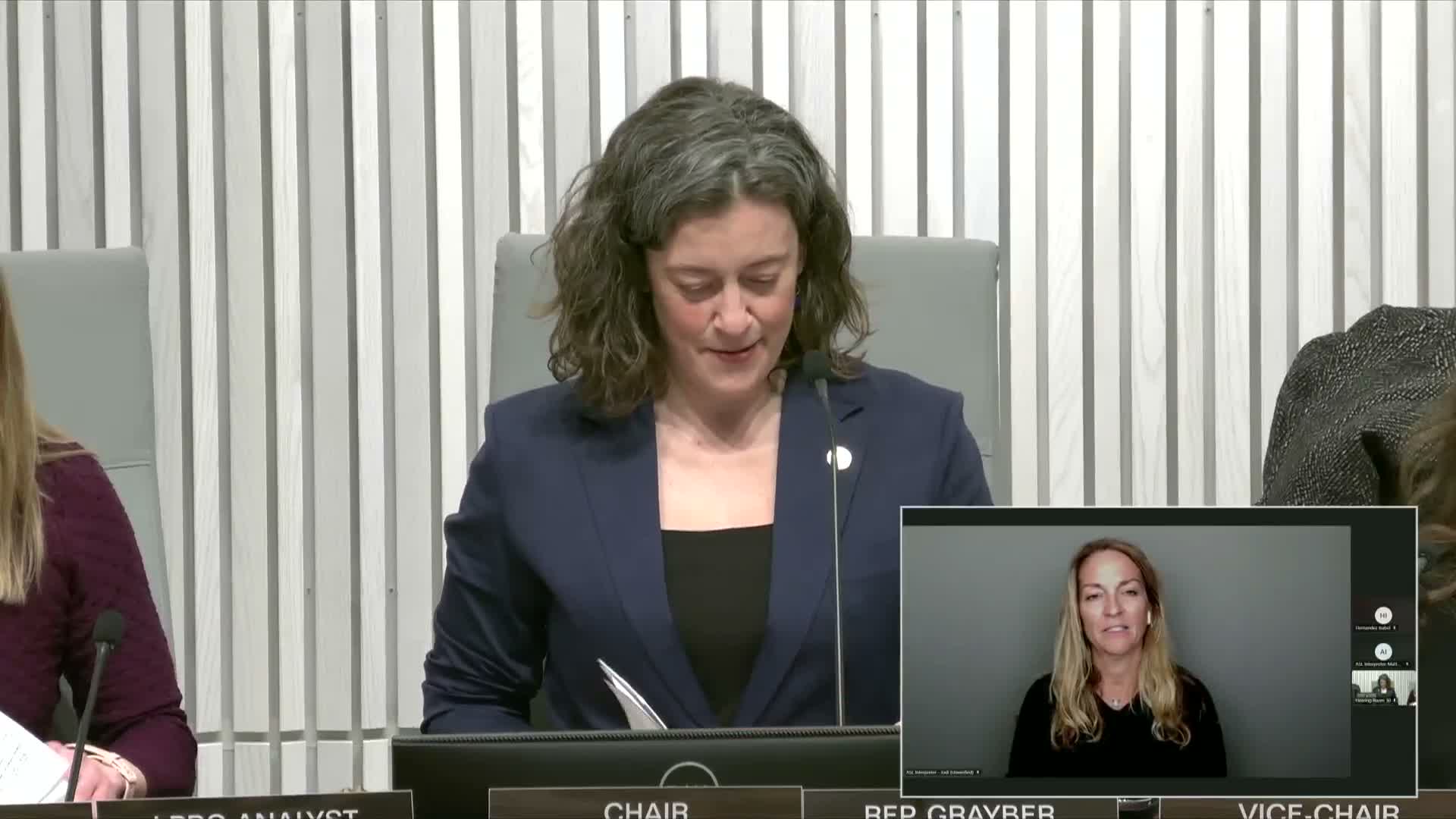
Chair Dacia Graber, who led the session, framed LC 145 as a response to growing concerns about child labor violations in hazardous industries and late-night work. “I think that we can all agree in this state, we believe that our children should be protected and that we have these, child labor laws for a reason,” she said while describing the concept as an effort to “freeze the floor” so state rules cannot be less protective than the federal standard.
Bureau of Labor and Industries staffer Josh Nasby described the legal effect of the draft: “the statute currently describes a ceiling, and what the LC does is it takes that ceiling, and it also makes it a floor,” meaning Oregon law would not be allowed to become less restrictive than the Fair Labor Standards Act provision cited in the concept.
LC 144 directs the Construction Contractors Board and BOLI to collaborate on a temporary, data-driven mission to collect information and increase monitoring of unlicensed labor contractors on construction sites. Chris Huntington of the Construction Contractors Board said the framework focuses on scoping the problem and using agencies’ existing lanes: “we’re gonna go out and we’re gonna nail down the scope and nature of the problem before we jump to the solutions,” he said, describing early interagency meetings as productive.
LC 141 would make class size and caseload mandatory subjects of collective bargaining for school districts, effectively rolling back limits adopted in 1995 and expanding bargaining topics beyond a Title I pilot. Emily McClain of the Oregon Education Association said districts that adopted class-size language after the Legislature acted saw “productive conversations” but also created a patchwork of approaches that this LC would address.
Votes at a glance: - LC 141 (introduce as committee bill; dated 12/31/2025): mover Vice Chair Leslie Munoz; roll call recorded Yes — Pragala, Wilson, Ricky Smith, Munoz, Graber; No — Bossard Davis, Bunch, Scharf; outcome: introduced. - LC 144 (introduce as committee bill; dated 12/09/2025): mover Rep. Emma Scharf; roll call recorded majority Yes; outcome: introduced. - LC 145 (introduce as committee bill; dated 01/12/2026): moved with LC 144 by Rep. Scharf; outcome: introduced.
Chair Graber emphasized that introducing a committee bill signals only that the measure will be considered and does not imply committee endorsement. Each bill will proceed to more technical hearings during session, when stakeholders including labor groups and industry representatives are expected to testify.
Next steps: The committee listed these LCs for further hearings during the 2026 short session beginning Feb. 2; technical amendments and stakeholder briefings were said to be forthcoming.