Get Full Government Meeting Transcripts, Videos, & Alerts Forever!
Economist tells revenue committee how apportionment determines Oregon corporate tax share
Summary
A Legislative Revenue Office economist explained apportionment methods (property, payroll, sales) and Oregon’s shift to single-sales-factor apportionment, noting federal limits (Public Law 86-272) and that deductions applied before apportionment dilute incentives for multistate firms.
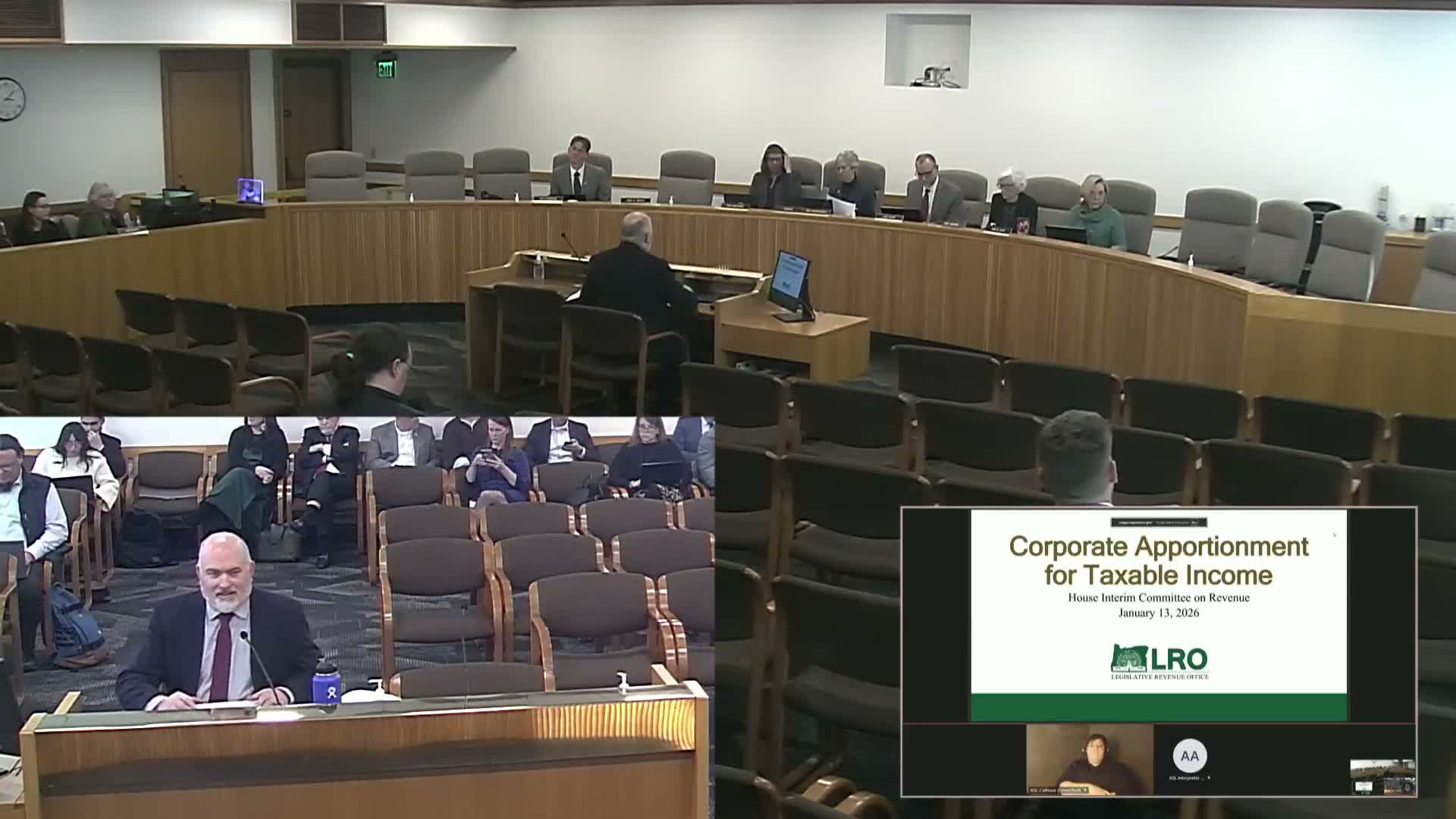
John Hart, an economist with the Legislative Revenue Office, told the House Interim Committee on Revenue on January 13 that apportionment — the process of deciding what share of a multistate company’s income is taxable in Oregon — typically uses property, payroll and sales factors. Hart explained the unitary business principle (treating related activities as a single economic unit) and demonstrated how different weighting formulas change Oregon’s taxable share.
Hart used a numerical example allocating property, payroll…
Already have an account? Log in
Subscribe to keep reading
Unlock the rest of this article — and every article on Citizen Portal.
- Unlimited articles
- AI-powered breakdowns of topics, speakers, decisions, and budgets
- Instant alerts when your location has a new meeting
- Follow topics and more locations
- 1,000 AI Insights / month, plus AI Chat