Senate committee hears emotional appeals for LC 100 to eliminate follow‑up costs after abnormal cervical screenings
Loading...
Summary
Lawmakers heard survivors, clinicians and advocates urge the Senate Interim Committee on Health to pass LC 100, a legislative concept to require commercial insurers to cover medically necessary follow‑up cervical diagnostic tests (colposcopy, biopsy, HPV typing) without cost sharing, after testimony about delayed care, racial disparities and average out‑of‑pocket follow‑up costs of $700–$1,000.
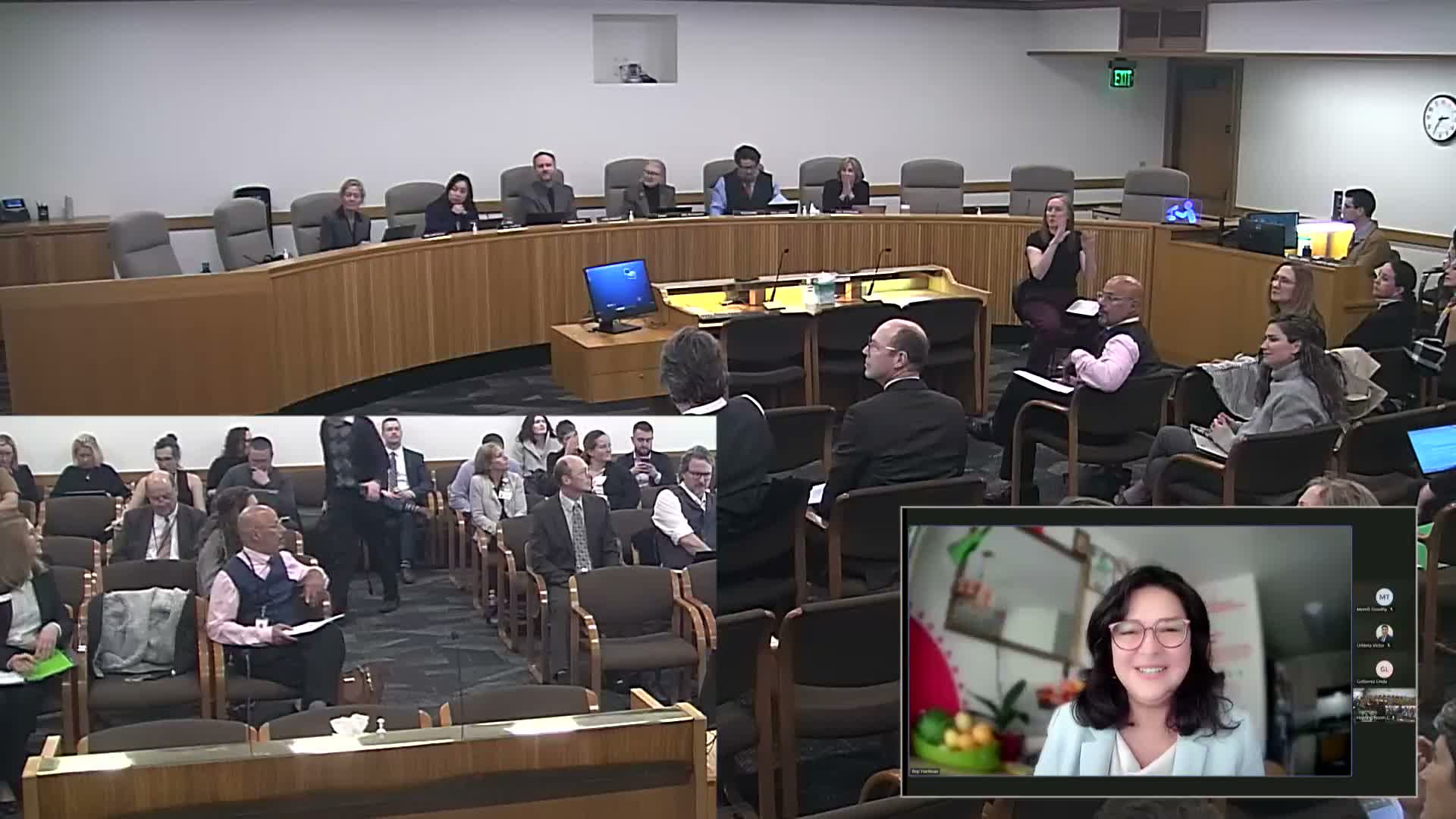
Representative Vanessa Hartman, who said she is currently being treated for stage‑3 cervical cancer, urged the Senate Interim Committee on Health to support LC 100 and described how cost barriers and lack of affordable follow‑up testing leave some patients unable to progress from screening to diagnosis and treatment. "Screening without affordable follow‑up is not prevention," Hartman said, recounting a constituent who was charged about $1,000 for a medically necessary colposcopy and could not afford it.
Jane Leo, Government Relations Director for the American Cancer Society Cancer Action Network in Oregon, told the committee follow‑up diagnostic costs commonly range from about $700 to more than $1,000 and that follow‑up is required for roughly 5% of Pap tests with abnormal results. Leo said Oregon recorded about 140 cervical cancer cases and 50 deaths in 2024 and repeated the panel's support for LC 100, clarifying the measure would remove out‑of‑pocket costs for follow‑up exams but would not change cost‑sharing for cancer treatment.
Dr. Julia Barnes, Oregon legislative chair for the American College of Obstetricians and Gynecologists, explained the clinical pathway: Pap or HPV screening can trigger colposcopy and biopsy, and some biopsies require LEEP (loop electrosurgical excision procedure) for diagnosis and treatment. Barnes said eliminating deductibles and copays for diagnostic cervical testing helps ensure abnormal screens complete the diagnostic process and cited new HRSA screening guidance expected to require additional coverage beginning in January 2027.
Dr. Amanda Bridal, a gynecologic oncologist at Oregon Health & Science University, described treating late‑stage disease and emphasized equity concerns: Black and Native American patients face higher death rates and are less likely to receive timely follow‑up. She urged the committee to consider how policy can prevent clinics and systems from losing the opportunity to diagnose curable disease.
At the start of the meeting the committee briefly convened a work session and Vice Chair Hayden moved to introduce LC 100 (dated 12/16/2025) along with LC 101 and LC 102 as committee bills; the motion passed on a roll call and the committee reopened the informational hearing for the presentations above. Members asked clarifying questions about whether the LC would apply to PEB/OEP plans; legislative staff clarified on the record that the draft would require an amendment to include those plans and that the chair and vice chair intend to bring that amendment forward.
What’s next: LC 100 has been introduced as a committee bill; sponsors signaled intent to amend scope to include certain public employer plans. The committee will continue informational hearings on the topic in subsequent meetings and may consider drafting and amendment language ahead of session.