Get Full Government Meeting Transcripts, Videos, & Alerts Forever!
Get email alerts on the Committee Bill Introductions topic
No spam. Unsubscribe anytime.
Senate Energy and Environment committee introduces blue‑economy task force and FORGE financing concept
Summary
The committee voted to introduce two committee concepts: LC 219 to create a blue‑economy task force and LC 226 to seed a Fund for Oregon Resilience, Growth and Energy (FORGE). A single senator voiced an early 'no' but the introductions carried; fuller debate will follow in future hearings.
The Senate Energy and Environment Committee on Jan. 13 voted to introduce two committee legislative concepts: LC 219, a proposal to establish a blue‑economy task force and authorize the Oregon Ocean Science Trust to form a nonprofit, and LC 226, which would direct the Oregon Department of Energy to seek funding to convene a founding board and create a revolving‑finance entity to support clean‑energy and resilience projects.
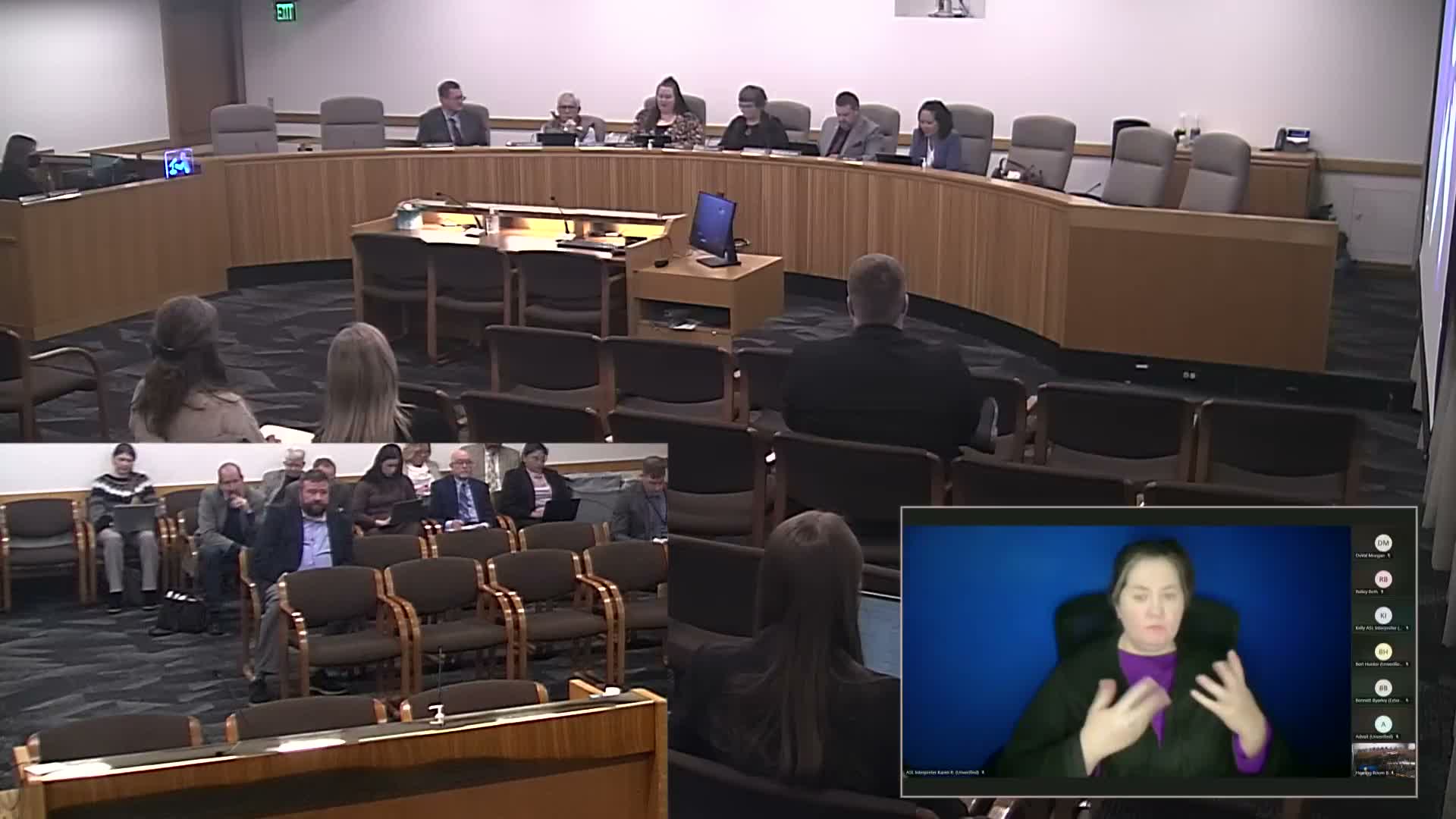
Chair Solman opened the work session and asked staff to summarize the two concepts. Beth, a committee staffer, described LC 219 as a way to coordinate economic development on the Oregon coast with environmental protections, and said LC 226 (FORGE) is intended to support projects statewide through public‑private financing and technical assistance. Vice Chair Brock Smith moved that both LCs be introduced as committee bills; seeing no sustained opposition, the chair announced the motion carried. One senator stated an immediate “no” during the introduction discussion but clarified the introduction vote does not bind members to a final yes or no on subsequent readings.
Supporters said the blue‑economy concept is intended to diversify coastal economies beyond tourism by developing sustainable uses of ocean resources. Proponents of FORGE described it as a public‑private vehicle to seed revolving capital for projects such as resilience upgrades, battery storage, and local clean‑energy investments.
The introductions set the two concepts up for further committee consideration, public testimony, and potential drafting. Committee members said they expect to return with additional detail on governance, funding sources and interactions with existing state agencies as the bills move through the legislative process.