
Torres Lopez ruling forces DOC recalculations; lawmakers told fixes and victim‑notification work are coming
Get AI-powered insights, summaries, and transcripts
Subscribe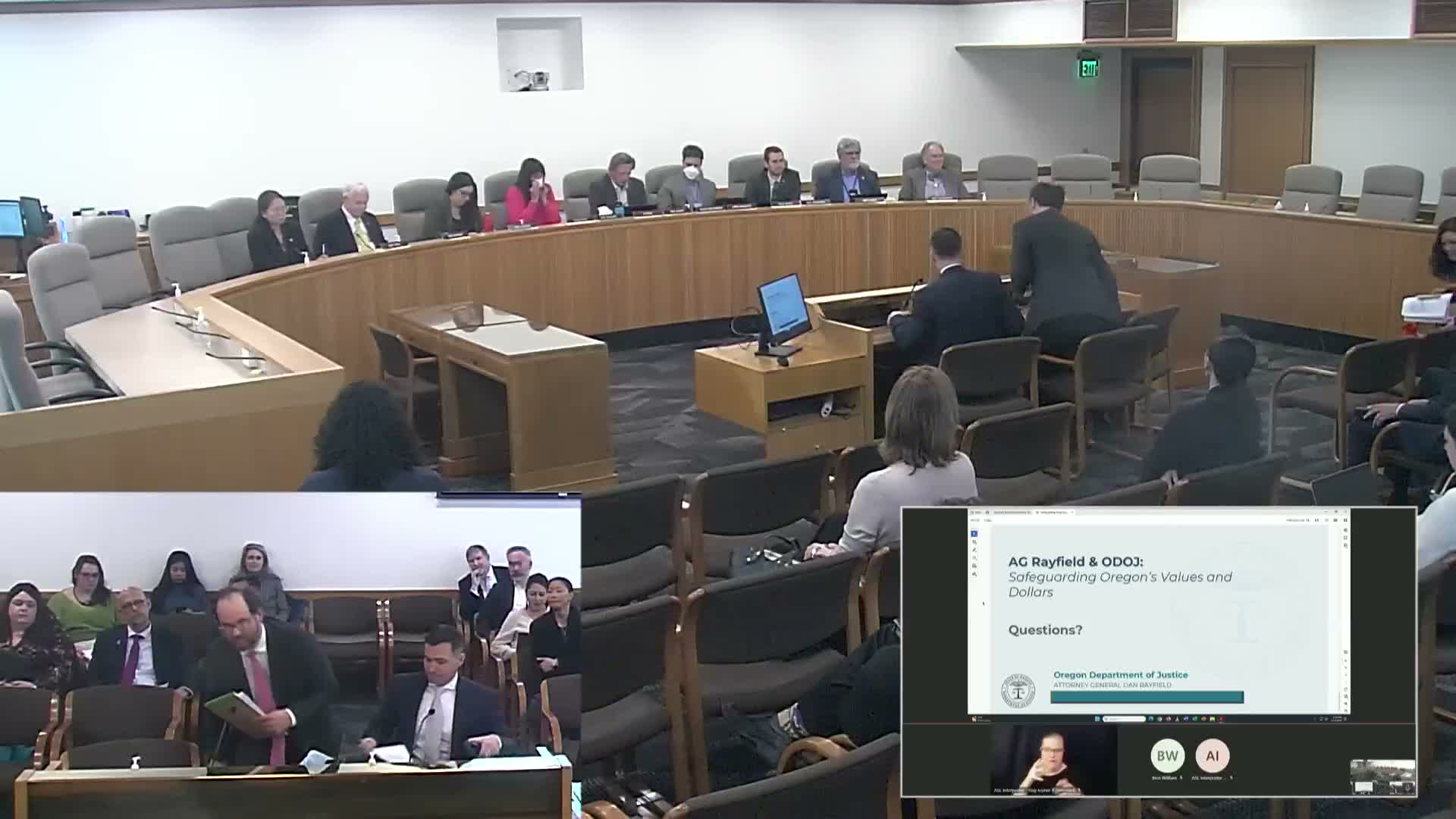
Summary
Oregon Department of Corrections officials told the House Judiciary committee that implementation of the Oregon Supreme Court's Torres Lopez decision required hand review of 11,000 judgments, moved 388 projected release dates, led to 40 immediate releases and returned 22 people to custody; DOC and stakeholders said statutory fixes and victim‑notification language are being developed.
The Oregon Department of Corrections briefed the House Interim Committee on Judiciary on Jan. 13 about the effects of the Oregon Supreme Court’s Torres Lopez ruling on credit‑for‑time‑served calculations and the downstream operational and legal challenges.
DOC Director Mike Rees said the decision has created "uncharted territory" for sentence calculation and public‑safety partners. "When the rules of how judgments are to be carried out changes dramatically as it did in the Torres Lopez decision, it puts us in uncharted territory that impacts victims, public safety agencies, elected officials, our DOC staff, and the adults in our custody," he said.
Larry Bennett, assistant director of DOC’s Correctional Services Division, described a hand review that began in August 2025: the agency reviewed about 11,000 judgments and found 388 cases in which projected release dates moved earlier; 40 people were released immediately after recalculation. DOC said it used statutory authority to issue warrants and returned 22 people to custody, although habeas petitions led the Oregon Supreme Court on Dec. 24 to order immediate release in three cases where the court found DOC lacked statutory authority to detain those individuals.
Bennett summarized current counts: 17 people remain in DOC custody on warrants and another 15 are not in DOC custody but owe additional court‑ordered time; habeas petitions remain pending in multiple jurisdictions. DOC said district attorneys are filing motions to amend judgments in some cases and that the department and its partners are drafting proposed statutory fixes to clarify application of duplicate credits and DOC’s authority to return individuals released in error.
Lawmakers pressed on remedies and forward‑looking clarity. Committee members asked whether judges could rewrite or clarify judgments, whether the governor had pardon options, how victims would be notified and how DOC will manage releases in ways that preserve medical assessments and housing planning. Stakeholders — including the District Attorneys Association and the Criminal Defense Lawyers Association — appeared to be working toward negotiated statutory language for the short session.
Why it matters: The ruling affects sentencing calculations retroactive to 2015, producing immediate population, administrative and victim‑notification consequences and raising questions about statutory authority to correct administrative errors. DOC asked the Legislature to consider statutory clarification in the February session.
What’s next: DOC representatives said they will return with draft legislation in February to guide consistent application of credit for time served and to clarify DOC’s authority and notification processes.