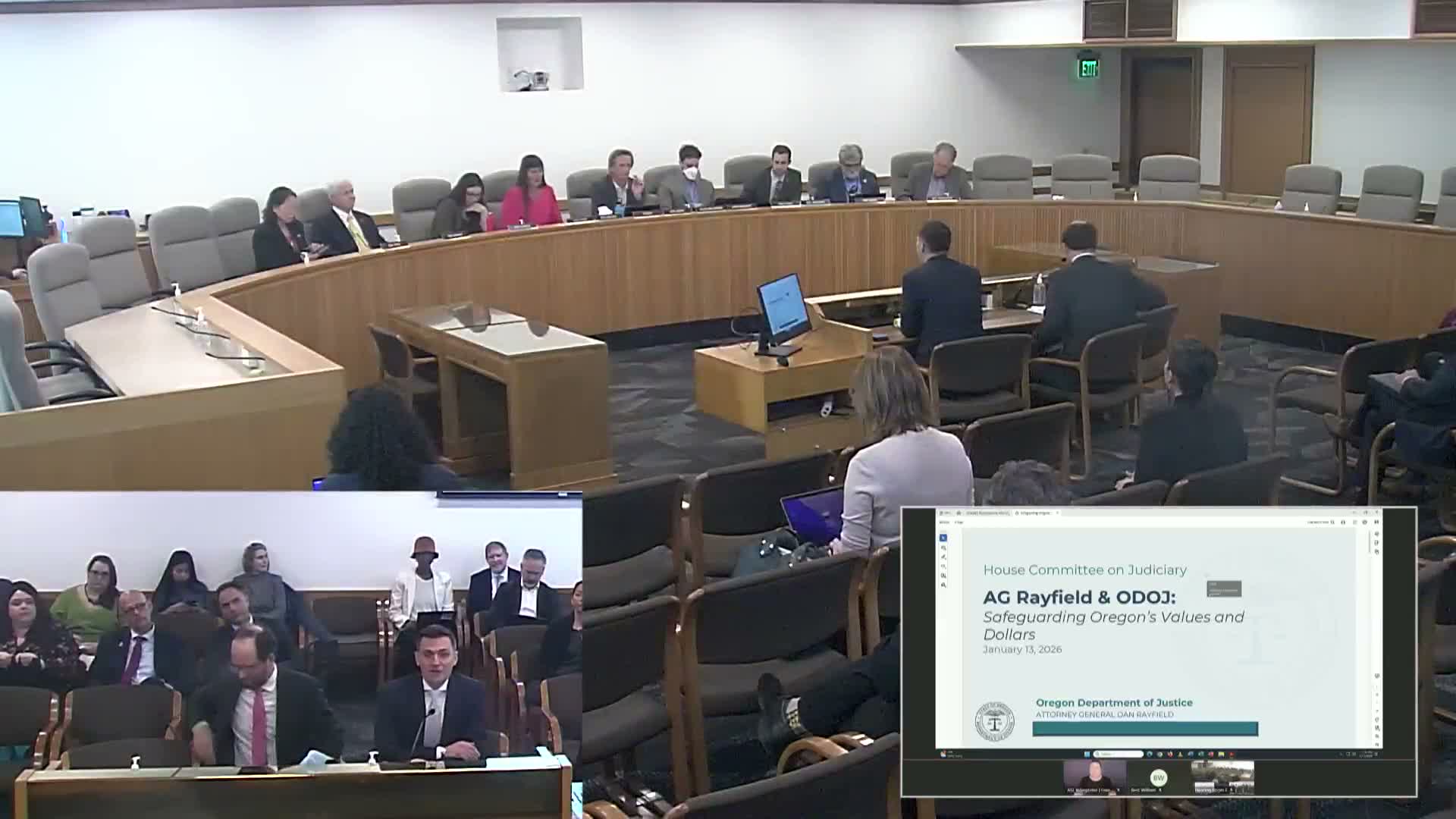
Oregon attorney general says DOJ has filed 53 suits, credits multistate wins with safeguarding $4.6 billion

House Interim Committee on Judiciary · January 13, 2026

Get AI-powered insights, summaries, and transcripts

Subscribe
AI-Generated Content: All content on this page was generated by AI to highlight key points from the meeting. For complete details and context, we recommend watching the full video. so we can fix them.

Summary

Attorney General Dan Rayfield told the House Judiciary committee that Oregon has joined or led 53 lawsuits against the federal administration and estimates roughly $4.6 billion protected for the state; Special Counsel Dustin Bueller highlighted SNAP, education, FEMA and HHS cases as examples of returned or preserved federal funds.

Attorney General Dan Rayfield told the House Interim Committee on Judiciary on Jan. 13 that the Oregon Department of Justice has filed 53 lawsuits challenging federal actions over the past year and a half and that the work has produced substantial financial benefits for the state.

Rayfield said the office’s federal oversight team was created to address what he characterized as democracy and administrative issues that harm Oregonians. “We’ve had 53 lawsuits filed today,” he said, and “in the overwhelming amount of these cases, when we have sought immediate relief, we’re winning.” He stated the department estimates about $4,600,000,000 safeguarded as a result of those actions and said the office spent roughly $3,500,000 to pursue the litigation.

Special Counsel Dustin Bueller outlined representative multi‑state matters the office led or joined. He said a coalition action kept SNAP benefits flowing during a federal shutdown, preserving roughly $134,000,000 in benefits to Oregon residents at a state cost of about $25,000. Bueller said a separate suit prompted the federal government to allow about $80,000,000 in education funding to continue flowing to Oregon classrooms, and that litigation challenging FEMA reallocations could restore about $128,000,000 in BRIC funds to Oregon. He also cited HHS grant restorations that amounted to approximately $117,000,000 for the state.

Bueller framed those cases as examples of high return on investment: “For every dollar that we spend in litigation cost to litigate, we are getting a return, that’s 1,300 to 1,” he said, summarizing the DOJ’s internal calculations.

Committee members asked how the state enforces court orders when a federal agency does not comply. Rayfield and Bueller described an escalation ladder that begins with communication to the opposing counsel or the U.S. Department of Justice, can include filing a motion to enforce injunctive relief, and — in rare circumstances — could involve contempt proceedings. Bueller told the committee that in many instances the federal government has responded promptly once the suit was filed or the courts issued clear relief.

Why it matters: The AG’s office presented the litigation program as a targeted response to what it views as harmful federal actions, with financial and programmatic stakes for Oregon schools, safety net programs and disaster grants. Lawmakers signaled interest in the approach but also asked about limits of state authority and the possible need for congressional action on recurring national policy questions.

What’s next: Rayfield and Bueller offered to provide the committee with more detailed spreadsheets and case lists that underlie the aggregate figures and to continue coordination with legislative members on related policy options.