Get Full Government Meeting Transcripts, Videos, & Alerts Forever!
Get email alerts on the Doc Moud topic
No spam. Unsubscribe anytime.
Oregon DOC seeks $21.5 million for opioid‑use disorder medications; lawmakers pressed on release continuity
Summary
The Department of Corrections asked the subcommittee to appropriate $21,522,020 GF for medications used in treating opioid use disorder, saying DOC shifted back to a long‑acting injectable for operational safety and to improve continuity at release; the request was forwarded to the full committee with LFO support.
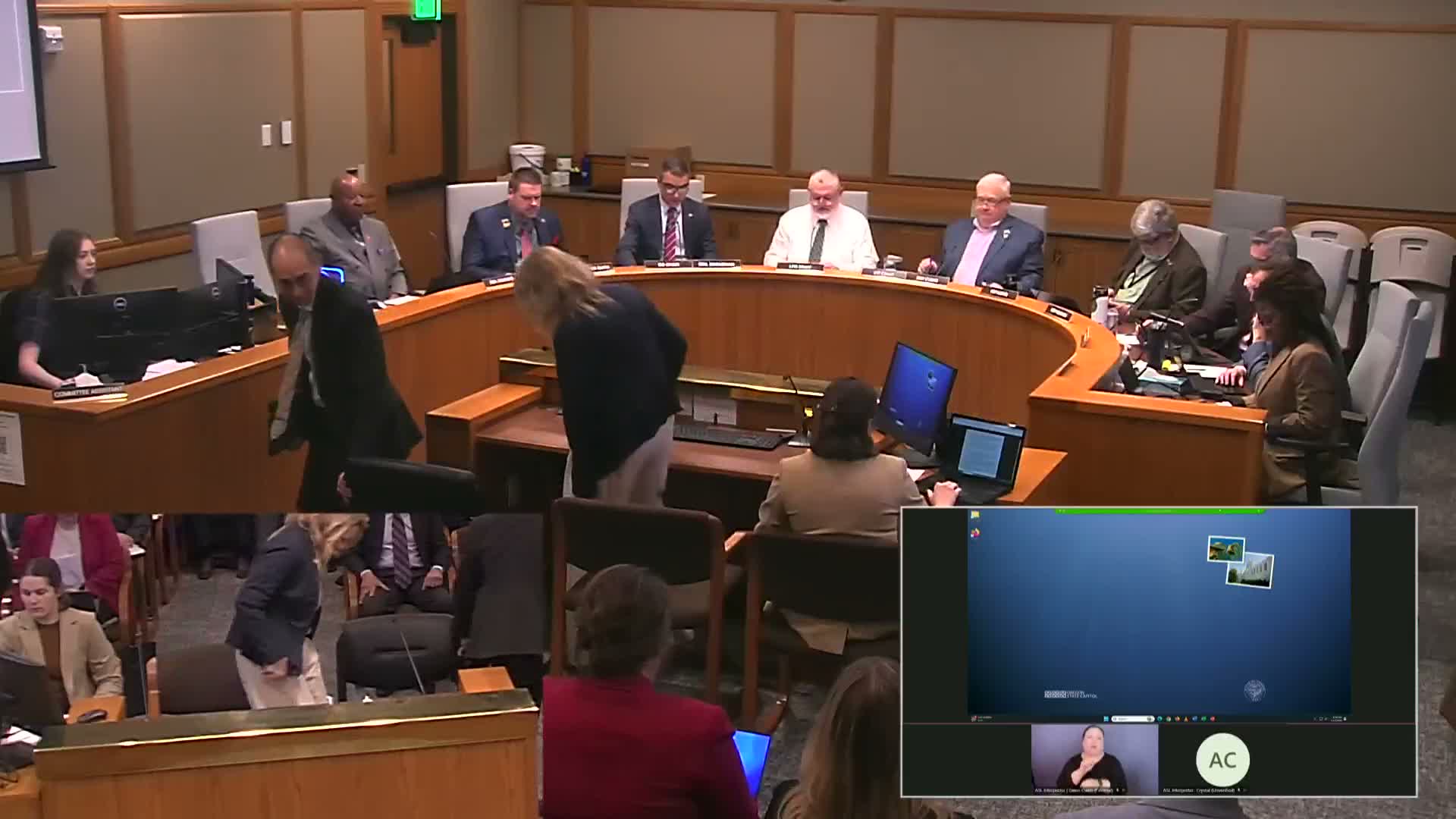
The Oregon Department of Corrections told the Joint Interim Committee on Ways and Means — Public Safety subcommittee on Jan. 14 that it is requesting $21,522,020 general fund to cover medications for opioid use disorder (MOUD) across state custody.
Kevin Bowmancamp, assistant director for health services, said roughly 1,800 adults in custody use MOUD and that treatment is voluntary. The department described clinical and operational reasons for returning to a long‑acting injectable (referred to in the presentation as Brixotti): oral tablets required 10‑minute observed dosing that increased diversion risk and staff workload. The injectable lasts about 30 days, which the department said makes it easier to track dosing, reduces daily medication lines and provides an operational safety benefit.
Donnell Meyer, Behavioral Health Services Administrator, said the department times injections so released patients generally have 30 days of medication coverage and added the agency is working with Oregon Health Authority programs to connect released patients to community MOUD services.
Committee members asked about long‑term outcomes, diversion risk, the mix of patients who may be weaned off medication versus those who require longer courses, and how the funding request aligns with prior statute and practice. DAS recommended consideration during the 2026 legislative session; the Legislative Fiscal Office recommended appropriating the requested amount in the 2026 budget reconciliation bill. A subcommittee member moved the request to the full committee with the LFO recommendation; the motion carried by voice vote with no objections.
The subcommittee’s action forwards the funding request and the LFO recommendation to the full committee; it does not itself appropriate the funds. DOC said it will provide additional data on outcomes, timing of injection relative to release, and connection rates to community MOUD providers as requested by members.