DNR identifies carbon, wildfire-avoidance and water-leasing as potential markets for ecosystem services
Loading...
Summary
Department of Natural Resources told the House Ag Committee that contractor screening found market potential for regulatory and voluntary forest carbon, avoided-wildfire emissions credits and water leasing on DNR lands, identifying roughly 15,000 candidate acres; DNR recommended pilots, third-party developers and further data work before scaling.
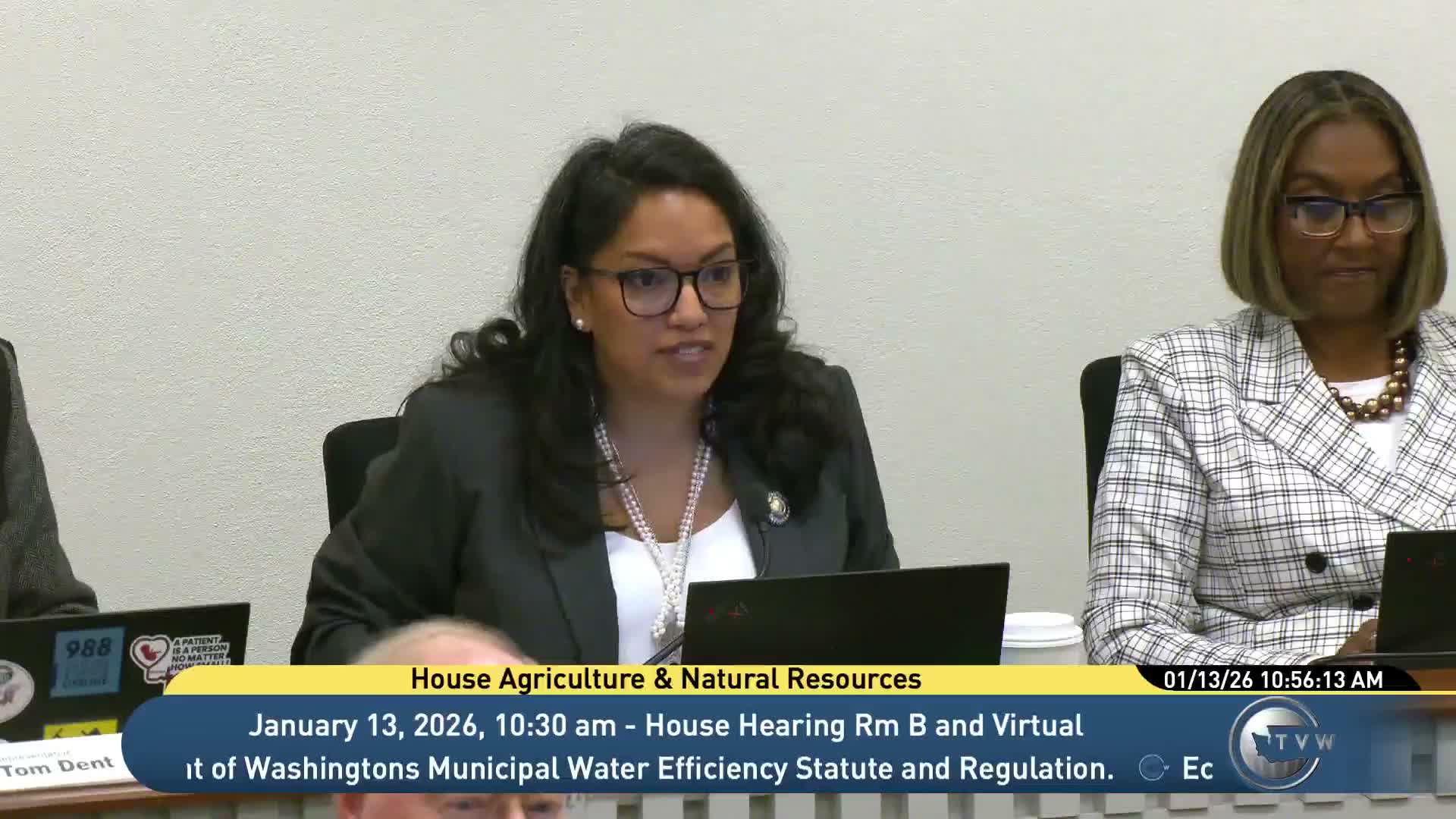
Duane Emmons, assistant deputy for State Uplands at the Department of Natural Resources, presented the legislature-mandated ecosystem services work group report and contractor market screening.
Emmons said the contractor identified several market opportunities on DNR-managed lands: regulatory forest carbon (offsets that require demonstrated additionality), voluntary forest carbon, avoided-wildfire emissions credits and water-leasing opportunities. "They identified about 15,000 acres of DNR managed forest lands, mostly in Clallam and Jefferson County," he said, noting current market prices make some carbon projects potentially competitive with timber returns in limited places.
Emmons cautioned that the contractor's assessment was a landscape-level screen, not a project-level financial analysis. He said the work group recommended pilot projects and additional data collection before committing to large-scale participation. The department also recommended use of third-party developers and pointed to House Bill 2170 as proposed legislation to clarify agency authority in the ecosystem services space.
Members probed economic tradeoffs, timber-price impacts and the time-value-of-money for delayed harvests; Emmons said such project-level financials were outside the scope of the contractor's screening and reiterated the need for pilots.
The department flagged avoided-wildfire emissions as particularly mission-aligned in eastern Washington and noted revenue from those credits could be reinvested to fund additional on-the-ground forest treatments. Emmons said some markets (blue carbon, biodiversity credits, water-quality markets) are less developed or have protocol and participation limitations for a state land manager.
DNR did not propose immediate, large-scale market entry. The department recommended continued monitoring, addressing barriers to entry, and focusing initial efforts on pilots with robust data and third-party development agreements.