Get Full Government Meeting Transcripts, Videos, & Alerts Forever!
Oregon energy strategy review draws bipartisan questions on reliability, costs and role of emerging technologies
Summary
The House interim committee heard Oregon Department of Energy officials summarize the state energy strategy and faced detailed questioning from lawmakers and utilities about affordability, wildfire liability, transmission bottlenecks and whether emerging technologies such as small modular reactors or large flexible loads (data centers) can help meet near‑term reliability needs.
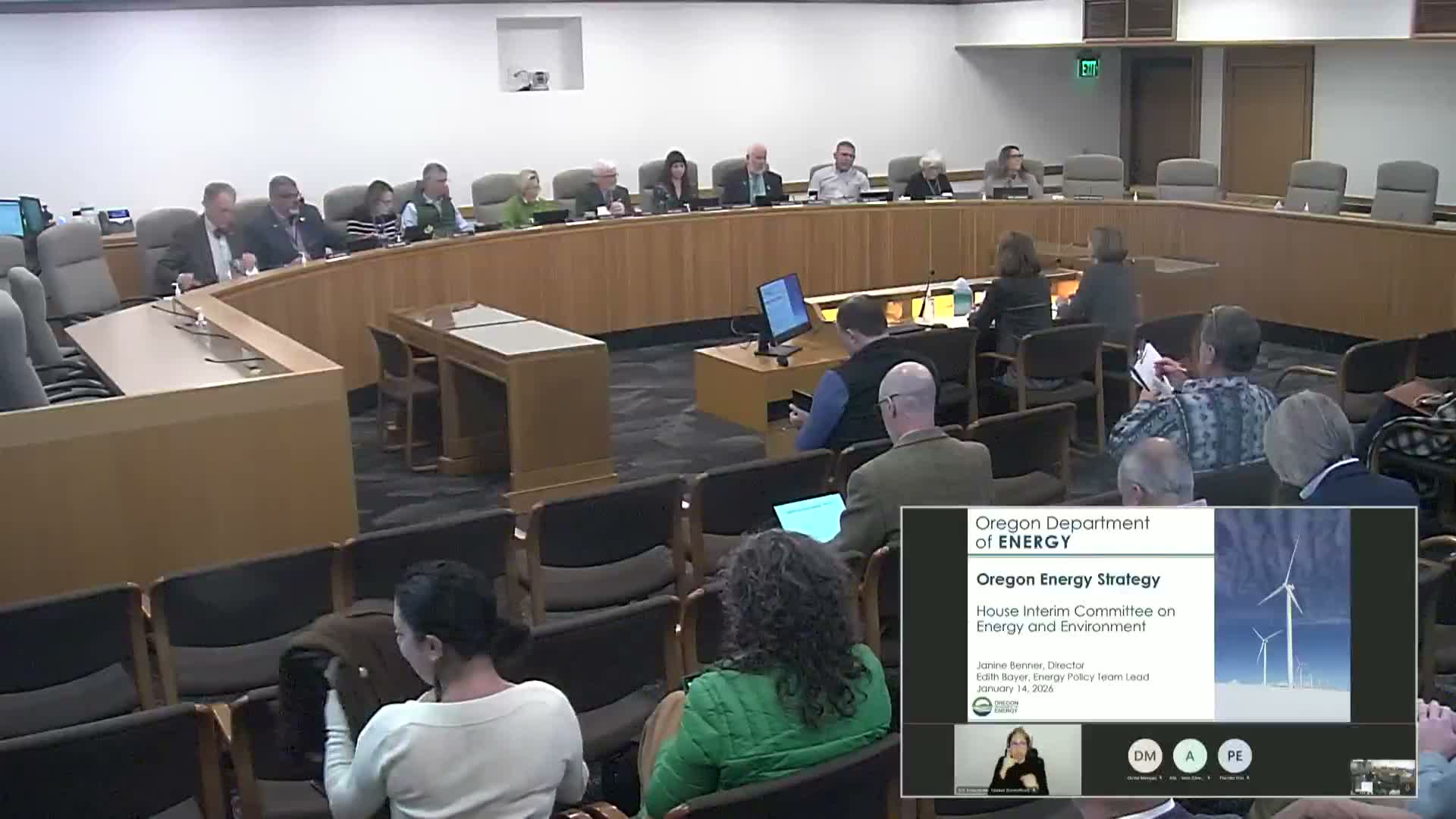
Chair Lively convened the House Interim Committee on Climate, Energy and Environment for a briefing and Q&A on the Oregon Energy Strategy, with Janine Benner, director of the Oregon Department of Energy, presenting the plan’s framework and near‑term actions.
Benner told the committee the strategy — developed under the mandate of HB 3630 (2023) — lays out five pathways and 42 legislative and policy actions focused on the next four years to advance affordability, reliability and resilience. She said the strategy modeled a least‑cost reference scenario that considers electricity, transportation and other fuels and stressed that some recommended actions can be started by agencies within existing authority while others will require legislation or funding. Benner also noted Governor Kotek’s executive order directing agencies to align investments with the strategy.
The nut of the committee’s inquiry centered on cost, system reliability and near‑term…
Already have an account? Log in
Subscribe to keep reading
Unlock the rest of this article — and every article on Citizen Portal.
- Unlimited articles
- AI-powered breakdowns of topics, speakers, decisions, and budgets
- Instant alerts when your location has a new meeting
- Follow topics and more locations
- 1,000 AI Insights / month, plus AI Chat