Get Full Government Meeting Transcripts, Videos, & Alerts Forever!
Get email alerts on the Water Efficiency topic
No spam. Unsubscribe anytime.
Ruckelshaus Center tells House Ag Committee data, funding and collaboration are key to municipal water efficiency
Summary
A June 2025 Ruckelshaus Center assessment told the House Agriculture and Natural Resources Committee that Washington needs better water-efficiency data, more technical assistance for small systems, and restored state funding; the report recommends keeping conservation oversight with the Department of Health while improving cross-agency collaboration.
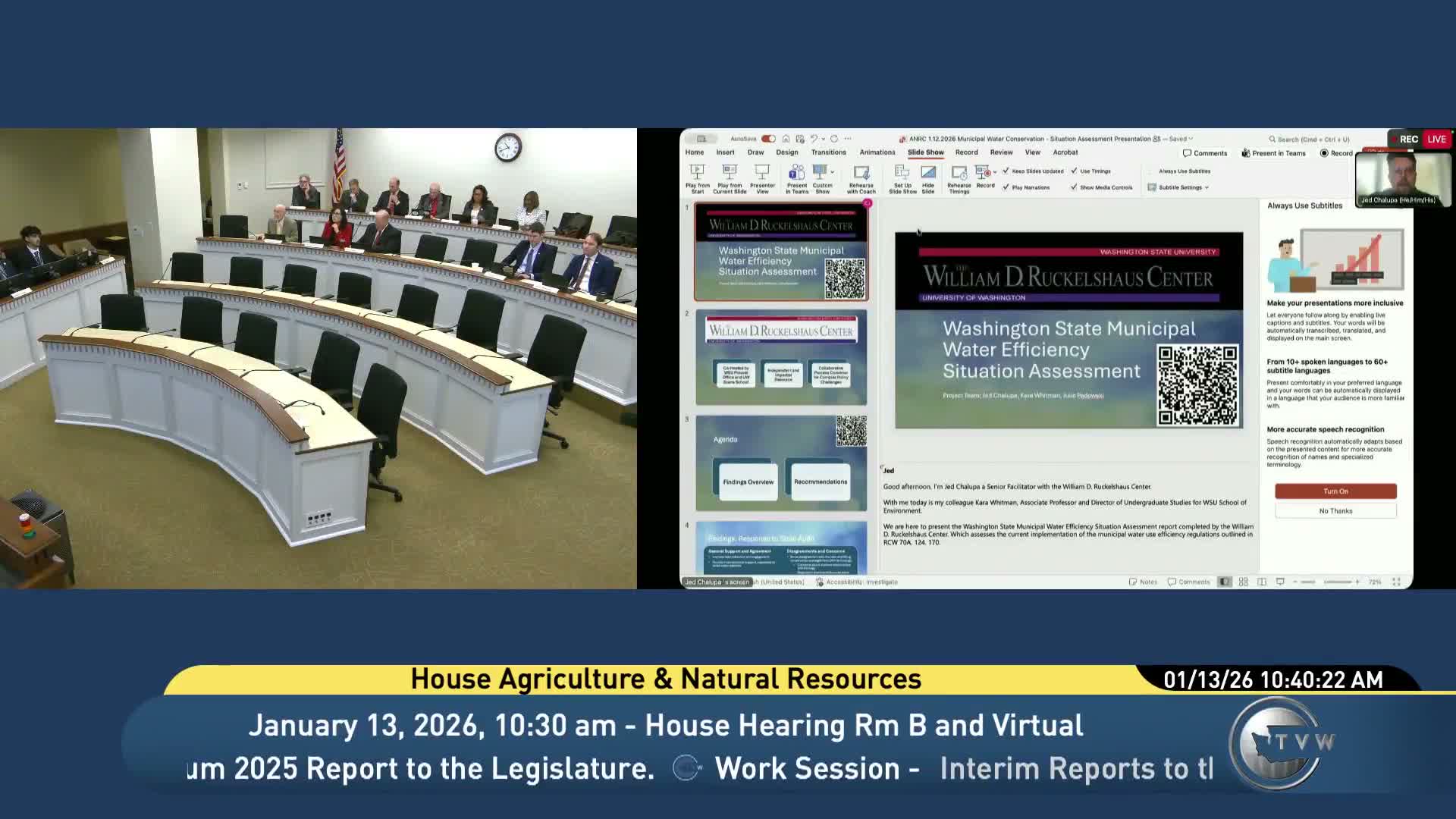
The House Agriculture and Natural Resources Committee heard a June 2025 situation assessment from the William D. Ruckelshaus Center on Washington's municipal water-efficiency statute and regulation.
The presenters told members the study largely agreed with a December 2023 State Auditor's Office review and highlighted three priorities: improved data collection and analysis, expanded technical assistance for smaller water systems, and additional state funding to restore staff and financial supports. "There needs to be more state funding put towards municipal water and water in general," one presenter said.
The report described disagreement among stakeholders about transferring the conservation oversight function from the Department of Health (DOH) to the Department of Ecology (Ecology). Presenters said many interviewees favored keeping regulatory oversight at DOH, citing DOH's experience with drinking-water regulation and collaborative approaches that prioritize technical assistance over fines; others argued Ecology could apply more aggressive conservation tools.
On measurement, presenters urged the committee to consider moving from percentage-based distribution-leakage metrics to the American Water Works Association (AWWA) water-audit method, which interviewees said provides a more comprehensive leakage analysis and is in use in other states. The presenters also recommended reevaluating the 500-connection threshold that currently governs leakage standards for smaller systems.
Funding and pilot approaches figured prominently. The report recommends restoring dedicated funding that previously supported municipal water work, increasing DOH FTEs for technical assistance and data analysis, and offering low- or no-interest loans and grants to water purveyors for costly infrastructure projects. Presenters emphasized pilots and statewide planning that includes tribes, DOH, Ecology and local purveyors rather than an immediate wholesale change in regulator.
Ranking Member Tom Dent asked whether the study considered creating a new water office outside DOH and Ecology; presenters said that option was discussed but viewed as complicated without new funding.
The committee will pursue follow-up questions offline and in upcoming hearings; chair Christine Reeves said staff will make the report and slides available on the committee website.