Get Full Government Meeting Transcripts, Videos, & Alerts Forever!
Get email alerts on the Stripper Well Exemption topic
No spam. Unsubscribe anytime.
Advisory committee approves study of stripper-well oil extraction tax exemption
Summary
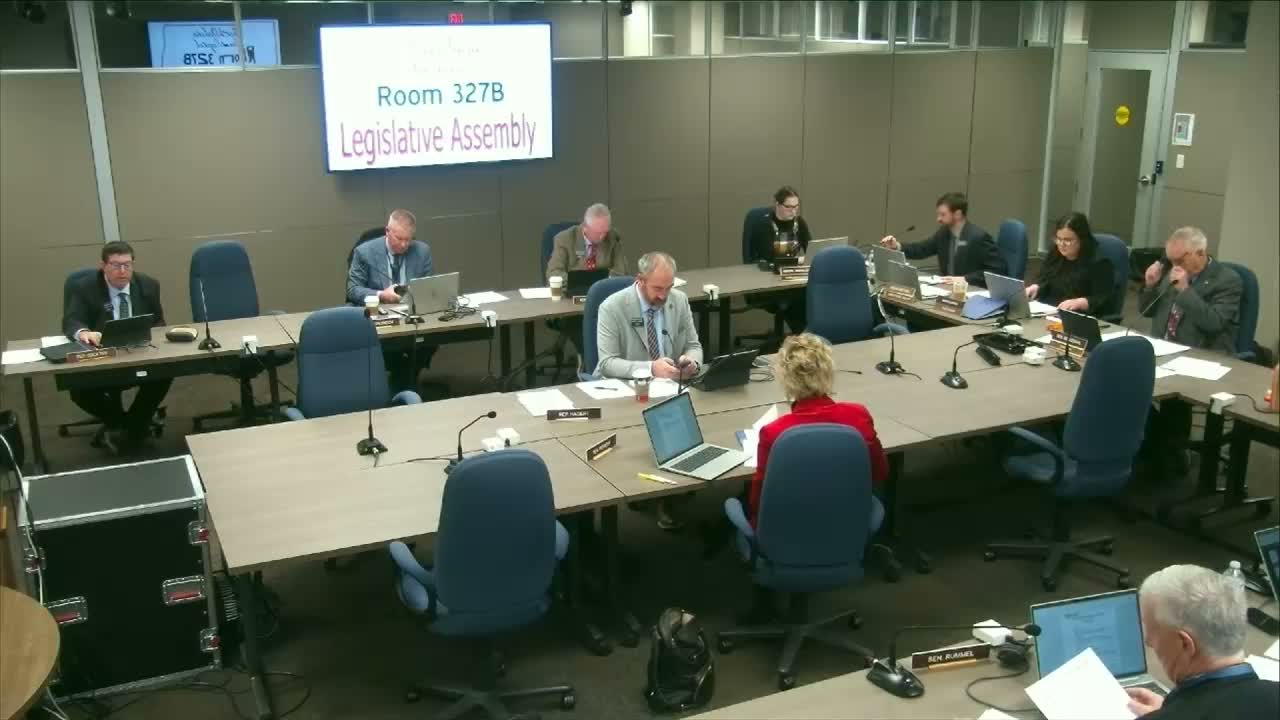
The Tax Reform Relief Advisory Committee voted to ask state agencies to study the oil extraction tax’s "stripper-well" exemption, directing Legislative Counsel’s draft scope to the Department of Mineral Resources, Tax Commissioner and research partners for work aimed at an April–June report next year.
The Tax Reform Relief Advisory Committee voted to request a formal study of the oil extraction tax’s stripper-well exemption, chairing legislators said after debate on the scope and background.
The committee’s motion, moved by Representative Hedlund and seconded by Senator Patton, asks the Department of Mineral Resources, the Tax Commissioner’s office and research partners to gather data on which wells currently qualify, counts of qualifying wells, and the estimated fiscal impact of the exemption. Clerk roll-call minutes show members answered in the affirmative and the motion carried.
Legislative Counsel Adam Matyuk presented the background memorandum that prompted the motion and emphasized the study is required by House Bill 1483. Matyuk reviewed the exemption’s history and mechanics: the extraction tax is separate from the gross production tax, the stripper-well exemption applies only to the oil extraction tax, and the law moved in 2013 from a property-based approach to a well-by-well qualification method. He noted qualifying thresholds vary by formation and well depth — for example, a shallow well historically qualified at about 10 barrels per day average; Bakken/Three Forks thresholds are higher (about 35 barrels per day).
Matyuk told the committee the study will collect production and well counts, estimate fiscal effects and examine alternative policy approaches. He said the committee should expect agency data from the Tax Commissioner and Department of Mineral Resources, and engagement with industry stakeholders and research partners as part of the interim work.
The committee instructed staff to move the drafted study request to the named agencies; members asked Legislative Counsel and staff to add clarifying questions and invited the Tax Commissioner to future meetings on implementation details.
The next procedural step is that staff will transmit the approved study scope to the named agencies and return status updates in subsequent committee meetings toward a targeted April–June deliverable window.