Get Full Government Meeting Transcripts, Videos, & Alerts Forever!
Get email alerts on the Devils Lake Operations topic
No spam. Unsubscribe anytime.
Devil's Lake outlets constrained by sulfate limits; DEQ and DWR outline operational trade-offs
Summary
DWR and DEQ told the committee that sulfate concentrations in the Cheyenne River system limit outlet operations from Devil's Lake; DEQ said natural flushing helps most years but dry seasons cause earlier shutdowns and only a governor-declared emergency can override water-quality standards.
The committee heard a technical briefing on Devil's Lake outlet operations and the water-quality constraints that govern when outlets can run.
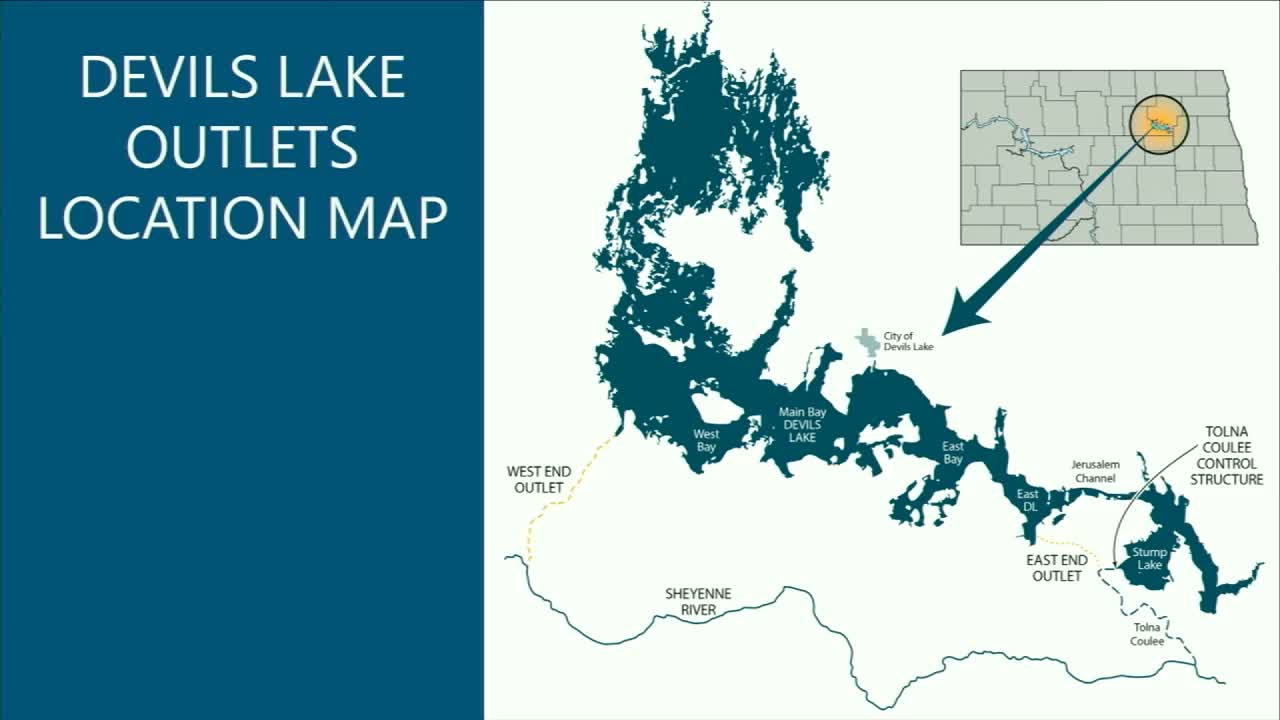
Rhys Haas summarized the outlets' history and operation: the West Outlet began in 2005 at 100 cubic feet per second (cfs) and later expanded to 250 cfs; the East Outlet (completed 2012) has 350 cfs capacity. DWR must manage outlet flows to avoid downstream flooding — staff said they cannot exceed roughly 800 cfs at Cooperstown without flooding downstream areas — and must also meet DEQ water-quality rules limiting sulfate loading.
Martie Harrelson, director of DEQ's Water Quality Division, told the committee that in many years natural downstream flows dilute and flush sulfates; this year, drier conditions and lower flows forced earlier-than-normal shutdowns. Harrelson said sulfates largely remain suspended in the water column and are transported downstream, where dilution and tributary inflows reduce concentrations over time.
Dave Glog, DEQ director, gave a historical and policy perspective: earlier concerns about biological invasives were resolved; current obligations to Canada under existing treaties and the Clean Water Act inform sulfate and other standards at the border. He said the state can temporarily relax standards only under a clear governor-declared emergency — a remedy used in the past to avoid catastrophic uncontrolled outflows.
Committee members asked about treatment options and costs. DEQ and DWR said treating Devil's Lake water at a level that would make it potable (or move it to different watersheds) would be "extremely significant" in cost; they also noted that cross-basin transfers bring additional biological and regulatory complexities. DWR and DEQ agreed to provide additional technical details when requested and noted monitoring and seasonal trends will inform next-year operations.
No regulatory changes were enacted at the meeting; the discussion focused on operational constraints, monitoring, and contingency planning.