Get Full Government Meeting Transcripts, Videos, & Alerts Forever!
Get email alerts on the Opioid Settlement topic
No spam. Unsubscribe anytime.
DHHS: North Dakota has received $26M in opioid settlements; $8M per biennium allocated for grants
Summary
Pam Segnus of DHHS reported $26 million received to date and about $43.3 million expected; statute directs $8 million per biennium to DHHS for competitive grants, with roughly 85% of settlement funds retained by the state and 15% passed to political subdivisions.
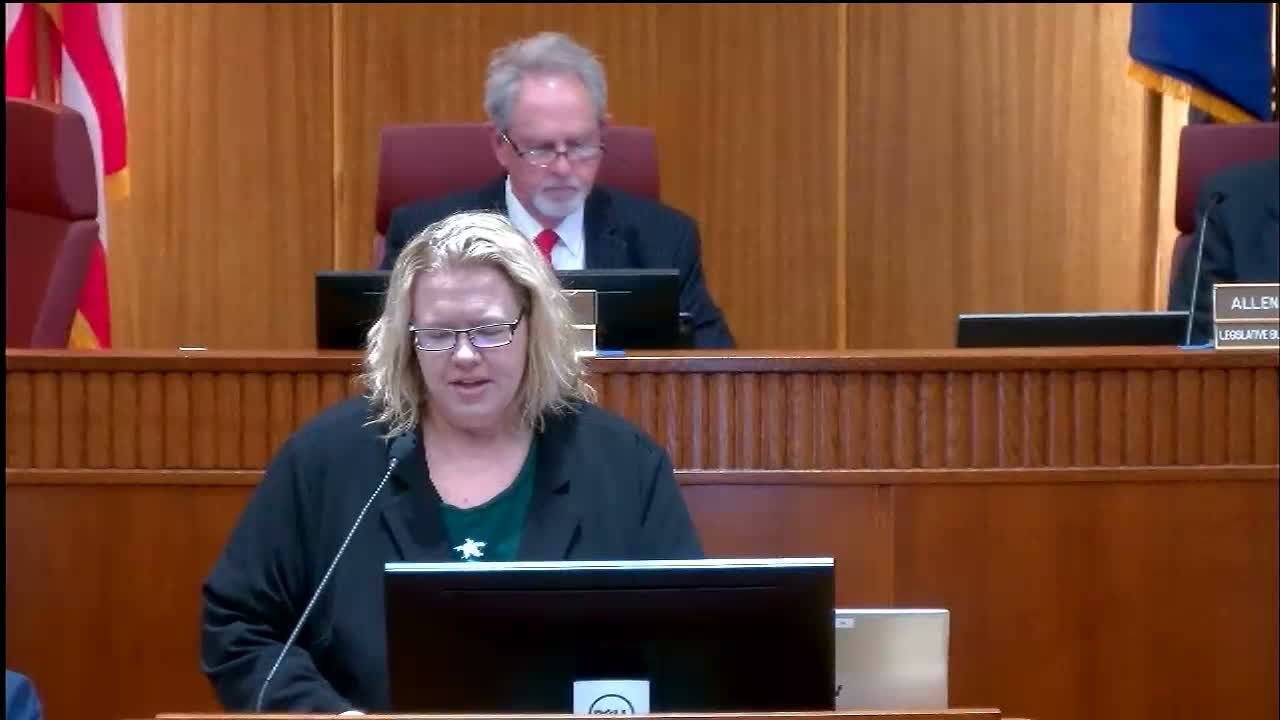
Pam Segnus, executive director of behavioral health at the Department of Health and Human Services, updated the Budget Section on the opioid settlement fund. As of Dec. 5 the state has received $26,000,000 and is anticipating approximately $43,300,000 in additional settlement dollars.
Segnus noted the 2023 Legislature required settlement receipts be deposited into the opioid settlement fund and invested; interest and investment income are credited to the account. She said the state investment board reported about $981,000 in investment revenue through August 2025.
The statute directs the department to appropriate $8,000,000 each biennium for grants addressing the opioid crisis; Segnus said the 2023–25 cycle expended about $7.6 million with some returned funds from grantees that did not use entire awards. She described the 2025–27 grant round (grants began July 1) and the requirement that political subdivisions receiving direct settlement dollars report plans to the behavioral health division. Segnus said the department will provide detailed award amounts upon request.
Committee members asked whether there is a deadline for local allocations and how grants are awarded; Segnus said there is no statutory deadline for political subdivisions to submit plans and that the competitive grant process prioritizes direct services and a 20% prevention/workforce-development set-aside.