Get Full Government Meeting Transcripts, Videos, & Alerts Forever!
Get email alerts on the School Meals topic
No spam. Unsubscribe anytime.
Legislative committee hears DPI estimate that universal free school meals could start near $133 million for next biennium
Summary
DPI Director Lynell Johnson told the E & E Committee that a proposed ballot initiative to provide universal free school meals could cost roughly $133 million in the 2027–29 biennium under current assumptions, but she emphasized the estimate is preliminary and participation, federal reimbursements and certification trends could change the total.
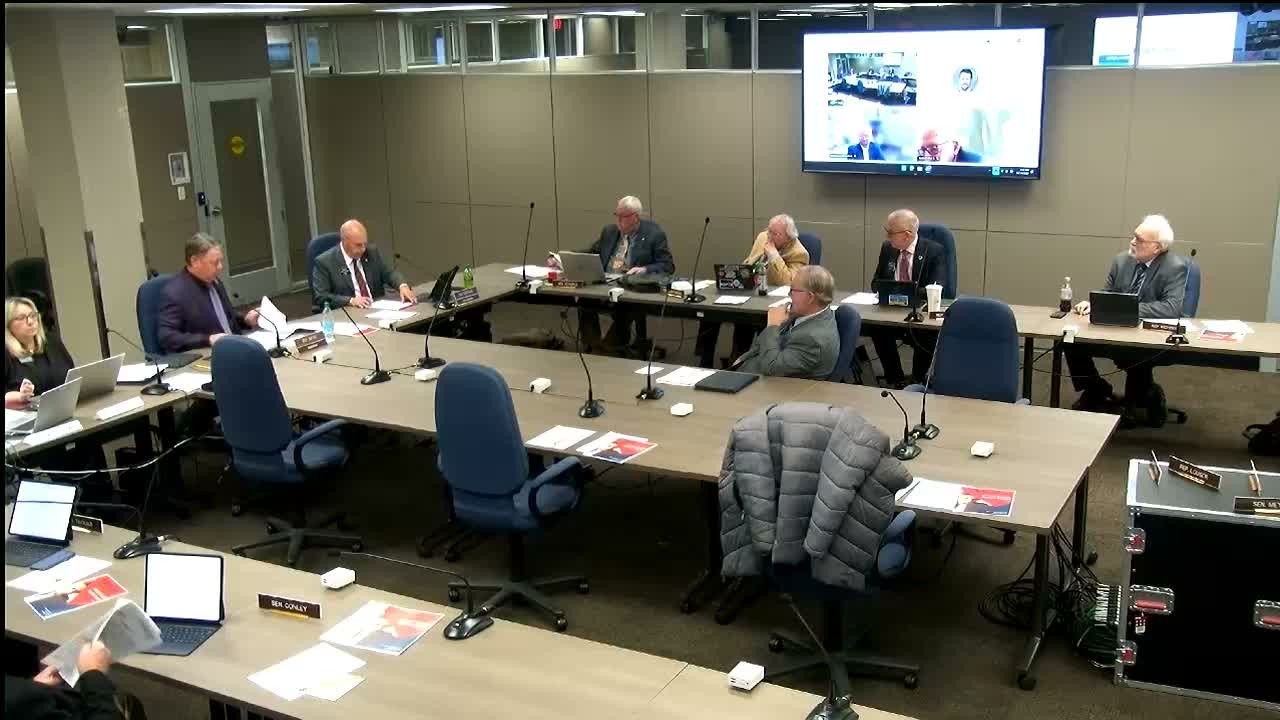
Lynell Johnson, director of child nutrition and food distribution at the Department of Public Instruction, briefed the E & E Committee on a proposed ballot initiative to provide universal free school meals, offering a working cost estimate and explaining how federal and state funding would interact.
Johnson said the current reimbursement framework means the federal government pays a baseline amount for reimbursable meals (about $2.46 for a free breakfast and $4.69 for a free lunch under this year’s USDA rates). State policy that expanded eligibility to 225% of the poverty level (the “state 225” program) already increased state responsibilities to reimburse schools for certain students. Under the initiative scenario — in which the state would cover remaining meal costs for all students who are not federally eligible — Johnson offered a refined, preliminary estimate of roughly $133,000,000 for the 2027–29 biennium, while noting an earlier high‑end estimate that circulated in the public debate had been about $140 million.
Why the number is uncertain: Johnson listed three main variables that could materially change the cost: future participation rates (full‑price students historically eat at lower rates than free/eligible students), changes at the federal level that affect Medicaid and SNAP direct‑certification (which determines how many students generate federal reimbursement without an application), and the USDA’s annual adjustments to per‑meal reimbursement rates. She said DPI will continue refining estimates and could return with updated figures before session.
Committee members pressed on behavioral and budget risks. Representative Lausser and others raised concern that families might stop filing free and reduced applications if meals are universally free, which would reduce federal reimbursement streams that currently fund parts of school operations. Johnson said some states (she cited Colorado and Minnesota as examples) used mitigation strategies to maintain application processes; she agreed to collect state‑level participation and fiscal outcomes for comparison. Representative Shibley warned that lower application rates could also affect Title I and other programs that rely on eligibility metrics, while Johnson noted some Title I funding has shifted toward census‑based measures.
Members also asked about private schools: Johnson said the draft initiative language appears to require public schools to participate while allowing nonpublic schools to opt in, but she recommended Legislative Council review the final, official ballot language for clarifications and potential ambiguities.
On the question of where state funds would come from, Johnson and members discussed the initiative’s fallback: the measure directs the Legislature to appropriate funds and specifies that, if no other source is identified, required funds would be drawn from the Legacy Earnings Fund. Several members asked for an analysis of potential long‑term fiscal pressure, and Chairman Navey asked DPI and Legislative Council to return once the official initiative language is filed and DPI has refined enrollment and cost modeling.
The committee did not take formal action on the initiative; members requested follow‑up information including comparative data from other states, refined participation scenarios, and a clearer projection of multi‑biennium costs.
Ending: DPI will provide updated cost models and state comparisons when the initiative’s official text is available; the committee expects to revisit the briefing prior to session.