Get Full Government Meeting Transcripts, Videos, & Alerts Forever!
Get email alerts on the Veterans topic
No spam. Unsubscribe anytime.
North Dakota Veterans Affairs details budget wins, Fisher House and Fargo cemetery line of credit
Summary
Commissioner Lonnie Wongen told the Budget Section the Department of Veterans Affairs restored one FTE, spent ARPA funds on document scanning and transportation pilots, advanced Fisher House funding in Fargo, and cited a $3 million state line-of-credit in Senate Bill 2265 to support construction at the Fargo National Cemetery.
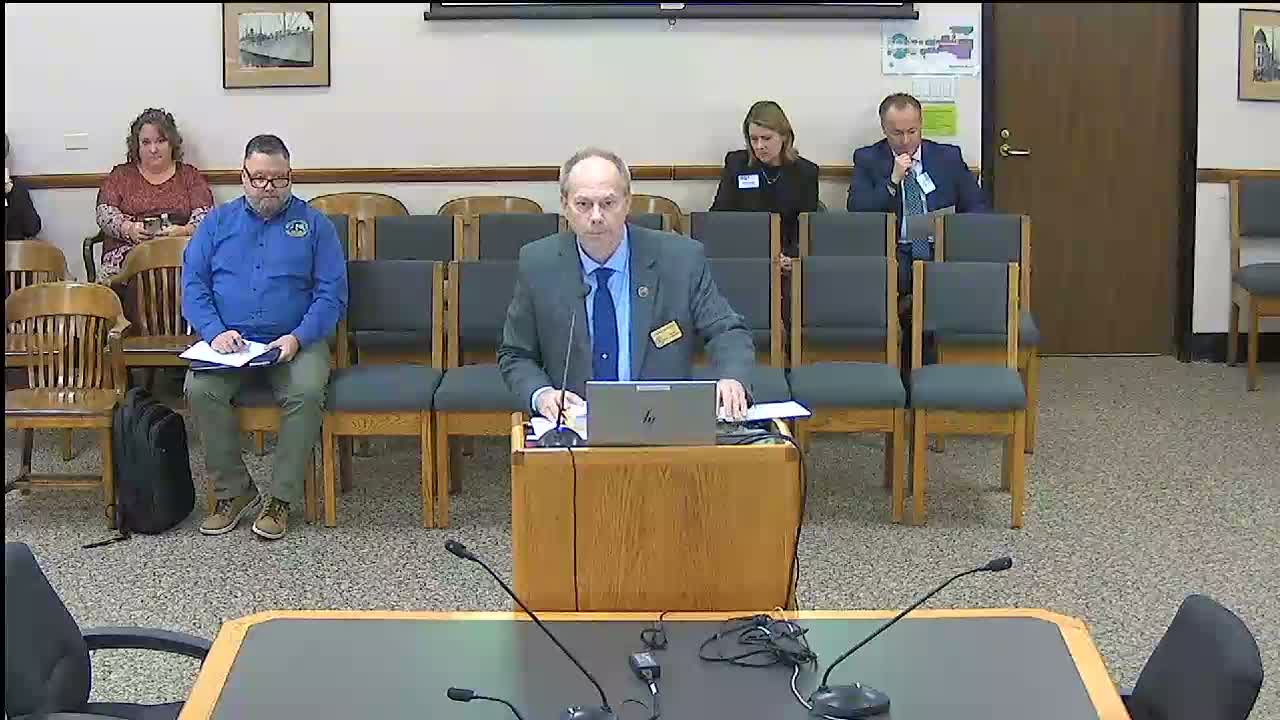
Commissioner Lonnie Wongen presented the Department of Veterans Affairs budget update to the Budget Section, summarizing staffing changes, one-time projects and capital plans. For the record, he said, “my name is Lonnie Wongen, Commissioner of Veterans Affairs for the state of North Dakota.” He reported the agency regained one full‑time equivalent position (filled July 1) and is tracking near 79% of biennial spending at this point in the cycle.
Wongen outlined recent and one‑time funding: ARPA dollars supported a document scanning project and a pilot for transportation to medical appointments; the department purchased new vans (approximately $70,000 apiece) and carried small ARPA carryovers to settle outstanding invoices. On homelessness, he said the department received a $500,000 general‑fund appropriation to prevent and house veterans and that CAPND was selected as a partner; “they waived the 5% [administrative fee],” he said, noting the department expects partner support for counseling and follow‑up services.
On Fargo projects, Wongen described an existing Fisher House effort funded with ARPA and other one‑time appropriations and outlined a state credit mechanism for the Fargo National Cemetery: “Senate Bill 2,265 allows $3,000,000 in a line of credit that will go through the North Dakota Department of Veterans Affairs as a grant,” he said, explaining the model will be similar to Fisher House (nonprofit builds with donated design/construction services and the federal National Cemetery Administration operates completed facilities).
Wongen also discussed service‑dog funding: $50,000 was appropriated and one applicant has been approved; he said the appropriation would allow funding for roughly four dogs as applications are approved. He answered committee questions about VA national staffing changes, saying the agency saw reductions primarily in claims and appeals positions rather than frontline clinical staff.
The Budget Section accepted the presentation and asked agency staff to provide further detail where requested. No formal vote was required on the presentation; members signaled appreciation for the update and asked for follow‑up materials on specific budget lines and grant coordination.