
Legislative Management adopts special‑session rule package and day‑one agendas for Jan. 21 special session
Get AI-powered insights, summaries, and transcripts
Subscribe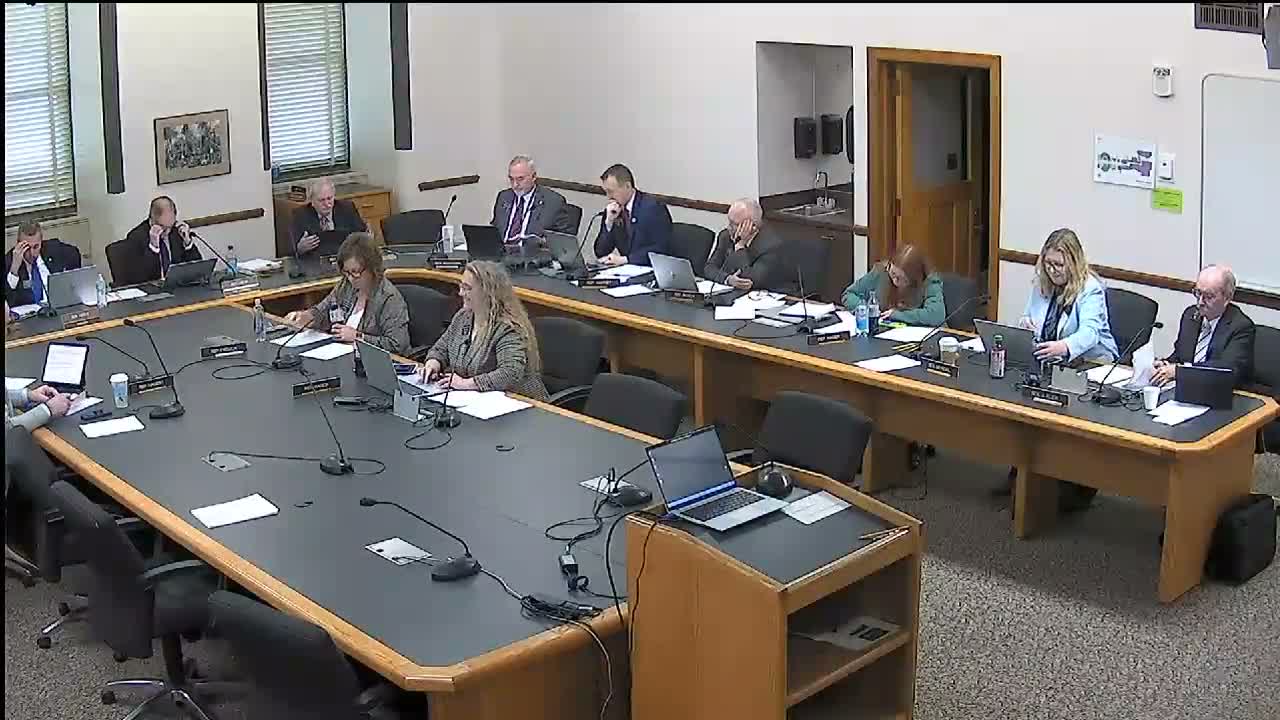
Summary
Legislative Management approved special‑session rule amendments that accelerate floor procedures, create two joint standing committees, and shift several filing deadlines. It also adopted tentative day‑one Senate and House agendas, including time to swear in new House members.
Legislative Management voted to forward a package of special‑session rule amendments and adopt tentative day‑one agendas for the Jan. 21 special session.
The committee approved rule changes described by committee staffer Beth Dittis that are intended to expedite floor procedures during a special session. Dittis said the package would allow a second reading on the same day a bill is reported from committee without requiring the usual two‑thirds vote, permit a bill to receive second reading and final passage one day after its first reading, and enable immediate transmission to the second house after second reading unless a majority or minority leader gives notice of intent to reconsider.
The changes also restructure committee assignments for a special session: procedural committees would be limited to the rules committee, employment, corrections and revisions of the journal, and arrangements for committee rooms. Two joint standing committees would replace most regular standing committees: a 39‑member Joint Appropriations Committee (23 House, 16 Senate) and a 28‑member Joint Policy Committee (14 House, 14 Senate). Dittis said joint committees must issue joint reports on bills and require a majority vote from members of each chamber to pass an amendment and issue a joint report.
Committee members asked how remote participation would be handled. Representative Bosch asked whether remote participation applied only to testimony in committee or also to voting on the floor. Dittis replied that floor participation and voting are discretionary decisions by the House speaker or Senate majority leader, while committee remote participation is subject to the committee chair’s approval.
Members also discussed several shifted deadlines that would take effect to accommodate the special‑session schedule and the next regular session. Dittis noted one example: moving the agencies’ prefile deadline to the day before Thanksgiving rather than the day after adjournment of the organizational session, and accelerating certain resolution-reporting deadlines by roughly seven legislative days.
Following the presentation, Senator Bausch moved and Representative Bosch seconded a motion to accept the Legislative Procedures and Arrangements Committee report and forward the rule packages. The committee recorded a roll call and the motion carried.
The committee then reviewed tentative day‑one agendas prepared by Legislative Council staff. Megan Gordon outlined an early‑morning rules committee meeting (7:30 a.m.), a morning floor session beginning at 8:30 a.m., a 10 a.m. joint State of the State address (30 minutes), and committee hearings beginning at 10:30 a.m. The agendas include placeholders for five health‑related bill drafts and an appropriation draft. The House will also allot time immediately after roll call to swear in three new members.
Representative Haggart moved to adopt the Senate agenda and the House agenda as revised; the motion was seconded and carried on voice/roll call vote.
The committee directed staff to notify legislators of the process, including a recommended Friday‑noon deadline for submitting bill requests to Legislative Council so drafts can be prepared for the meeting the following Tuesday. The committee noted the deadline is tight but consistent with prior special‑session practice.
The chair closed the item by confirming logistics for the upcoming special session and the meeting was adjourned.