Get Full Government Meeting Transcripts, Videos, & Alerts Forever!
Get email alerts on the Educator Layoffs Diversity topic
No spam. Unsubscribe anytime.
Advocates urge committee to let districts weigh teacher performance to protect diverse workforce
Summary
Proponents of S.327/H.711 told the Joint Committee on Education that strict seniority-based layoffs disproportionately remove early-career, diverse educators and urged pilot authority for districts to consider performance, student impact and critical shortages during reductions in force.
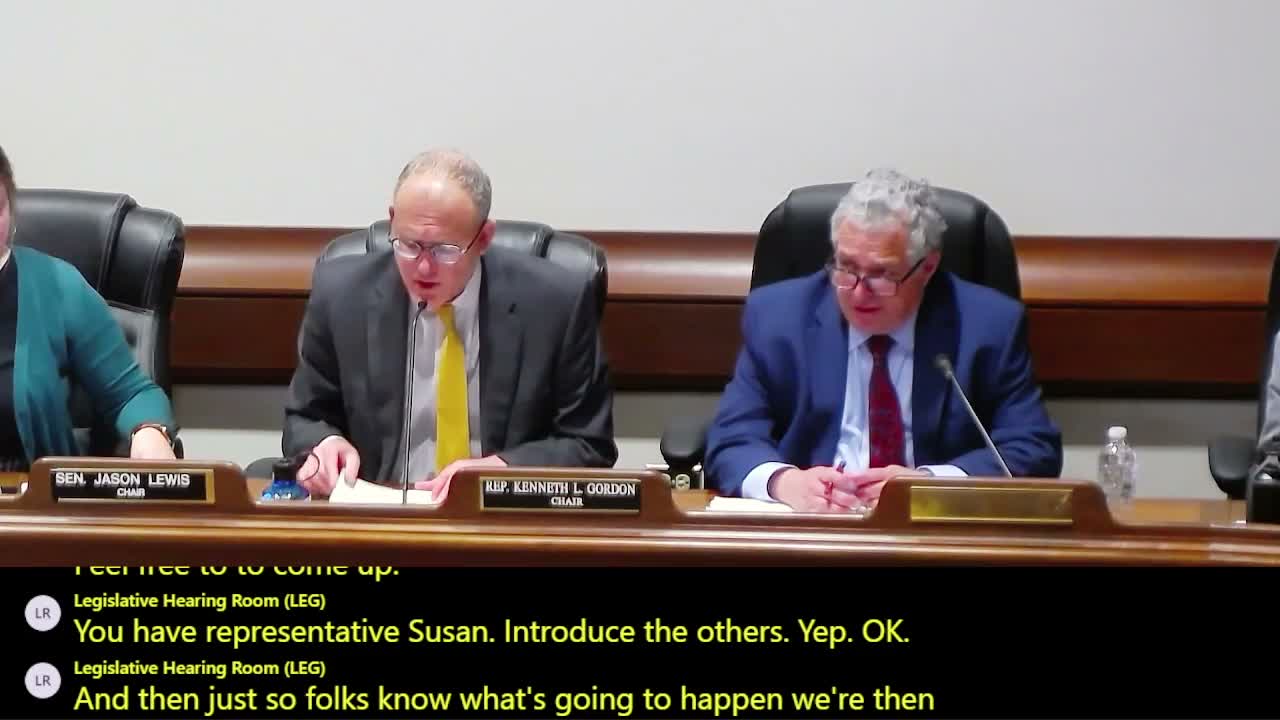
Sen. Jason Lewis convened the Joint Committee on Education on Jan. 20 as supporters of S.327 and H.711 pressed for changes to how districts handle layoffs to preserve educator diversity.
Cedric Jacobson, a science teacher at Brook High School, said the current law "enforces ambiguous often prioritizing seniority over job performance," arguing that approach "undermines our ability to retain the highly qualified and diverse educators essential for student success." He told the committee: "Over 45% of Massachusetts public school students are students of color yet only 10% of the state's public school teachers match that description." (Cedric Jacobson)
Dr. Deshaun Washington, a teacher who described near-attrition in his first year, urged lawmakers to avoid a strict last-in, first-out (LIFO) approach. "Under last in first out ... I would have been the first teacher laid off," he said, describing how administrators' mentorship turned his early career around and warning that LIFO can push out early-career teachers working in high‑need schools.
Lisa Lazar, executive director of Educators for Excellence—Massachusetts, framed the bills as a measured policy change: she said S.327/H.711 "solves this issue by requiring districts to consider multiple factors such as teacher performance, staffing needs in high needs schools, and critical shortage alongside seniority." Lazar noted Massachusetts is "only one of six states that currently require early career educators to be let go first," and urged the committee to allow districts to pilot alternative reductions‑in‑force procedures.
In committee discussion, members raised questions about tenure and contract language. Chair Lewis reminded the room of the recently passed Educator Diversity Act and DESE's ongoing implementation work; proponents said the bills are intended to complement—not abolish—seniority, by adding quality measures only when a district triggers a reduction in force for budgetary or fiscal reasons. Representative Cruz described a locally negotiated ordering that starts with seniority and moves to evaluation and other tiebreakers as an example of how districts and unions can incorporate additional factors.
The proponents emphasized the bills were written as pilot or optional pathways for districts, not as a blanket replacement of tenure protections.
The committee did not take a vote at the hearing; members asked proponents to continue discussions with unions and DESE implementation teams before the next steps.