Get Full Government Meeting Transcripts, Videos, & Alerts Forever!
Get email alerts on the Criminal Justice topic
No spam. Unsubscribe anytime.
Panel divides over decriminalization of sex work and expanded vacatur for trafficking survivors
Summary
Survivors, public‑health researchers and sex‑worker organizers told the committee that decriminalizing consensual adult sex work (H.1980) would improve safety, reporting and public health; survivor‑led groups and other witnesses supported vacatur/expungement but warned against conflating consensual work with trafficking.
The committee heard competing but partially overlapping proposals on how to address harms tied to sex work and trafficking. H.1980 would decriminalize consensual adult sex work; separate bills (for example H.1683/H.1116) seek to strengthen vacatur/expungement and to create a survivor‑centered commission to coordinate services.
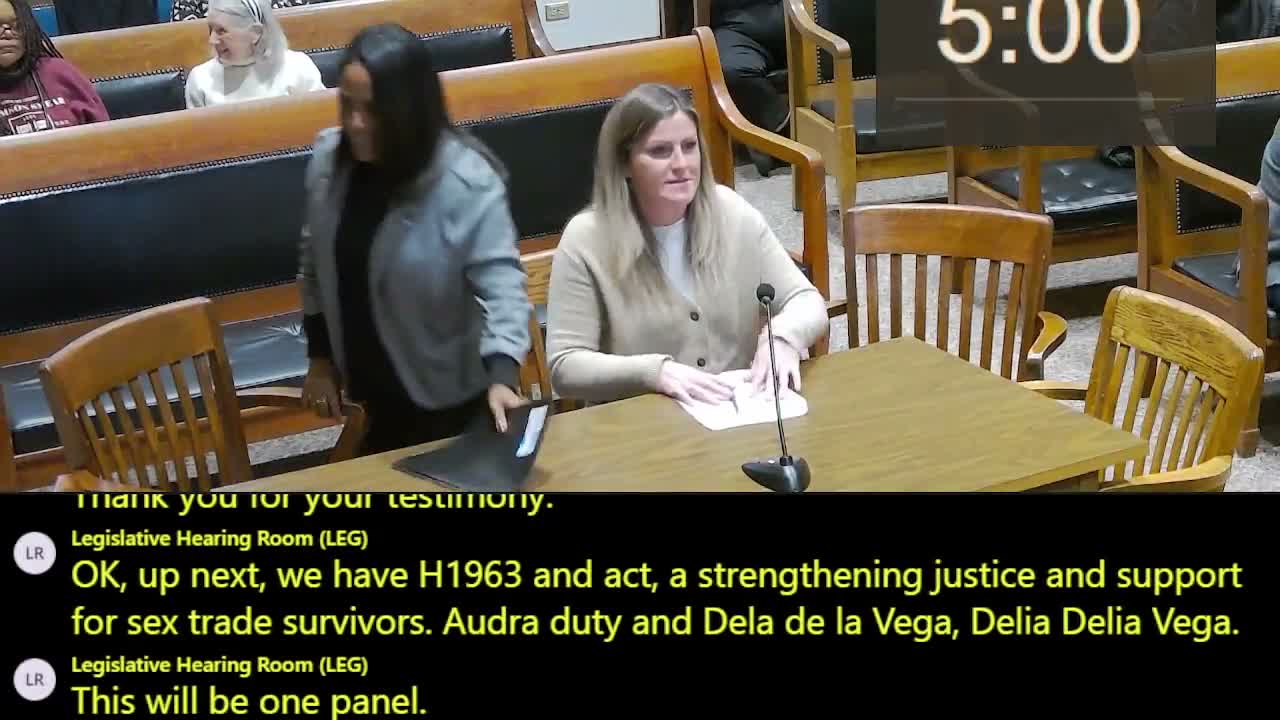
Survivors and service providers described how records from prostitution‑era statutes block access to housing, employment and services. "A criminal record is more than just legal obstacles," said Audra Doody of Safe Exit Initiative, describing how vacatur or expungement would help survivors rebuild housing and employment stability. Multiple survivor‑led witnesses said vacatur should be accessible, automatic in some cases, and accompanied by trauma‑informed services.
Sex‑worker advocates and researchers argued decriminalization improves safety and the ability to report violence. "When buying or selling sex is criminalized, they cannot report trafficking without fear of being arrested themselves," testified Jessica Van Meer (policy chair, Boston Sex Workers and Allies Collective), citing international evidence such as New Zealand experience.
Legal advocates for vacatur expressed concern with draft language in some survivor bills that creates a stigmatizing statutory category ("prostituted person") and expands asset forfeiture; those provisions risk harming the very people the bills aim to help, they said. Melissa Bruto (legal director, Decriminalized Sex Work) and Rebecca Cleary urged the committee to avoid conflating trafficking and consensual adult work in statutory language and to ensure vacatur processes are accessible and not retraumatizing.
Several witnesses said the policy goals — reducing exploitation, expanding services, ending harmful criminal records — are shared across groups but that legislative drafting must address distinctions in lived experience and avoid unintended consequences. The committee collected written testimony and heard dozens of in‑person and virtual witnesses; no vote was taken.