Get Full Government Meeting Transcripts, Videos, & Alerts Forever!
Get email alerts on the Civil Rights topic
No spam. Unsubscribe anytime.
Attorney General urges new subpoena power, data reporting in hate‑crime reform bill
Summary
Attorney General Andrea Joy Campbell told the joint committee that Massachusetts should expand state civil‑rights investigatory tools, add protective classes to hate‑crime law, and require mandatory hate‑crime data reporting to better prevent bias incidents.
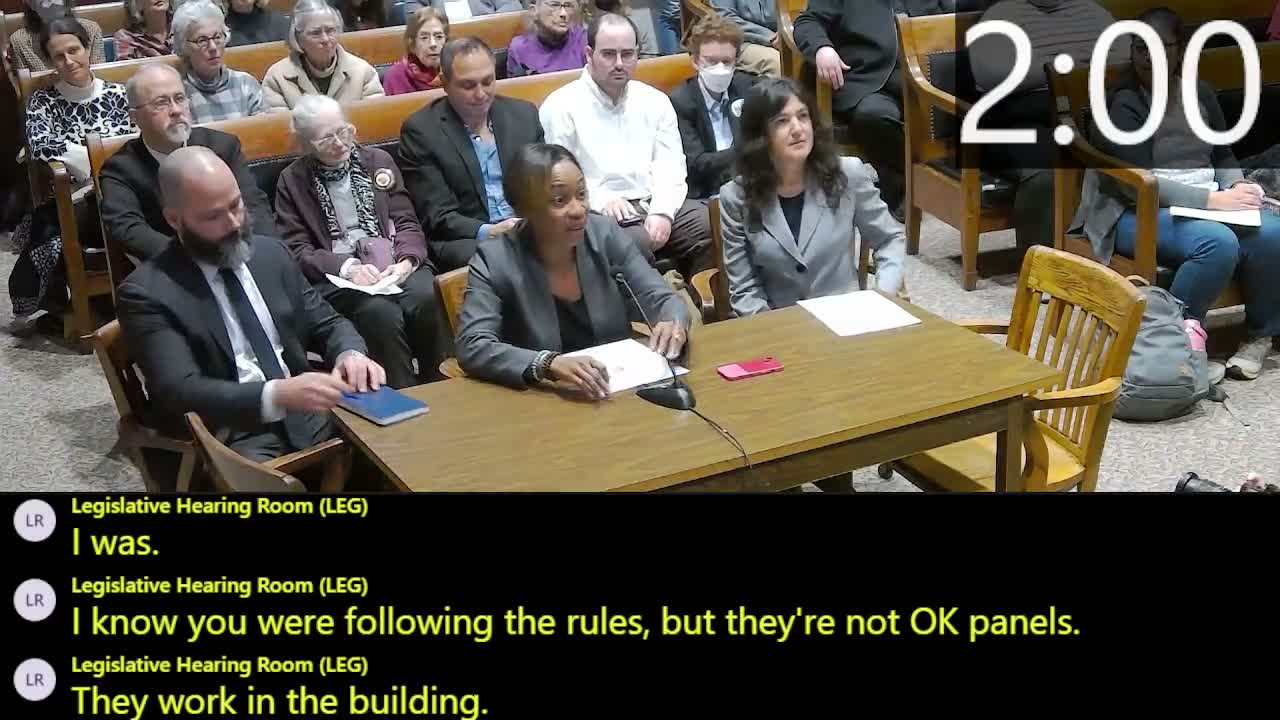
Attorney General Andrea Joy Campbell and civil‑rights division leaders asked the Joint Committee on the Judiciary to give S.1126 and H.1920 a favorable report, saying the Commonwealth must strengthen tools to investigate and prosecute bias and hate incidents.
"I am here to testify with respect to my support and strong support of S.1126 and H.1920, an act relative to combating hate in the Commonwealth," Campbell told the committee, describing an increase in targeted harassment and bias incidents against immigrants, Jewish and Muslim residents, and LGBTQ+ communities.
Elizabeth Matos, chief of the AGO Civil Rights Division, detailed specific gaps the legislation would address: giving the division civil investigative demand authority (a subpoena‑like power), expanding injunctive relief, adding missing protective classes to the state hate‑crime statute, and requiring more thorough mandatory reporting of hate‑crime data by local law enforcement so the state can better predict and prevent incidents.
Matos said the division currently lacks subpoena authority similar to federal civil‑rights enforcement and other state enforcement units (for example, consumer protection) and that providing such a tool would allow more comprehensive investigations of organized hate and systemic incidents. "This legislation would address this gap and prioritize civil rights enforcement by providing civil investigative demand authority or subpoena power to the division," she said.
Committee members asked clarifying questions about the boundary between criminal and civil investigatory powers; witnesses emphasized that the bill targets civil investigative tools and data reporting to improve prevention and enforcement rather than criminalizing new conduct.
The hearing included supportive testimony from victim advocates and legal experts. No final committee action was taken during the session; sponsors sought a favorable report to advance the legislation.