Get Full Government Meeting Transcripts, Videos, & Alerts Forever!
Get email alerts on the School Impact Fees topic
No spam. Unsubscribe anytime.
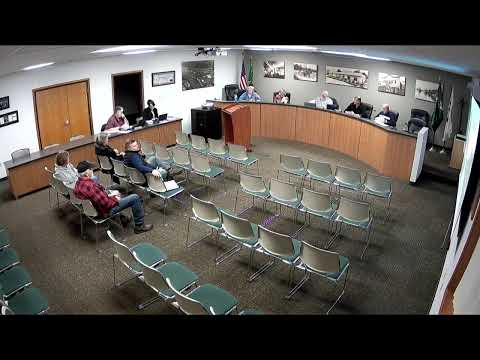
Woodland Planning Commission adopts higher school impact fees; urges county talks
Summary
The commission voted to adopt Ordinance 15-79 amending how school impact fees are calculated and collected after hearing school-district testimony and public comment; staff and commissioners also pledged to press Cowlitz County to align collections to reduce local disparities.
The Woodland Planning Commission voted to adopt Ordinance 15-79, amending Ordinance 14-31 to update the city's school impact fees after a public hearing and testimony from the Woodland School District.
School-district representative Asha told the commission the increase largely reflects rising construction costs and the district's planning choices. "$10,545.93 is what the report generated," she said, referencing the per-single-family-home fee produced by the district's study. She added the district 'recognize[s] that the cost is a significant change' and expressed willingness to work with the city on final numbers.
Commissioners and commenters pressed several technical points. Some speakers noted roughly half of Woodland's students live outside city limits in neighboring counties, meaning collection rules adopted by Clark or Cowlitz County affect who ultimately pays the fee. Commissioner Simpson said she would pursue discussions with Cowlitz County as part of the county's comprehensive-plan update, calling it "a steep hill to climb, but this is the year to do it."
The commission also discussed the methodology used in the district's calculation. A public commenter flagged that the report uses a 400-student design size for a proposed elementary school even though a six-year projection showed a need of about 161 students; he argued that charging fees based on overcapacity could be legally and politically problematic. Asha responded that districts typically plan for a reasonable long-term school size and that the formula incorporates several conservative variables.
Commissioners and staff clarified how impact fees may be spent. Asha and staff explained that school impact fees are restricted to capital improvements that provide new student capacity; they cannot be used for routine repairs such as roofing. She described an example: fees paid by development next to North Fork Elementary funded a portable classroom, but an unrelated roof replacement at Columbia Elementary could not be paid from those fees.
Action and next steps: after deliberation, a motion to adopt Ordinance 15-79 as presented was moved and seconded; the commission recorded unanimous 'Aye' votes in the roll call and passed the ordinance on to the city council for its readings and final action. Commissioners said they will continue to gather data, consider adjustments for accessory dwelling units (ADUs) and other development types, and pursue intergovernmental conversations with Cowlitz County to explore broader collection or rate-sharing options.
The ordinance will not take final effect until the city council holds its readings; staff said the council process may include modifications. The commission kept the public hearing record open during some deliberations and thanked district staff and community members for detailed comments and data offered during the meeting.