Get Full Government Meeting Transcripts, Videos, & Alerts Forever!
Get email alerts on the Local Governance topic
No spam. Unsubscribe anytime.
Fairbanks North Star Borough presents 2026 legislative priorities to Interior delegation, urges school funding and Fairbanks spur for LNG pipeline
Summary
The borough asked Interior delegation members to support increased school funding (BSA/PERS-defined benefits), restoration of property-tax reimbursements and revenue sharing, and to conditionally back a Fairbanks spur of the proposed Alaska LNG pipeline to keep local energy costs down.
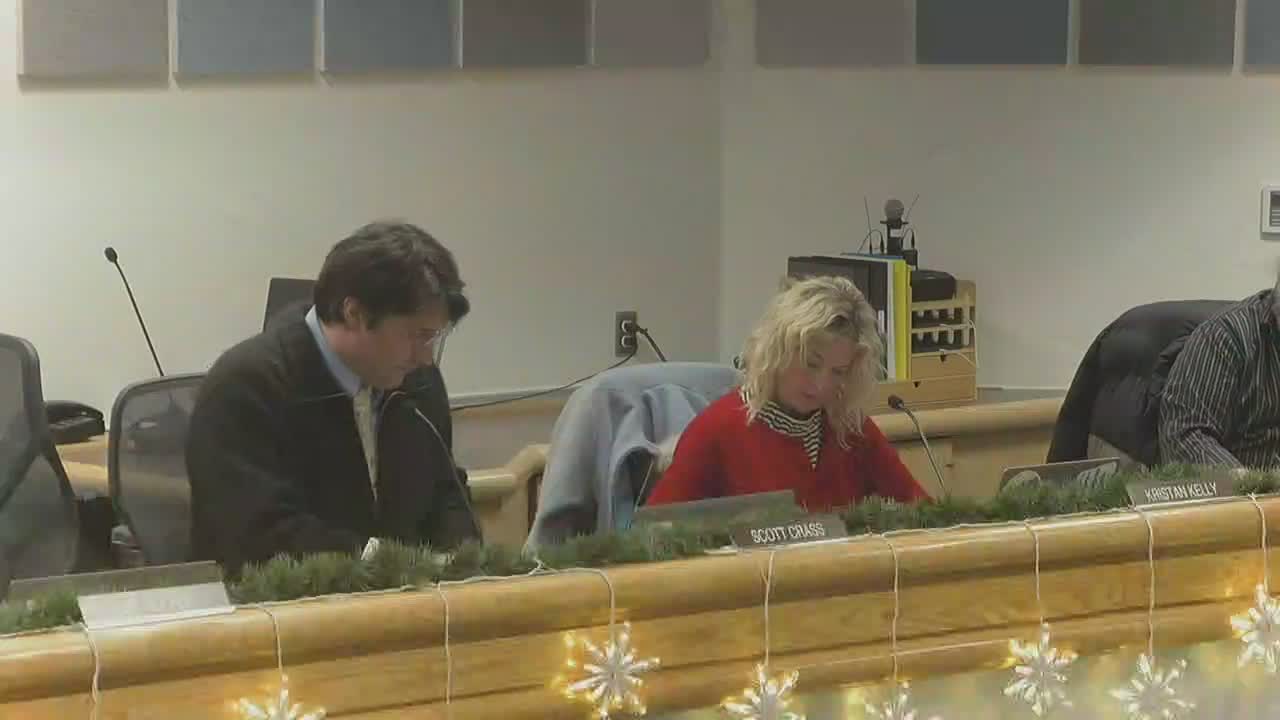
The Fairbanks North Star Borough Assembly laid out its top legislative priorities at a Dec. 4 work session with the Interior delegation, pressing for state action on school funding, local reimbursements and energy infrastructure.
The assembly identified restoring or increasing the Borough School Allocation (BSA) and addressing public-employee retirement contributions as central priorities to retain teachers and stabilize school finances. Assembly members said the district faces a current budget shortfall and deferred maintenance that local taxpayers cannot shoulder alone. The borough requested that the state restore full school-bond debt reimbursement and resume full funding of statutory real-property tax revenue reimbursement, which has not been fully funded since 1997.
Legislative staff cautioned the delegation about fiscal limits. Mr. Otto, representing legislative staff, said raising the inflation-adjusted BSA from 6,660 to 7,768 would “approximately cost the state $280,000,000,” underscoring the budget trade-offs lawmakers will face.
On energy, the borough urged support for the Alaska LNG spur that would bring gas to Fairbanks. Representatives and staff described bills moving in both chambers: a House bill (HB119) in House Resources and a companion Senate bill (SB114) that has had initial hearings. Representative Kerrick said the intent among Interior delegation members is to “support a gas line conditionally with the spur line,” noting the goal is to prevent high local energy costs.
Assembly members repeatedly stressed the distributional risk of pipeline pricing. Several members warned that, depending on the rate-setting formula, Fairbanks ratepayers could pay more than other regions; Mr. Otto said one proposed structure is a per-mile rate designed so "ratepayers in Fairbanks would pay about half as much as ratepayers in Anchorage." Delegation staff also noted discussions with the regulatory authority (RCA) to help limit rates charged to Fairbanks customers.
Other legislative asks included restoring community revenue-sharing funds, enabling local rental-conversion tax incentives to encourage short-term rentals to move to long-term housing, adding volunteer hazmat responders to an existing property-tax exemption, and supporting animal-adoption privacy protections so adopters’ contact information is not disclosed to former owners.
The assembly emphasized the tight state fiscal environment. Several legislators, including Senator Kawasaki and Senator Myers, warned that lower oil prices and competing obligations (including Western Alaska disaster relief) will constrict capital and operating budgets this session and urged realistic expectations.
The work session closed with the assembly asking the delegation to carry local priorities to Juneau and to coordinate on technical fixes and funding strategies. The chair adjourned the meeting after expressing appreciation for the delegation’s attendance and urging cross-party cooperation.