Laconia staff outline how New Hampshire's ED 306 competency standards will change graduation and curriculum
Loading...
Summary
District presenters told the Laconia School Board that New Hampshire's updated ED 306 standards (adopted about a year ago) shift high-school credits from seat time to competency-based demonstration and add several half-credit requirements beginning with the class of 2030.
Speaker 3, the evening's presenter, told the Laconia School Board on Dec. 16 that the New Hampshire Department of Education adopted revised standards (ED 306) about a year ago and that district teams have been crosswalking old and new language to understand impacts.
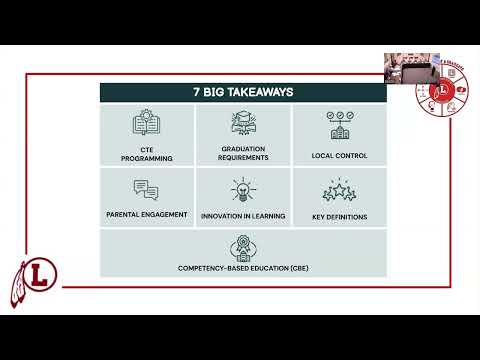
The presenter said the new framework emphasizes competency-based education and local control in developing competency statements. "The new standards were adopted and became the standards by which public schools in New Hampshire, operate," Speaker 3 said, adding that districts retain flexibility to develop competencies as long as they align to state standards.
Why it matters: Board materials and staff analysis show the biggest immediate change affects high-school graduation credits. Under ED 306, credits will be tied to proficiency and mastery rather than only seat time. Speaker 3 said the district will maintain a dual set of graduation requirements next year so current sophomores, juniors and seniors remain under the 26-credit diploma while incoming freshmen (class of 2030) follow the new competency-aligned requirements.
Key changes and examples: Staff listed several new required or clearly-identified half-credit elements for the class of 2030, including a half credit in writing, a half credit in rhetoric and logic, a half credit in data analysis/statistics, New Hampshire history/constitution/government content, personal financial literacy and a half credit in digital literacy. "We will be required to establish a half credit of writing," Speaker 3 said.
Staff explained they are exploring how to "embed" these half credits in existing courses rather than creating many new standalone classes. That work includes mapping course competencies to state standards and to summative assessments; Speaker 3 noted summative assessments currently make up about 70% of a course grade and will be used to document demonstrated proficiency where appropriate.
Challenges and next steps: Board members asked how transfer students and juniors from other districts will receive missing competencies. Speaker 3 said the district is developing avenues such as competency-recovery programs and cross-district crosswalks but that details remain under discussion: "We have a backup plan," Speaker 3 said.
The academic task force and department leaders reported they are more than halfway through work aligning assessments and competencies and will prioritize professional development over the next one to three years. Staff said a program-of-studies update for incoming freshmen will be ready before February course selection.
What the district will do next: District staff will continue crosswalking course descriptions to state model competencies, develop assessment maps, and bring policy changes forward as required. A QR code and a side-by-side comparison document of statewide changes were offered to board members as reference materials.
The board had no formal vote on the standards themselves; the presentation concluded with questions and ongoing work scheduled into next year.