Chesapeake Land Bank Authority reports FY25 gains, unveils strategic plan
Loading...
Summary
The Chesapeake Land Bank Authority presented its FY25 annual report and a multi-goal strategic plan developed with the Center for Community Progress, highlighting 18 properties in inventory, $276,000 in grants awarded in FY25 that leveraged $416,000, and new strategies to expand acquisitions, diversify funding, and prioritize neighborhood-based dispositions.
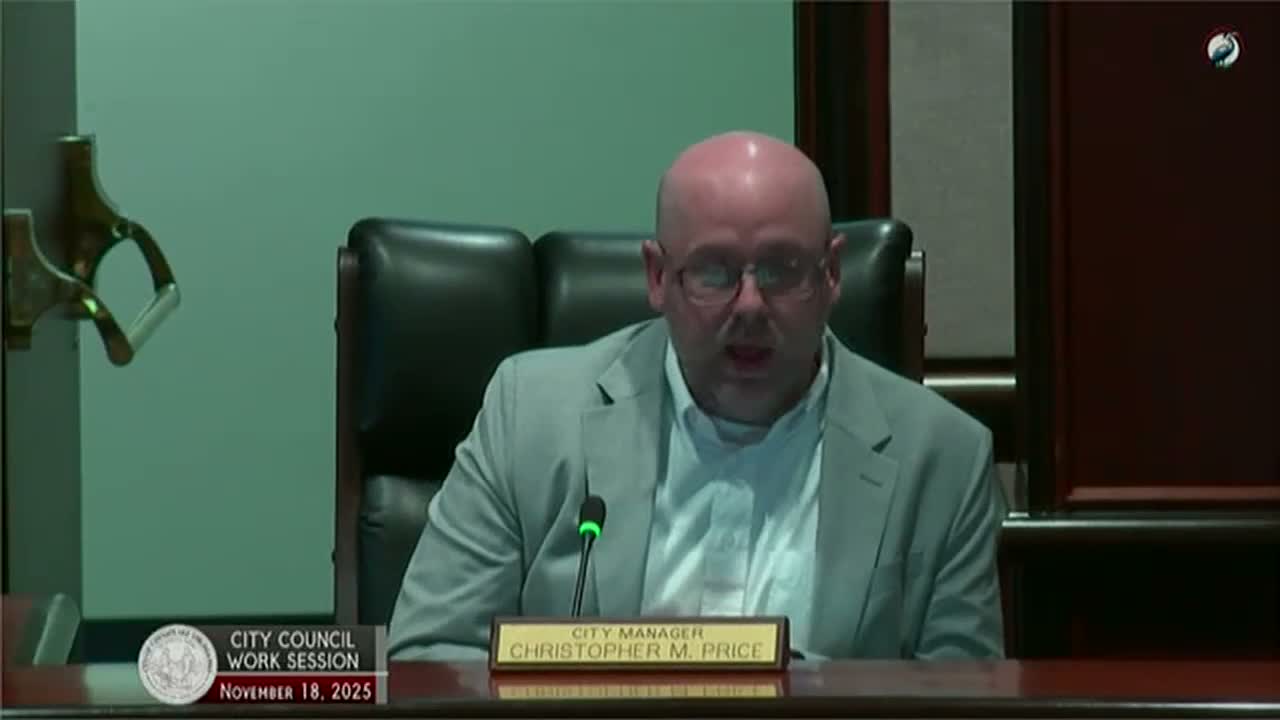
John Harbin, director of the Chesapeake Land Bank Authority, presented the authority’s FY25 annual report and a newly completed strategic plan to the City Council during a Nov. work session. Harbin said the land bank currently holds 18 vacant, abandoned or deteriorated properties — nine in the South Norfolk target area, seven in Great Bridge and two in Indian River — and has returned five parcels to productive use in the last year.
The land bank’s South Norfolk Residential Rehab ("Grama") matching grant program was a centerpiece of the presentation. Harbin told council that the program typically functions as a 50–50 matching grant; in FY25 the authority awarded $276,000 in grant funds that leveraged a total investment of $416,000 in the historic district. "The grant typically functions as a fifty–fifty matching grant," Harbin said, adding that an income-qualified hardship provision can cover up to 100% of project costs for qualifying homeowners.
Consultants Kim Graziani and Nora Daley of the Center for Community Progress summarized the strategic plan work they completed over six months. The plan identifies five goals: build a comprehensive inventory and data-sharing process with city departments; expand residential rehab programming modeled on South Norfolk; broaden acquisition and disposition strategies with greater transparency; grow funding capacity and partnerships (including state and national advocacy); and strengthen resident relationships and the citizen advisory committee. Graziani noted Chesapeake is relatively unique in Virginia: "I have worked with almost 300 land banks and it's very unique and very inspirational to see the level of commitment from city council," she said.
Harbin and the consultants highlighted several specific dispositions and projects: the Liberty Street assembly and subdivision that yielded two owner-occupied homes, and a side-lot sale at 3703 Bainbridge Boulevard that enabled a local business expansion. Harbin described the land bank’s flexibility to hold land tax-free and to dispose of parcels in ways aligned with community goals, including side-lot transfers and prioritized sales to local residents when proposals compete.
Council members pressed for additional detail. Councilmember Bunn asked whether an investor or flipper could qualify for grants; Harbin replied, "No. The South Norfolk grant is not open to investors, flippers, anyone like that. It’s only available to owner occupied structures." Vice Mayor Ritter requested a year-by-year breakdown of past grants, amounts and demonstrated impacts on property values to evaluate return on investment; Harbin agreed to provide the requested breakdown. Ritter also raised concerns about certain language in the strategic plan that cited "resistance to development in rural areas" and asked staff to provide examples and legal context for acquisition strategies including any partnership work with the Chesapeake Redevelopment and Housing Authority.
The presentation closed with the city manager and council praising the land bank’s early accomplishments and supporting continued implementation of the strategic plan. No council vote was required for the report itself; Harbin said the authority will return with further implementation items and staff will provide the requested grant-history details.
Next steps: the land bank will implement the strategic plan’s performance indicators and pursue diversified funding sources; council requested follow-up materials on grant history and specific zoning or policy changes the authority may recommend.